At dawn in the waters between Iran and Oman, the sea often appears deceptively calm. Tankers move slowly across pale blue currents, their steel hulls catching the first light of morning while distant patrol vessels trace quiet lines along the horizon. Above them, seabirds drift through warm Gulf air, and beneath them passes one of the most important maritime corridors in the modern world.
The Strait of Hormuz has long carried more than ships alone. It carries anxiety, calculation, diplomacy, and the steady pulse of global energy markets. This week, Iranian state media reported that 35 vessels successfully passed through the strait within the previous 24 hours, an announcement that seemed designed as much to reassure as to inform.
The figures arrived during a period of heightened regional tension, as governments, shipping companies, and energy traders continue watching the Gulf with careful attention. The Strait of Hormuz remains the world’s most critical oil transit chokepoint, linking Gulf producers to markets across Asia, Europe, and beyond. Roughly one-fifth of the world’s oil supply passes through its narrow waters, making even routine shipping updates feel geopolitically significant.
In Tehran, officials and state media have increasingly emphasized that maritime traffic continues uninterrupted despite recent confrontations and military strain across the region. The message appears aimed at calming concerns over potential disruptions to shipping lanes that could trigger economic shocks far beyond the Middle East.
Yet beneath the language of stability lies an atmosphere of quiet uncertainty. Insurance costs for vessels moving through the Gulf have reportedly fluctuated in recent weeks, while international naval forces continue monitoring commercial traffic. Shipping companies have adjusted routes, schedules, and security procedures as tensions between regional powers and Western allies remain elevated.
The geography itself adds to the sense of fragility. At its narrowest point, the Strait of Hormuz spans only a few dozen miles, with designated shipping lanes compressed into even tighter corridors. Massive oil tankers move carefully through waters where strategic calculation and commercial necessity coexist side by side.
For coastal communities along the Gulf, however, the strait is not merely a geopolitical symbol. Fishing boats still depart before sunrise, ports continue loading cargo beneath desert heat, and harbor workers move through routines shaped by tides and trade rather than diplomatic statements. Life along the water persists in parallel with the larger tensions that surround it.
In recent years, the Strait of Hormuz has repeatedly become a focal point during periods of confrontation involving Iran, the United States, and regional allies. Tanker seizures, drone incidents, military patrols, and sanctions disputes have all transformed the narrow passage into a recurring symbol of how interconnected energy, security, and diplomacy have become.
Now, as conflicts elsewhere in the Middle East continue casting shadows across the region, each report about maritime traffic carries broader implications. The passage of 35 vessels in a single day may appear routine on paper, yet in the context of present tensions, it also functions as a statement about continuity — about the determination to project calm despite instability surrounding the Gulf.
Energy markets responded cautiously, with analysts continuing to monitor shipping data and regional military activity. Even small interruptions in Hormuz can influence oil prices globally, affecting economies far removed from the Gulf’s waters. In cities thousands of miles away, fuel costs and financial markets often respond to events unfolding inside this narrow maritime corridor.
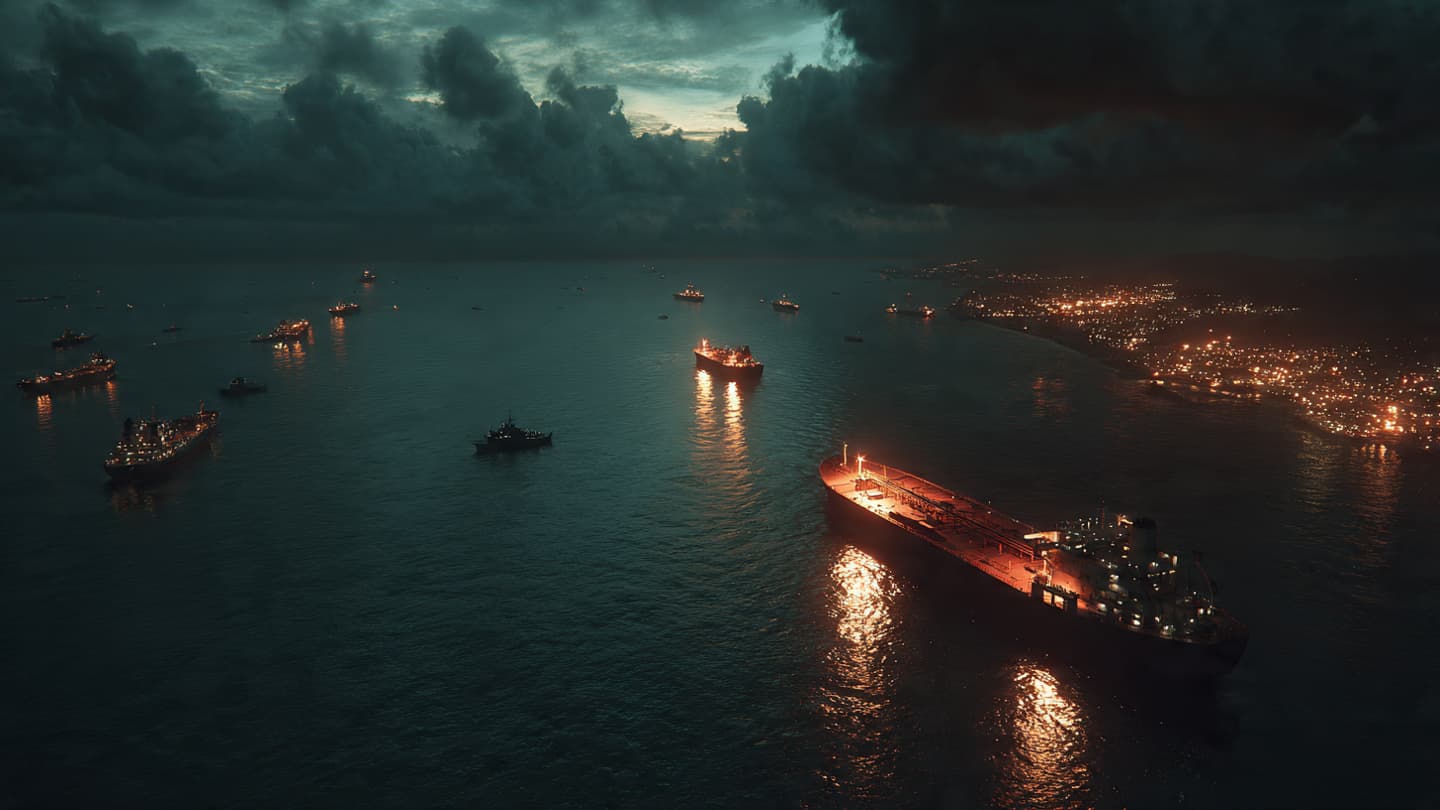
As evening settles again over the strait, navigation lights flicker across the darkening sea while ships continue their measured movement between continents. The currents beneath them remain ancient and indifferent, though the world above watches closely, aware that so much modern commerce flows through these confined waters.
And so the Strait of Hormuz endures as both passage and symbol — a narrow opening through which oil, tension, diplomacy, and uncertainty continue moving together beneath the warm Gulf night.
AI Image Disclaimer: These visuals were produced using AI-generated imagery and are intended to represent the broader themes and locations discussed.
Sources:
Reuters Associated Press Bloomberg Al Jazeera International Energy Agency
Published by Banx Network. This article is part of the Banx decentralized media programme, powered by the BXE token on the XRP Ledger.

.jpg&w=3840&q=75 "Intelligence Agencies Suspect Russia Is Developing Anti-Satellite Weapon to Target Starlink")