
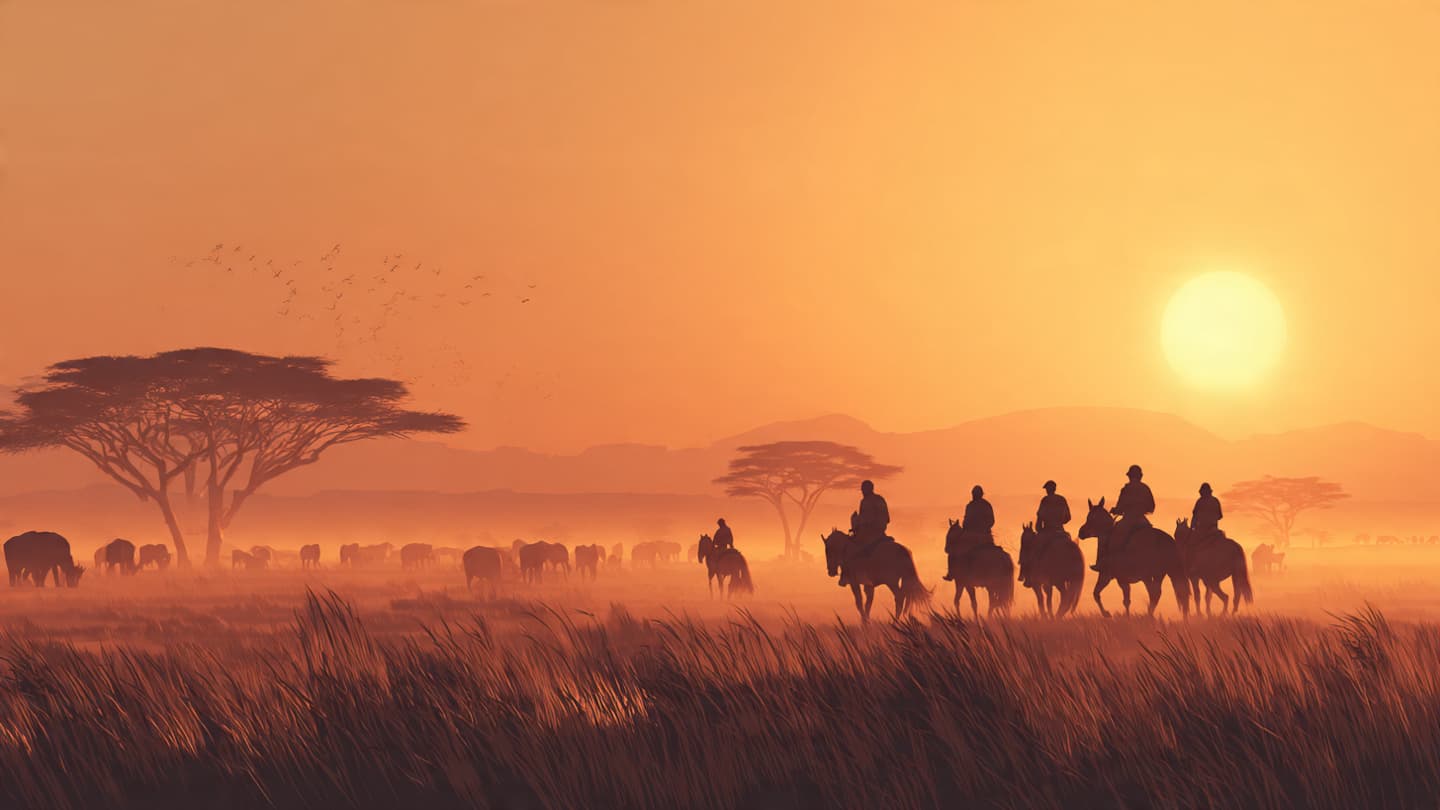
In many wildlife reserves, engines arrive before dawn, carrying visitors along dusty tracks in search of movement across the grasslands. Yet beyond the familiar rhythm of safari vehicles, another approach continues quietly through open plains and wooded trails. Horseback safaris, long practiced in parts of Africa, are increasingly being described by conservationists and travel specialists as one of the more immersive and low-impact ways to experience wildlife.
Unlike traditional vehicle safaris, horseback excursions move at the slower pace of the landscape itself. Riders travel through bushlands and savannas with fewer mechanical sounds, allowing closer observation of smaller environmental details often missed from roads or larger groups. Guides frequently describe the experience as less about pursuit and more about gradual presence within the ecosystem.
Wildlife experts say animals may respond differently to horses than to vehicles or groups on foot. In some cases, grazing animals perceive mounted riders as less intrusive because horses blend more naturally into the environment. This can create opportunities for quieter observation while still maintaining strict safety protocols around larger predators and sensitive habitats.
Operators offering horseback safaris often emphasize conservation-oriented tourism models. Smaller group sizes, reduced fuel use, and limited infrastructure requirements can lessen environmental pressure compared to higher-volume tourism activities. Many horseback safari programs are also linked to wildlife conservation initiatives or local community partnerships.
At the same time, specialists stress that such safaris require careful management and experienced guides. Riding through wildlife habitats carries risks, and ethical operators maintain strict distance guidelines, trained horses, and close coordination with conservation authorities. Not every reserve is suitable for horseback tourism, particularly in areas with dense predator populations or fragile ecosystems.
The growing interest in experiential travel has contributed to renewed attention around horseback safaris. Travelers increasingly seek activities that feel slower, quieter, and more connected to nature rather than heavily structured sightseeing experiences. The appeal often lies in the sensation of moving through landscapes without separating oneself entirely from them.
Tourism researchers note that horseback safaris remain a niche segment compared to conventional game drives. Costs, riding experience requirements, and physical demands naturally limit broader participation. Still, within luxury and eco-tourism markets, the format has gained visibility as travelers pursue alternatives emphasizing sustainability and personal immersion.
Photographers and conservationists frequently describe horseback safaris as uniquely atmospheric. Early morning rides through mist-covered plains or evening crossings beside grazing wildlife can create a perspective shaped less by speed and more by observation. The environment unfolds gradually rather than through rapid destination-focused movement.
As wildlife tourism evolves, horseback safaris continue to represent one example of how travel experiences are adapting toward quieter forms of engagement with nature. While traditional safaris remain central to African tourism, horseback exploration offers an alternative path for travelers seeking slower encounters with the natural world.
AI-generated image disclaimer: Certain visuals accompanying this article were produced through AI-assisted image generation.
Published by Banx Network. This article is part of the Banx decentralized media programme, powered by the BXE token on the XRP Ledger.


