In cities shaped by war, mornings begin not with certainty but with listening. Residents wake to the low mechanical hum of generators, to distant traffic moving around damaged streets, and to the instinctive pause that follows every unfamiliar sound in the sky. In Dnipro, a city that has become both refuge and logistical artery during Ukraine’s long war, warehouses and railway lines carry a significance beyond commerce. They are part of the fragile infrastructure of survival.
This week, that fragile network suffered another rupture when a Russian attack destroyed humanitarian food aid stored in the city, according to Ukrainian officials and relief organizations operating in the region. The strike reportedly damaged facilities containing supplies intended for civilians affected by the continuing conflict — food packages, staple goods, and emergency provisions assembled to sustain communities already living through repeated displacement and disruption.
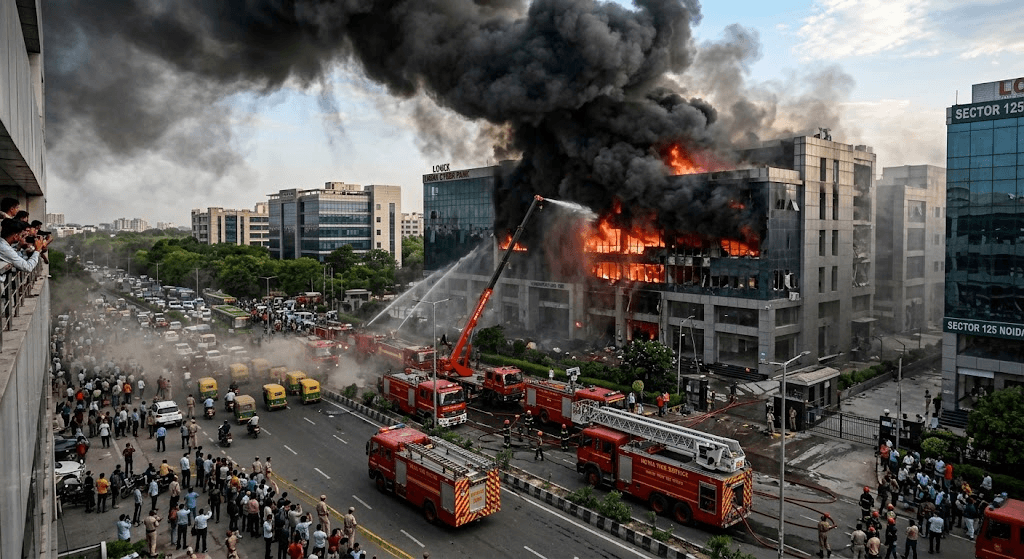
Photographs released after the attack showed blackened warehouse interiors, collapsed roofing, and aid supplies buried beneath debris and ash. Burned packaging and twisted metal lay scattered across loading areas where volunteers and workers had previously sorted shipments bound for frontline regions and vulnerable towns across eastern Ukraine.
Dnipro occupies a difficult geography within the war. Positioned along the Dnipro River and serving as a major transportation hub, the city has become a central point for evacuation routes, medical treatment, military logistics, and humanitarian coordination. Trains carrying displaced families have arrived there for months, while trucks loaded with aid continue departing toward areas closer to active fighting.
In wartime, warehouses become quiet symbols of endurance. Behind their plain walls are the ordinary objects that sustain civilian life — flour, canned food, bottled water, medicine, blankets. Their destruction carries consequences measured not only in financial terms but in delayed deliveries, interrupted routines, and communities left waiting longer for essentials.
Ukrainian authorities condemned the strike as another example of attacks affecting civilian infrastructure, while humanitarian groups warned about the increasing strain on aid distribution networks. Relief organizations working across Ukraine have repeatedly faced logistical challenges tied to damaged roads, electricity shortages, security risks, and the unpredictability of missile and drone attacks.
Russia has continued carrying out long-range strikes across Ukrainian territory throughout the conflict, often targeting infrastructure linked to transportation, energy, and supply systems. Moscow maintains that many sites support military functions, while Ukraine and Western governments argue that repeated attacks on civilian facilities deepen humanitarian suffering and undermine recovery efforts.
For residents of Dnipro, the war has increasingly become a rhythm of interruption. Cafés reopen beside sandbagged buildings. Children attend school beneath the shadow of air raid alerts. Markets function while missile defenses remain visible overhead. Daily life persists, though always with an awareness that normality may be temporary.
The destruction of food aid also highlights the broader role humanitarian organizations now play inside Ukraine’s war economy. International agencies, local charities, volunteers, and municipal workers together sustain networks that attempt to fill the widening gaps created by displacement and damaged infrastructure. Their work often unfolds quietly, far from diplomatic summits or battlefield headlines.
Yet aid itself has become part of the geography of conflict. Warehouses, rail depots, bridges, and supply routes now exist within zones of strategic vulnerability, where the movement of food and medicine intersects with military realities. Humanitarian corridors that once appeared administrative now carry the tension of frontline logistics.
As smoke cleared from the damaged site in Dnipro, emergency crews and volunteers reportedly worked to salvage remaining supplies where possible. Nearby residents gathered outside apartment blocks, watching firefighters move through the wreckage while sirens faded into the distance. Some supplies may eventually be replaced through international assistance, but time itself becomes costly during war — every delayed shipment extending uncertainty for families already dependent on external support.
Meanwhile, winter concerns continue hovering over Ukraine’s humanitarian landscape even outside the cold season. Aid organizations remain focused not only on immediate food shortages but also on energy access, shelter repair, and the cumulative psychological strain carried by civilians after years of conflict.
By evening, the city’s traffic resumed beneath gray skies. Trams crossed intersections, shop windows glowed dimly against gathering darkness, and volunteers elsewhere in the city continued sorting new deliveries into cardboard boxes marked for towns farther east.
And in another warehouse, somewhere along another railway line, workers quietly prepared the next shipment — because in war, even the act of moving bread, water, and medicine becomes a form of persistence against destruction.
AI Image Disclaimer: These images are AI-generated illustrations created to visually represent the settings and themes described in the article.
Sources:
Reuters Associated Press BBC News United Nations World Food Programme Al Jazeera
Published by Banx Network. This article is part of the Banx decentralized media programme, powered by the BXE token on the XRP Ledger.