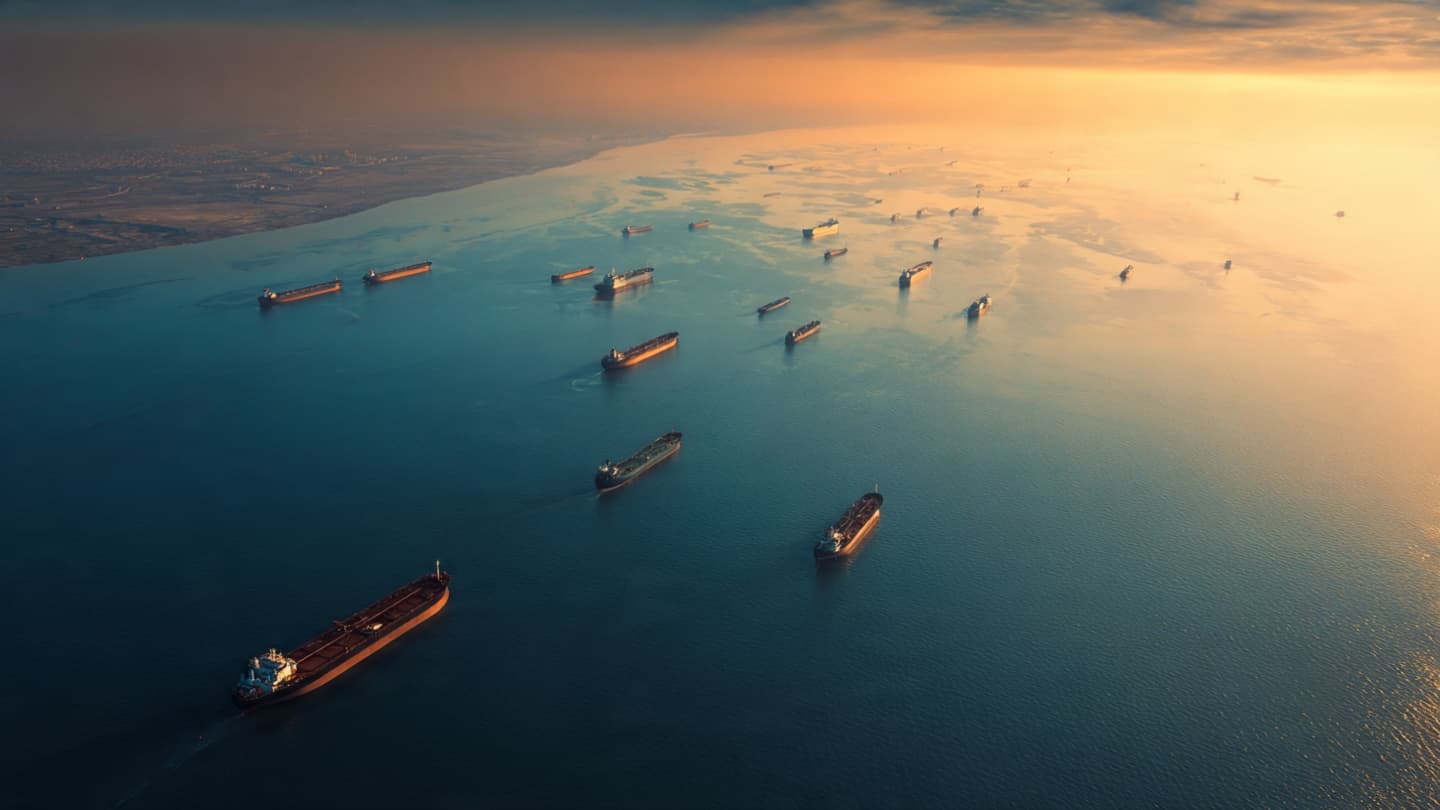
There are waterways that seem to carry more than ships. They carry routines, expectations, and the quiet confidence that tomorrow's horizon will resemble today's. The Strait of Hormuz has long been one of those places, where tankers pass like patient silhouettes beneath an unyielding sun, and the rhythm of global commerce is measured in tides rather than clocks. Yet even familiar waters can become unusually still when uncertainty settles over them.
As another night faded into morning, the United States completed a seventh consecutive night of military strikes linked to its ongoing regional operations. Across the surrounding waters, caution spread as naturally as the first light across the sea. Commercial vessels slowed their movements, while many shipping operators chose to wait rather than sail into a corridor where calculations had become more difficult than navigation itself.
The narrow passage has always occupied an outsized place in the world's imagination. A significant share of internationally traded crude oil and liquefied natural gas travels through this channel connecting the Persian Gulf to the Gulf of Oman. Even small disruptions echo well beyond the coastline, reaching fuel markets, manufacturers, and households thousands of miles away.
Shipping companies responded with a careful balance of patience and preparation. Some vessels delayed departures, while others anchored in nearby waters until security assessments could provide greater confidence. Maritime authorities and private security firms continued issuing guidance, encouraging captains to remain alert as the operational environment evolved from hour to hour.
Financial markets watched the developments with equal attention. Energy traders evaluated the possibility of prolonged disruptions, knowing that uncertainty often influences prices as much as physical shortages. Insurance costs for vessels operating in the region also remained under close review, reflecting the additional risks associated with navigating an increasingly tense maritime corridor.
For crews aboard commercial ships, the headlines translated into quieter, more personal realities. Longer waiting times, revised routes, and heightened communication became part of daily routines. Their work, usually defined by predictable schedules and distant horizons, now unfolded against a backdrop where every radio transmission carried greater significance.
Diplomatic efforts continued alongside military operations. Governments across the region and beyond urged restraint while emphasizing the importance of preserving freedom of navigation through one of the world's most strategically important waterways. Behind official statements remained a shared recognition that stable sea lanes benefit not only individual nations but the wider global economy.
The seventh consecutive night of strikes therefore became more than another entry in a military timeline. It also marked another evening in which commerce paused, caution deepened, and the sea itself appeared to hold its breath. Even without permanent closures, uncertainty proved capable of slowing one of the busiest maritime crossroads on Earth.
As events continue to unfold, shipping companies, energy markets, and governments are expected to monitor conditions closely. The Strait of Hormuz remains open, but reduced traffic reflects the broader impact of regional tensions. Like the tide itself, movement has not stopped—it has simply become more deliberate, waiting for calmer currents to return.
AI Image Disclaimer Illustrations were created using AI tools and are intended as conceptual visual representations rather than authentic photographs.
Sources Reuters Associated Press U.S. Central Command (CENTCOM) Lloyd's List MarineTraffic
Published by Banx Network. This article is part of the Banx decentralized media programme, powered by the BXE token on the XRP Ledger.