
The roads near Ukraine’s northern frontier run through forests that seem almost too calm for the history they now carry. Pine trees sway above empty checkpoints, villages settle into early evening silence, and long freight trains move slowly across distant rail lines toward borders layered with suspicion. Yet beneath the ordinary rhythms of rural life, the region continues to live under the steady pressure of military calculation — troop movements, satellite images, exercises announced through official statements, and the constant awareness that geography itself has become fragile.
This week, Ukraine moved to strengthen security measures along parts of its border as Russia announced that tactical nuclear munitions had been transferred to Belarus for military exercises. The development added another tense chapter to a conflict already shaped by escalation, symbolism, and the careful signaling of power between Moscow, Kyiv, and NATO.
Russian officials described the deployment as part of planned joint exercises with Belarusian forces, emphasizing readiness and coordination amid what the Kremlin continues to portray as growing Western involvement in the war. Belarus, a close ally of Moscow, has increasingly served as both strategic partner and staging ground since Russia’s full-scale invasion of Ukraine began. Russian troops crossed through Belarusian territory during the opening phase of the war in 2022, transforming the northern border into a source of continuing anxiety for Ukrainian planners.
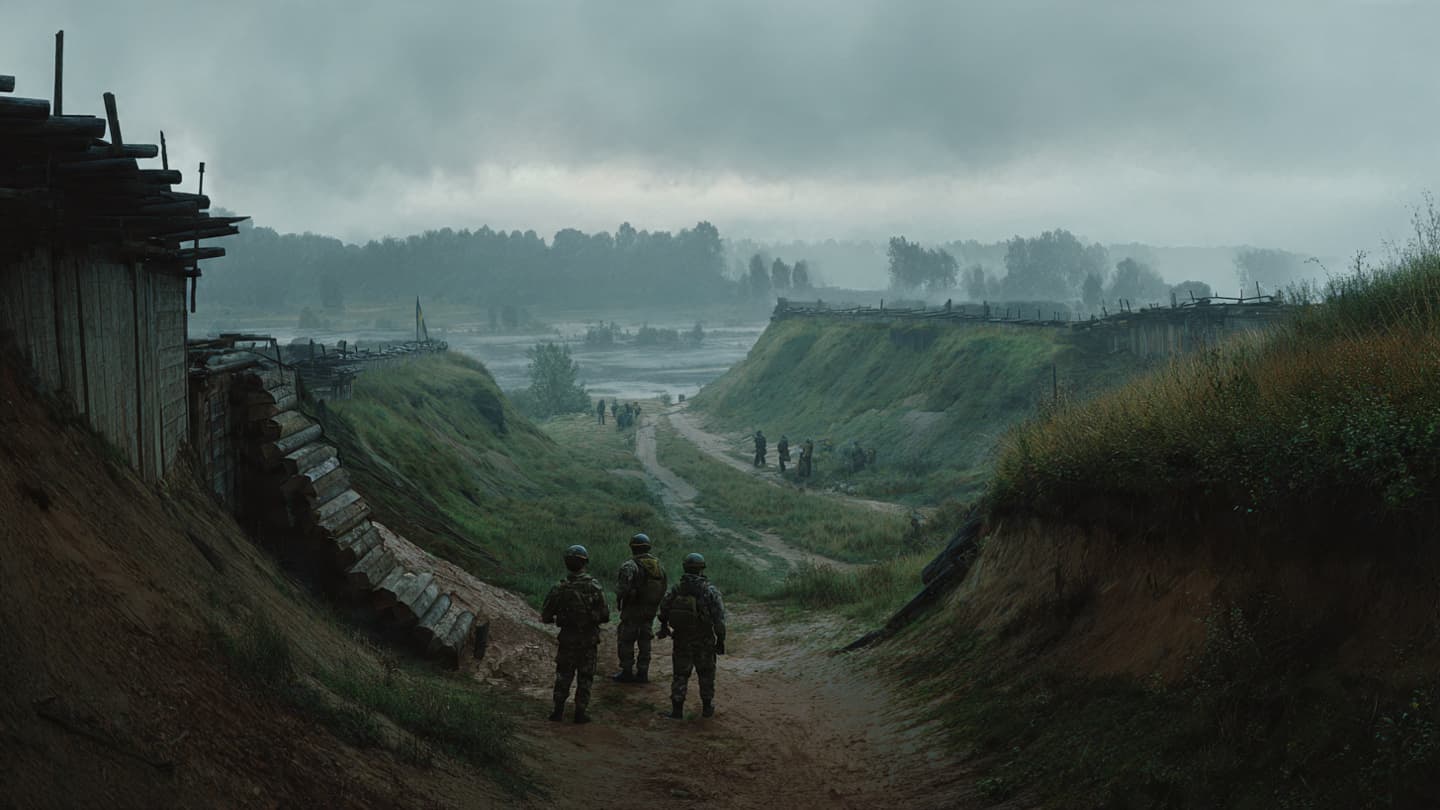
For Ukraine, the response has been measured but vigilant. Officials announced additional fortifications, surveillance efforts, and troop deployments near sensitive border regions, particularly in areas facing Belarus. Defensive trenches, anti-vehicle barriers, and expanded patrols have become familiar features across stretches of frontier once defined mainly by forests, farmland, and quiet crossings.
There is a particular tension attached to the language of nuclear weapons, even when framed as exercises rather than direct threats. Tactical nuclear munitions are generally smaller in scale than strategic nuclear weapons designed for long-range deterrence, yet their movement alone carries symbolic weight far beyond immediate military practicality. In Europe, where memories of Cold War brinkmanship still linger beneath contemporary politics, such announcements ripple quickly through diplomatic circles and public consciousness alike.
The Belarusian landscape itself has become increasingly entangled in those geopolitical currents. Long known for its flat fields, Soviet-era industrial towns, and carefully managed political order under President Alexander Lukashenko, the country now occupies a more visible position within the broader confrontation between Russia and the West. Military drills, equipment transfers, and joint exercises have gradually altered perceptions of the borderlands, turning once-overlooked regions into focal points of international concern.
Meanwhile, ordinary life continues beneath the strategic language. In northern Ukraine, residents living near the Belarusian frontier have spent years adapting to uncertainty. Air raid sirens, military checkpoints, and reinforced roads exist alongside farms, schools, and apartment blocks where daily routines persist despite the wider conflict. The war often advances not only through dramatic offensives, but through prolonged vigilance — a landscape learning to remain alert even during moments of relative stillness.
Western governments have so far described the latest Russian nuclear moves as concerning but not unexpected. NATO officials said they continue monitoring developments closely while emphasizing that no immediate changes to the alliance’s own nuclear posture have been announced. Analysts note that Moscow has periodically used nuclear rhetoric throughout the conflict, both as strategic messaging and as an attempt to deter deeper Western involvement in Ukraine.
Still, each new reference to nuclear deployments subtly reshapes the atmosphere surrounding the war. What began as a regional invasion has evolved into a prolonged confrontation carrying global implications — military, economic, diplomatic, and psychological. The movement of weapons, even for exercises, becomes part of a larger theater of signaling where perception matters almost as much as capability itself.
At the same time, Ukraine remains focused on the practical realities of border defense. Officials have repeatedly warned that the northern frontier cannot be treated as secure simply because the heaviest fighting currently lies farther east and south. The possibility of diversionary actions, cross-border pressure, or renewed incursions continues to influence military planning across the country.
And so the borderlands remain suspended between stillness and apprehension. Watchtowers rise above tree lines. Soldiers reinforce trenches in damp spring soil. Freight traffic passes quietly through distant stations beneath gray skies that reveal little. Somewhere beyond those forests, military exercises continue according to official schedules and carefully crafted statements.
Yet the deeper reality is harder to contain within communiqués alone. Every movement of nuclear-linked equipment, every fortified checkpoint, every announcement of readiness adds another layer to a conflict already reshaping Europe’s security landscape in ways that may endure long after the guns fall silent. For now, Ukraine watches its northern horizon carefully, aware that in modern conflict, even exercises can cast long shadows across the border.
AI Image Disclaimer: The accompanying visuals were generated using AI technology and are intended as interpretive illustrations rather than real photographs.
Sources:
Reuters Associated Press BBC News Al Jazeera Institute for the Study of War
Note: This article was published on BanxChange.com and is powered by the BXE Token on the XRP Ledger. For the latest articles and news, please visit BanxChange.com