The wind across Kazakhstan’s steppes has always carried movement. It bends grasslands without resistance, sweeps dust across distant roads, and passes through industrial regions once defined almost entirely by oil, coal, and heavy extraction. Now, that same wind is being reconsidered not simply as weather, but as power itself.
Kazakhstan has continued advancing its green energy transition through a growing number of renewable energy projects focused on solar, wind, and sustainable infrastructure development. Government officials and regional analysts describe the shift as part of a broader effort to diversify the country’s energy sector while reducing long-term environmental pressures.
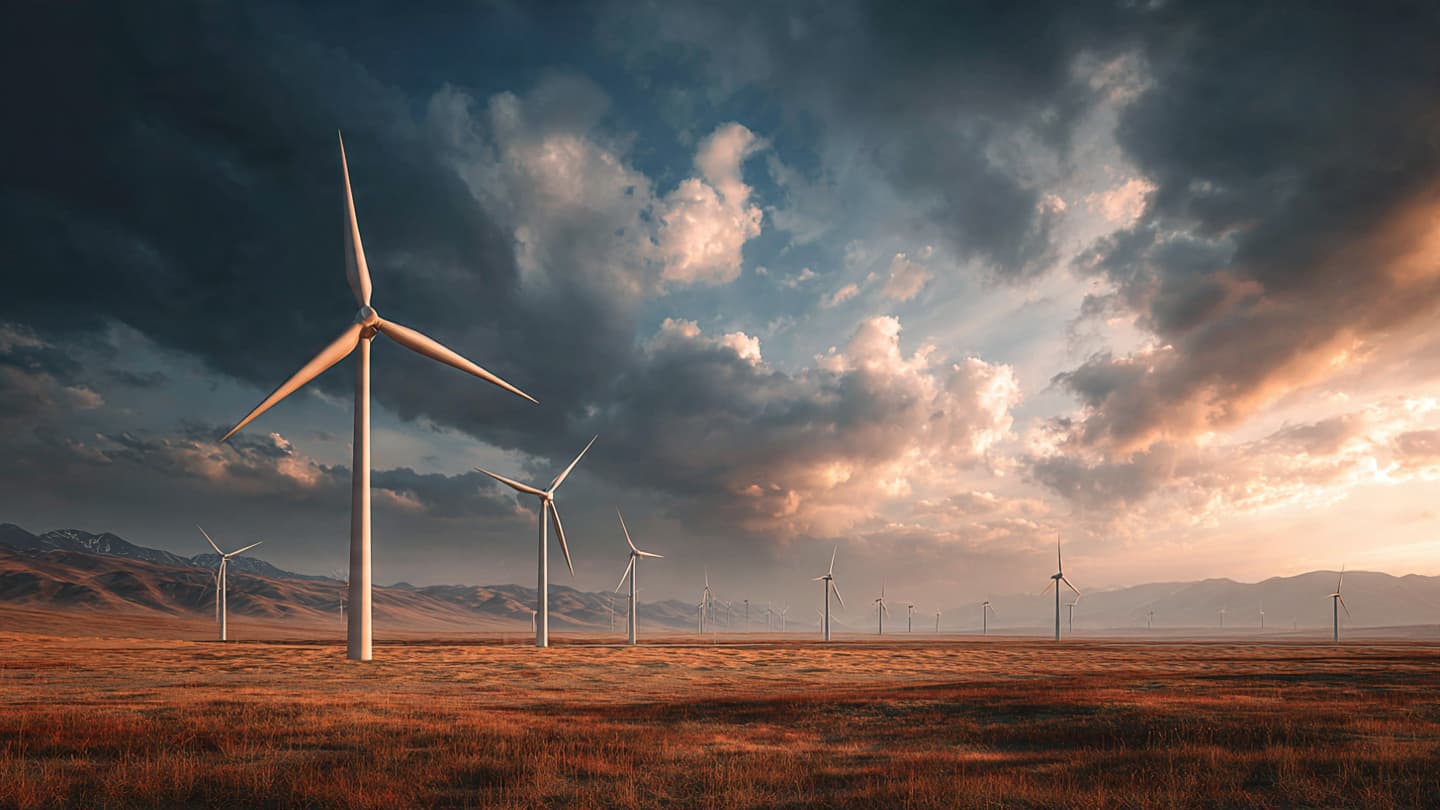
Across several regions, new renewable facilities are gradually emerging beside older industrial systems that shaped Kazakhstan’s economic identity for decades. Wind farms now stand across open plains, while solar installations spread beneath the intense sunlight of southern territories. Together, these projects represent an attempt to balance economic modernization with environmental adaptation.
International organizations and development partners have increasingly supported Kazakhstan’s renewable ambitions, particularly as Central Asia confronts rising climate challenges tied to water scarcity, temperature increases, and environmental degradation. Energy transition policies are now viewed not only through environmental concerns, but also through economic resilience and regional competitiveness.
Kazakhstan remains one of the region’s largest energy producers, and traditional resources continue holding major economic importance. Yet officials have acknowledged that future stability may depend on how effectively the country integrates renewable systems into its broader industrial structure. Diversification has become less theoretical and more practical with each passing year.
The transition, however, moves unevenly. Renewable expansion requires substantial infrastructure investment, updated transmission systems, technological adaptation, and long-term regulatory planning. Analysts note that balancing existing energy industries with emerging renewable sectors remains one of Kazakhstan’s most delicate economic challenges.
Still, the visual transformation has already begun. In certain areas, turbines now rotate against horizons once dominated only by smokestacks and pipelines. Construction crews move across dry land preparing foundations for future solar networks. The landscape itself reflects an economy slowly adjusting its direction beneath immense skies.
For many younger professionals and environmental advocates within Kazakhstan, renewable development also carries symbolic importance. It suggests participation in a global transition increasingly shaping trade, investment, and industrial planning far beyond Central Asia alone.
Kazakhstan is expected to continue expanding renewable energy initiatives throughout 2026, with additional international partnerships and infrastructure investments anticipated across wind, solar, and sustainable energy sectors.
Published by Banx Network. This article is part of the Banx decentralized media programme, powered by the BXE token on the XRP Ledger.