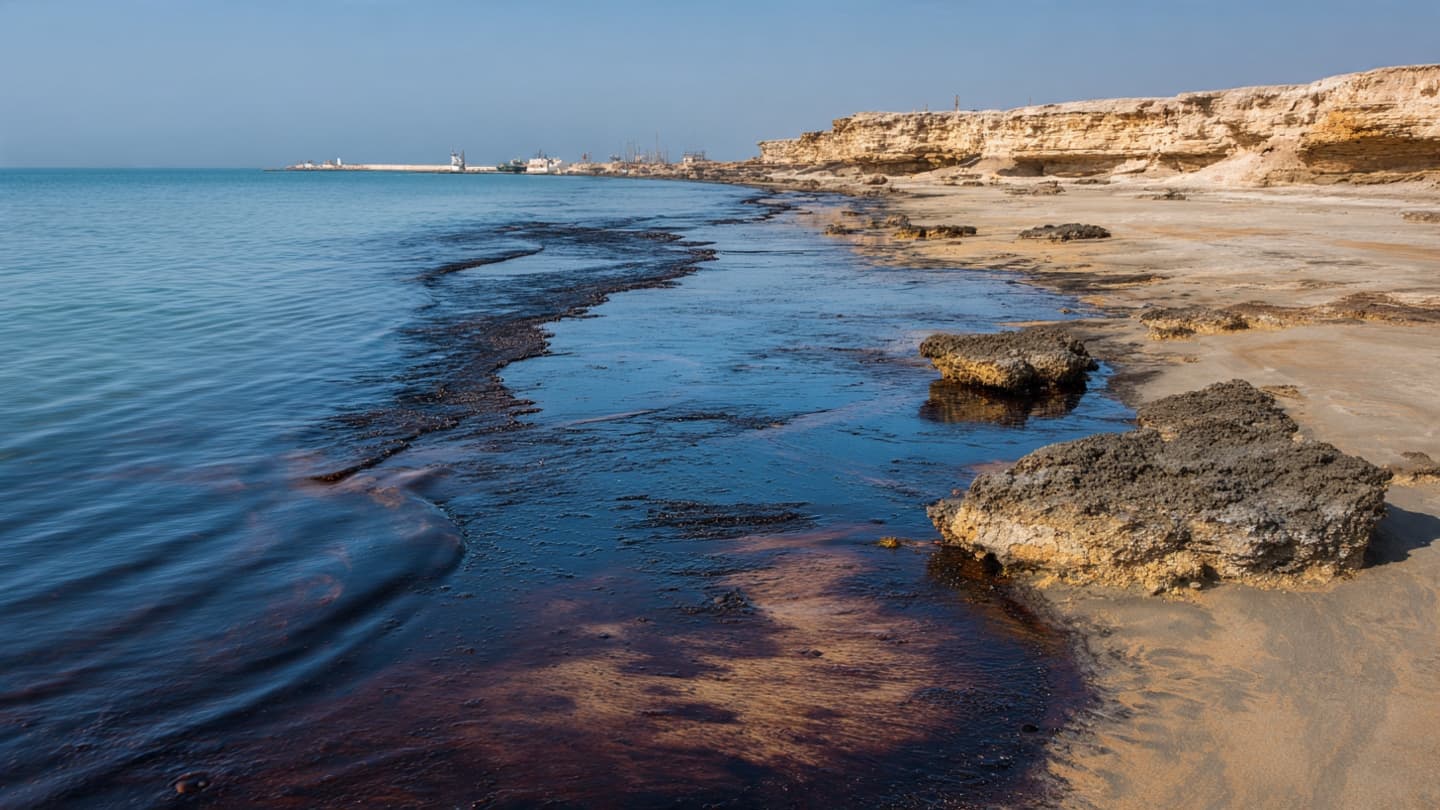
The Persian Gulf carries many movements at once: fishing boats crossing shallow water, commercial vessels traveling between ports, and currents flowing quietly along the coast. Near Qeshm Island, another movement has become visible. An oil slick has spread through the water and reached sections of the island's beaches.
Reuters reported that satellite imagery showed two oil slicks in the Gulf, including one near Qeshm Island and another near Sirri Island. The Qeshm slick was believed to contain heavy fuel oil, while a lighter oil trail stretched for approximately 160 kilometers. (reuters.com)
The pollution has already crossed from open water onto land. Reuters verified footage showing oil washing onto Qeshm's beaches, where petroleum can become trapped in sand and sediment. Coastal contamination can be more difficult to manage once oil reaches shallow waters and shoreline environments.
The suspected source of the Qeshm slick is the damaged Minoan Pioneer, a Liberia-flagged dry bulk carrier. Reuters reported that the vessel was damaged during the regional conflict and that the resulting pollution is believed to be responsible for the slick near Qeshm. (reuters.com)
The slick's movement is being monitored partly through satellite imagery. From space, oil can appear as an irregular darkened area against the surrounding water, allowing specialists to follow its changing shape and direction even when direct observation at sea is difficult.
For marine ecosystems, the direction of the slick matters. Oil can move with currents and wind, potentially affecting beaches, shallow-water habitats, and marine organisms. The severity of the environmental impact depends on factors including the type of petroleum involved, weather conditions, and how long contaminated areas remain exposed.
Qeshm's coastal communities also depend on the sea in practical ways. Fishing, transportation, tourism, and other activities are closely linked to the surrounding waters. Pollution can therefore create difficulties for local residents even before longer-term environmental effects are fully measured.
Cleanup operations require coordination between maritime authorities, salvage teams, environmental specialists, and local communities. Reuters reported that efforts around the Qeshm spill have been complicated by delays involving permissions for salvage and cleanup operations, while environmental organizations have continued monitoring the slick. (reuters.com)
The wider Gulf is also dealing with another major oil spill near Oman involving the tanker Caroline Bezengi. That incident is separate from the Qeshm spill but has increased attention on the environmental vulnerability of the region's heavily traveled waters. (reuters.com)
For Qeshm, the coming period will be shaped by the oil's movement and the response on the water and shore. Authorities and environmental monitors continue assessing the extent of the contamination. The Gulf's surface may once again appear blue from a distance, but along parts of Qeshm's coast, the evidence of what moved through the water remains visible.
Image Disclaimer
AI-generated illustrations accompany this report as conceptual representations of the oil spill and coastal environment and are not real photographs.
Sources
Reuters Associated Press SkyTruth Greenpeace
Note: This article was published on BanxChange.com and is powered by the BXE Token on the XRP Ledger. For the latest articles and news, please visit BanxChange.com
.jpg&w=3840&q=75 "Adam Scott Says His Daughter’s Acting Class Was Forced to Watch His Failed ‘Office’ Audition as an Example of What Not to Do")