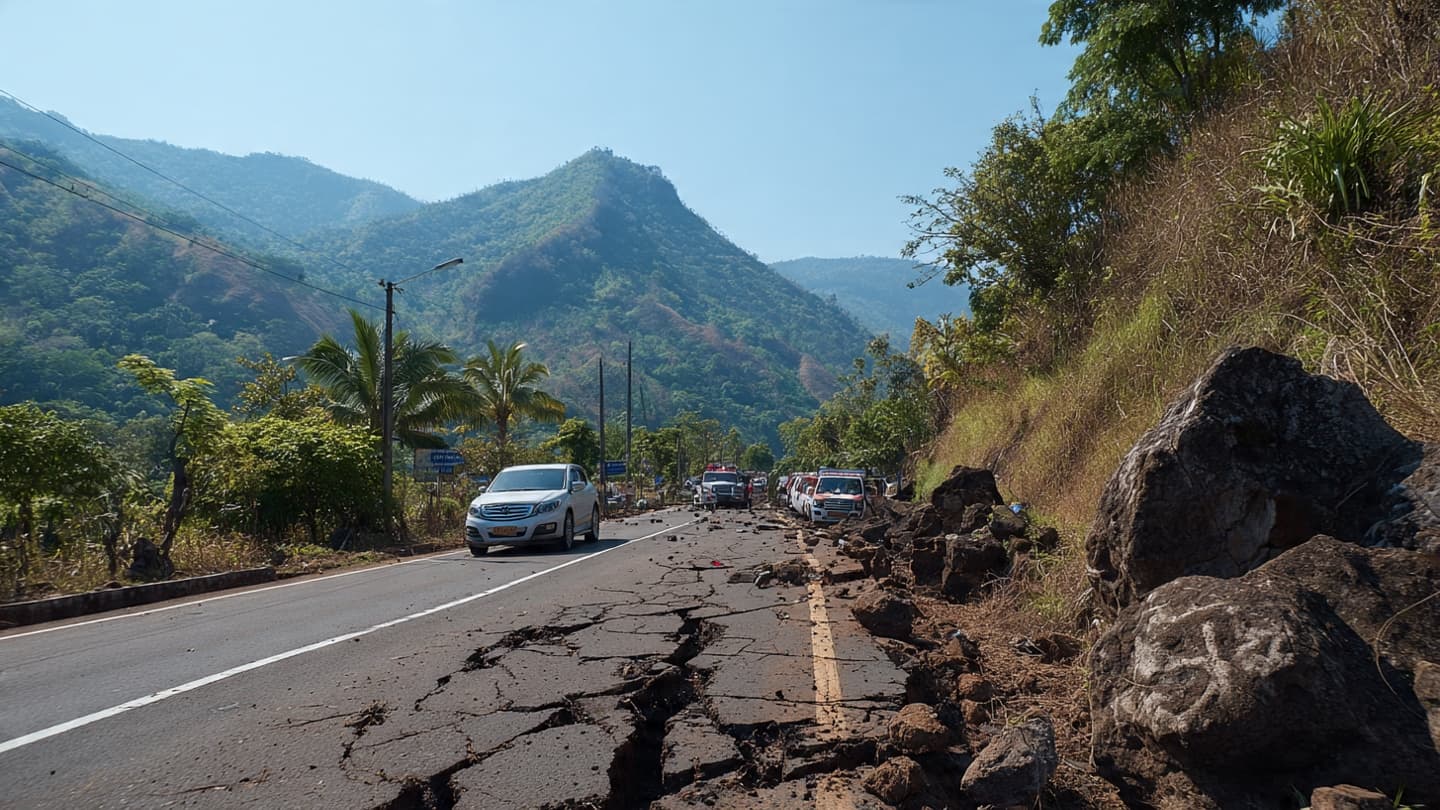
Across Flores, the distance between one village and the next can be measured not only in kilometers, but in roads that cross steep hills and winding terrain. After the magnitude 7.7 earthquake, some of those roads were broken by landslides and debris, turning ordinary journeys into difficult routes for rescue teams carrying people and supplies.
The earthquake struck offshore near Nagekeo Regency early on August 15 and caused widespread damage across parts of East Nusa Tenggara. Reuters reported that landslides and communication outages made it difficult to reach some affected communities, particularly around Nagekeo.
The Trans-Flores highway, one of the island's important transportation routes, was also disrupted. The road connects communities across the island and serves as a vital link for residents, emergency workers, food supplies, medical assistance, and other necessities. When sections of the route are blocked, the effects can travel far beyond the immediate point of damage.
Landslides create a particular challenge because they can continue to move after an earthquake. Loose earth and rock may remain unstable, while additional aftershocks can trigger further collapses. Rescue teams therefore have to balance the urgency of reaching affected communities with the need to operate safely on unstable terrain.
The damage was not limited to transportation. Buildings and homes collapsed in several areas, while electricity and communications were disrupted. More than 2,000 people were reported to have evacuated, leaving emergency authorities responsible for helping displaced residents while also attempting to reach communities that remained difficult to access.
In Maumere, the largest town in Sikka Regency, 20 deaths were reported. Another 16 people were killed in a landslide in Reok village, according to reports cited by Reuters and The Associated Press. These figures demonstrate how the earthquake's consequences extended from collapsed structures into the surrounding mountainous terrain.
Emergency operations have included ground teams as well as additional transportation support. AP reported that rescue operations were being supported by helicopters and a vessel as authorities worked to assess the damage and assist communities affected by the earthquake.
Communication problems can make the first hours of a disaster especially difficult. When telephone or electricity networks fail, information from isolated villages may arrive slowly, leaving emergency coordinators to work with incomplete reports while trying to determine where assistance is most urgently needed.
As access improves, authorities will be able to build a more complete picture of the earthquake's impact. Roads must be cleared, damaged buildings inspected, and displaced residents provided with safe places to stay. The work may take time because the geography of Flores can make even short distances difficult when roads and slopes have been damaged.
For now, rescue and assessment teams continue moving across the affected areas as conditions allow. The earthquake has shown how closely transportation and emergency response are connected on Flores: when roads fail, the journey to help becomes part of the disaster itself. Authorities remain focused on restoring access and reaching communities that have not yet been fully assessed.
Image Disclaimer
The following AI-generated illustrations are visual interpretations of earthquake-related road damage and emergency response and should not be mistaken for actual event photographs.
Sources
Reuters Associated Press BNPB BMKG
Note: This article was published on BanxChange.com and is powered by the BXE Token on the XRP Ledger. For the latest articles and news, please visit BanxChange.com