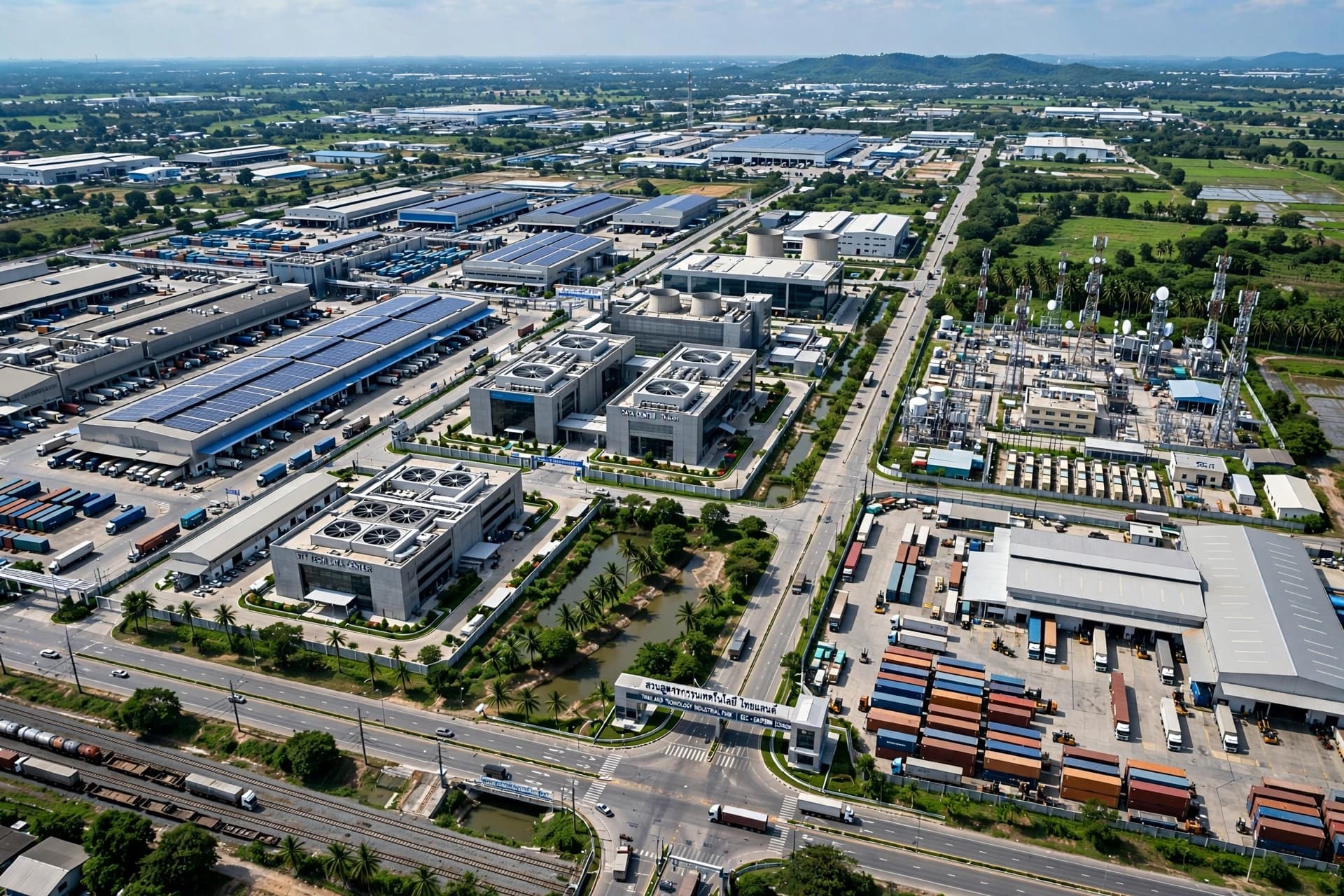
Artificial intelligence is often imagined through the image of a powerful processor, glowing screens, and complex algorithms. Yet beneath that visible intelligence lies a much larger physical world: electricity systems, cooling equipment, optical networks, servers, storage devices, and the factories that produce them. Thailand is finding its place within that quieter landscape.
Recent industry reporting shows that Thailand has developed capabilities across several critical parts of the AI infrastructure supply chain. The country does not yet manufacture the most advanced AI processors, but its electronics industry produces equipment needed to operate the data centers where those processors work.
Power management is one of those areas. High-density computing requires sophisticated systems capable of delivering and controlling electricity reliably. Companies operating in Thailand are increasingly involved in equipment designed for modern data-center environments.
Cooling is equally important. As computing power increases, so does the heat generated by servers. Advanced cooling technologies, including systems designed for high-density and liquid-cooled environments, are becoming increasingly relevant as AI workloads grow.
Optical communications form another part of the picture. AI systems move enormous quantities of information between processors, servers, and buildings. High-capacity optical networks help carry that information at the speed required by modern computing operations.
Storage and networking equipment add another layer. AI applications generate and process enormous volumes of data, creating demand for servers, storage systems, and networking hardware. Thailand already has manufacturers producing several of these components.
The country's investment figures reflect the momentum. Thailand received 1.473 trillion baht in investment applications during the first half of 2026, with the digital sector accounting for 1.115 trillion baht. Electronics and electrical appliances represented another 120.23 billion baht.
Much of the digital investment is concentrated around data centers, cloud services, and infrastructure supporting AI. At the same time, electronics manufacturers are expanding production of components that can serve this growing ecosystem.
The development brings Thailand into competition with other Southeast Asian manufacturing centers, including Malaysia, Singapore, and Vietnam. Each country is seeking a place within the rapidly expanding infrastructure surrounding artificial intelligence.
For Thailand, the opportunity may not depend on producing the most advanced processors. Strengthening the supporting technologies around them can also create investment, employment, technical expertise, and connections to international supply chains.
The result is a different way of looking at the country's technology ambitions. Thailand's role in artificial intelligence is increasingly visible not through the algorithms themselves, but through the physical systems that allow those algorithms to function. Across factories, data centers, and communications networks, the country's electronics industry is becoming part of the machinery beneath the AI economy.
AI Image Disclaimer The visuals are AI-generated conceptual representations of Thailand's role in the artificial-intelligence hardware supply chain and are not real photographs.
Sources The Nation Thailand Thailand Board of Investment Reuters
Note: This article was published on BanxChange.com and is powered by the BXE Token on the XRP Ledger. For the latest articles and news, please visit BanxChange.com