In places shaped by conflict, childhood often becomes intertwined with events far beyond a child’s understanding. A classroom becomes a shelter. A playground becomes an empty lot. Days are remembered not by school terms or holidays, but by the sounds that arrived from the sky and the uncertainty that followed. Across Gaza, where years of war have altered the rhythm of ordinary life, the experiences of children have increasingly become a focal point of international attention.
This week, that attention sharpened further as a United Nations inquiry released one of its most severe assessments of the conflict to date. The report, issued by the U.N. Independent International Commission of Inquiry on the Occupied Palestinian Territory, including East Jerusalem, and Israel, concluded that Israeli authorities and security forces deliberately targeted Palestinian children, actions that the commission said amounted to genocide, crimes against humanity, and war crimes in Gaza, as well as war crimes in the occupied West Bank.
The findings examined the period from the outbreak of the Israel-Hamas war in October 2023 through October 2025. According to the commission, children accounted for roughly thirty percent of those killed during the conflict. Investigators stated that more than 20,000 Palestinian children died during the period under review, while tens of thousands more suffered injuries, displacement, psychological trauma, and the loss of family members, homes, schools, and access to essential services.
The report argued that the scale and pattern of harm extended beyond the immediate consequences of warfare. Investigators pointed to repeated military operations in densely populated civilian areas, the destruction of infrastructure critical to children's survival, and the cumulative effects of humanitarian restrictions. The commission concluded that these actions reflected an intent to undermine the future continuity of the Palestinian population by targeting its youngest generation.
For many observers, the significance of the report lies not only in the allegations themselves but also in the language used to describe them. Genocide is among the gravest accusations in international law, carrying profound legal, diplomatic, and historical implications. Such determinations remain fiercely contested and are often examined by multiple international bodies, courts, and independent investigators over many years.
Israel rejected the findings immediately and forcefully. Israeli officials described the report as biased, defamatory, and detached from the realities of the conflict that began with Hamas's October 7, 2023 attack on Israel. The Israeli government has consistently argued that its military operations are directed against Hamas and other armed groups, not civilians, and that it takes measures intended to reduce civilian casualties despite fighting in densely populated urban environments.
The disagreement reflects a wider divide that has accompanied nearly every major international assessment of the war. Human rights organizations, legal scholars, governments, and international institutions have frequently reached differing conclusions regarding intent, proportionality, responsibility, and accountability. Yet amid these debates, the condition of Gaza's children has emerged as one of the least disputed realities. Successive U.N. reports have documented unprecedented levels of child casualties, injuries, displacement, and psychological distress linked to the conflict.
The humanitarian dimensions extend beyond casualty figures. Schools have been damaged or converted into shelters. Healthcare systems have struggled under prolonged strain. Many children have spent extended periods without stable access to education, medical treatment, or secure housing. International agencies continue to warn that the effects of these disruptions may persist long after active fighting subsides.
In Gaza itself, these realities are experienced not through legal terminology but through daily life. Families search for safety, communities rebuild what they can, and children grow up amid circumstances that would once have seemed unimaginable. Their stories unfold beneath headlines, investigations, and diplomatic exchanges, carried quietly through homes, shelters, and temporary classrooms.
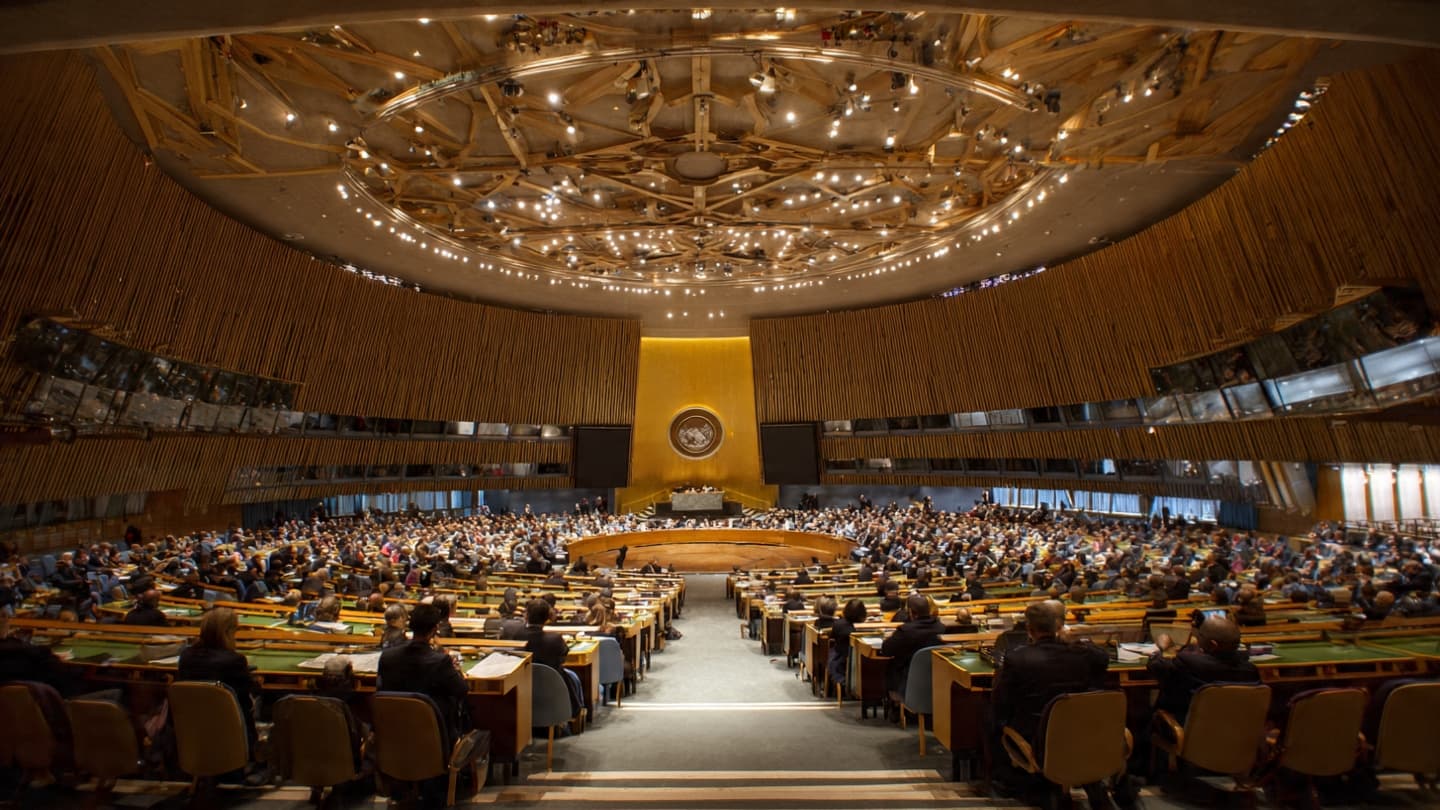
As the latest U.N. report enters international debate, its conclusions are likely to be examined, challenged, defended, and discussed across diplomatic forums and legal institutions. Whether its findings ultimately shape future legal proceedings remains uncertain. What is already clear, however, is that the experiences of Gaza's children have become central to understanding the broader human consequences of the war. In a conflict measured by territory, security, and politics, the youngest lives continue to stand at the heart of the world's attention.
AI Image Disclaimer Illustrative images accompanying this article were generated using AI technology and should be viewed as visual interpretations rather than actual photographs.
Sources
Reuters United Nations Independent International Commission of Inquiry on the Occupied Palestinian Territory, including East Jerusalem, and Israel United Nations Office at Geneva Associated Press The Guardian
Published by Banx Network. This article is part of the Banx decentralized media programme, powered by the BXE token on the XRP Ledger.