
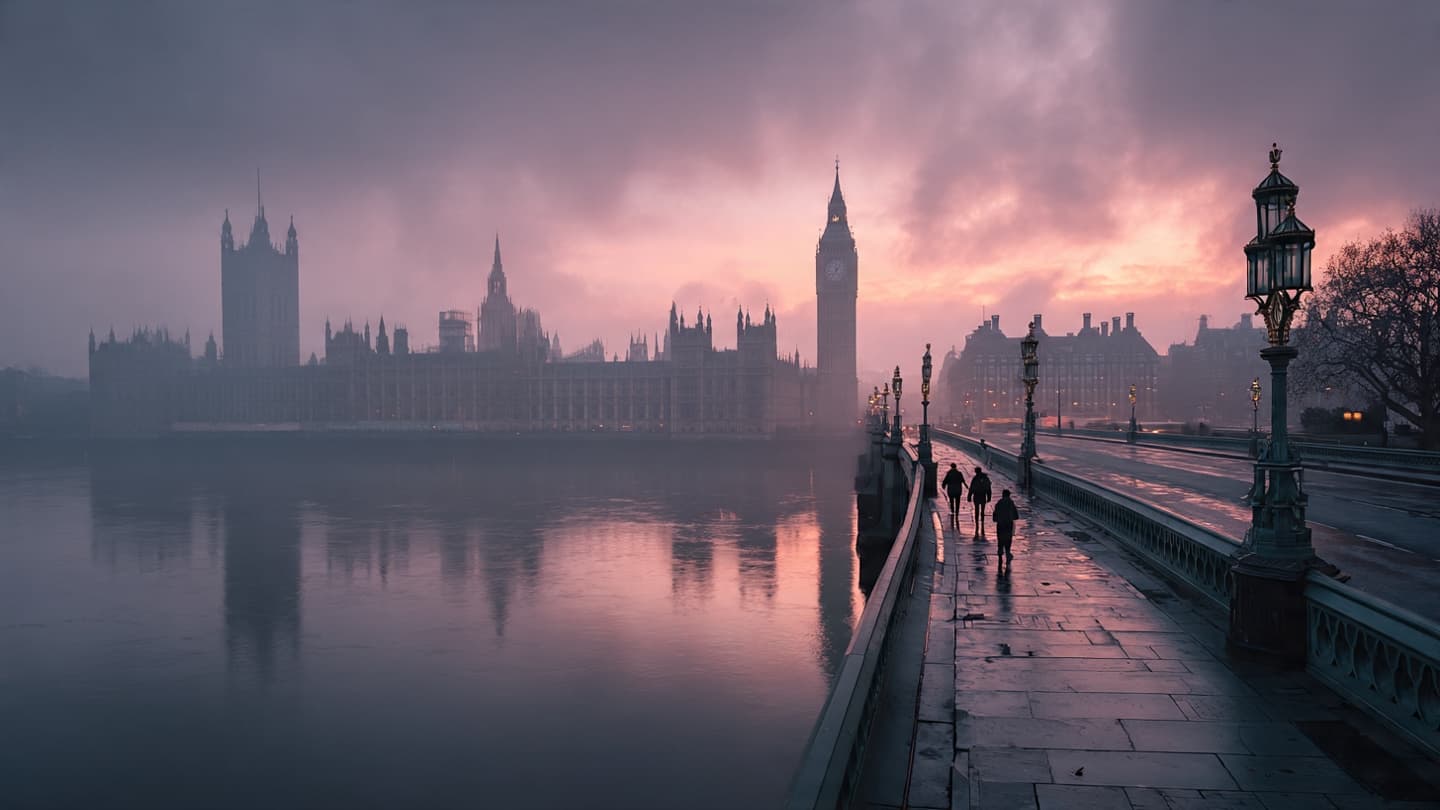
Morning arrives in Westminster with a rhythm that has echoed through centuries of changing governments. The River Thames continues its patient journey beneath historic bridges, while the clock towers and stone facades remain steady witnesses to political chapters that often unfold without the sound of a nationwide vote. In Britain's parliamentary tradition, change sometimes enters quietly, carried not by ballots cast across the country but by decisions made within the halls of Parliament.
That tradition has once again drawn public attention as Britain prepares for a new prime minister without holding a general election. For observers more familiar with presidential systems, the process may seem unusual. Yet within the United Kingdom's parliamentary democracy, the office belongs not to an individual elected directly by the public but to the Member of Parliament who is able to command the confidence of the House of Commons.
When a sitting prime minister resigns or leaves office before the end of a parliamentary term, the governing political party normally chooses a new leader through its own internal leadership process. Once that leader is selected, the monarch invites them to form a government, provided they are considered capable of maintaining the confidence of Parliament. In most circumstances, this transition does not automatically require a general election.
The approach reflects the constitutional framework that has gradually evolved over generations. British voters elect Members of Parliament in general elections, and those representatives collectively determine which party forms the government. The prime minister therefore derives authority through Parliament rather than from a separate national election focused on the office itself.
This constitutional arrangement has been demonstrated several times in recent decades. Leadership transitions have occurred between general elections as governing parties responded to resignations, political pressures, or changing priorities. While each occasion carried its own political context, the underlying constitutional process remained consistent: the governing party selected a new leader, and the new prime minister assumed office after receiving the monarch's invitation to form a government.
Even so, leadership changes often spark public debate. Some citizens argue that a new prime minister should seek a fresh electoral mandate, particularly when significant policy shifts are expected. Others point out that the existing Parliament was elected through a general election and continues to possess constitutional legitimacy until it is dissolved or its confidence in the government is lost. These differing perspectives reflect political preferences rather than constitutional requirements.
For financial markets, international partners, and domestic institutions, continuity often becomes a central concern during such transitions. Government departments continue their daily work, civil servants maintain administrative functions, and Parliament remains responsible for scrutinizing legislation and holding ministers accountable. The machinery of government is designed to continue operating even as leadership changes at its highest level.
Across Britain, daily life unfolds alongside these constitutional developments. Commuters board trains, shopkeepers raise their shutters, students begin new lessons, and conversations about politics mingle with ordinary routines. Leadership transitions, while significant, become another chapter in a parliamentary system built upon gradual adaptation rather than abrupt interruption.
As Britain welcomes another prime minister through parliamentary procedure rather than a nationwide election, the moment serves as a reminder that democracies express themselves in different institutional forms. Some choose their national leaders through direct popular votes, while others entrust that responsibility to elected legislatures. In Westminster, the changing occupant of Downing Street reflects not a departure from democratic practice, but the continued operation of a constitutional tradition shaped over centuries—one in which the continuity of institutions often carries the nation through periods of political change.
AI Image Disclaimer The accompanying visuals were generated using AI and are intended as illustrative representations rather than authentic photographs.
Sources Reuters UK Parliament UK Cabinet Office Institute for Government BBC News
Published by Banx Network. This article is part of the Banx decentralized media programme, powered by the BXE token on the XRP Ledger.


.jpg&w=3840&q=75 "EU Gambling Levy Omitted From Irish MFF Budget Draft, but Remains Under Discussion")