
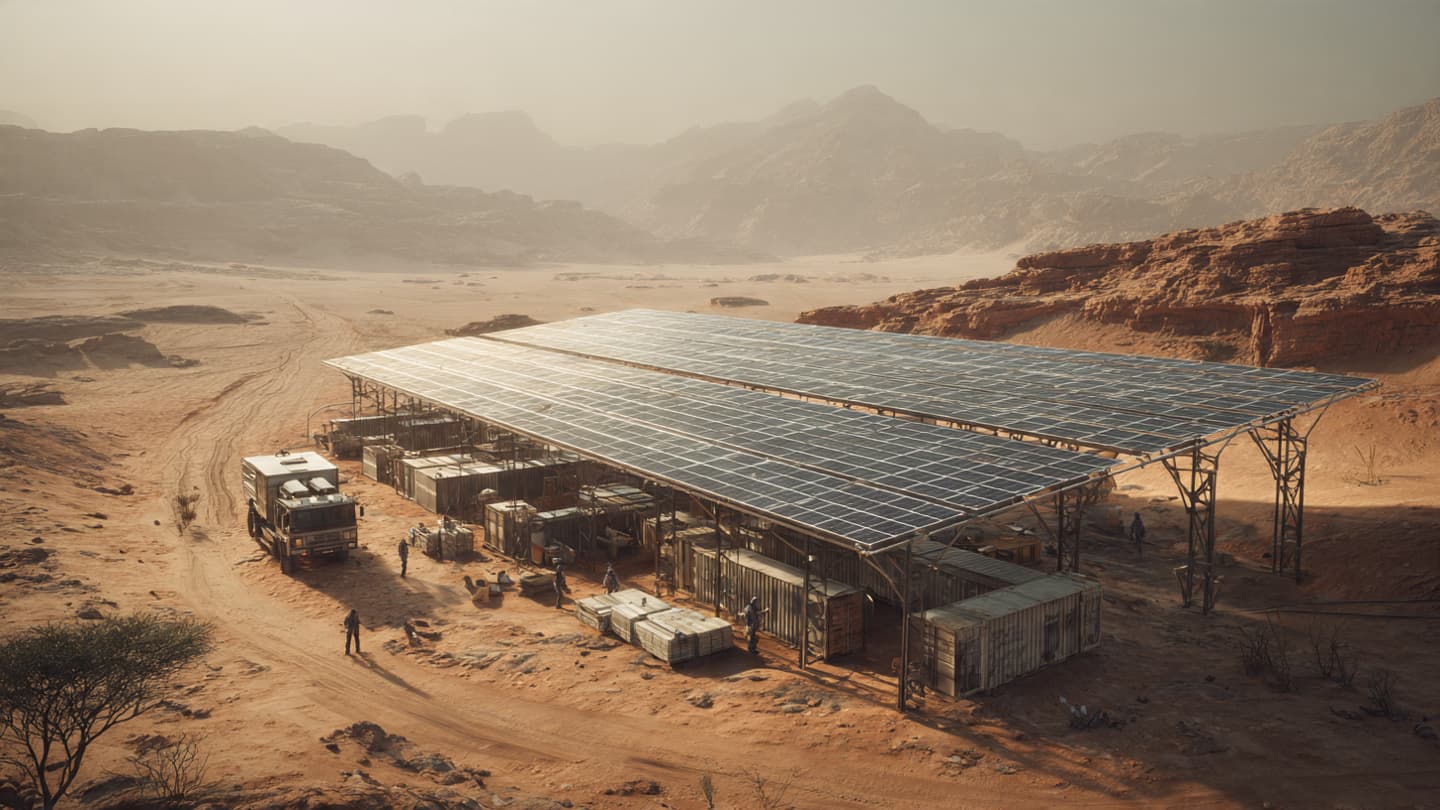
There are moments when a country begins speaking not through declarations, but through construction itself. Roads extend farther into unfinished land. Transmission towers appear against empty horizons. Solar panels rise gradually beneath open skies where only wind once moved uninterrupted. Across Algeria, these quieter signs of transformation are beginning to attract increasing international attention.
Foreign interest in Algeria’s renewable energy and infrastructure sectors has grown steadily as global investors search for long-term opportunities tied to energy transition and regional development. Analysts and business observers note that Algeria’s geographic scale, solar capacity, and strategic position between Africa and Europe continue drawing attention from international partners.
Much of this interest centers on renewable energy expansion, particularly solar power development across Algeria’s vast southern regions. With abundant sunlight and large expanses of available land, the country has become increasingly visible within broader conversations surrounding clean energy production and regional electricity infrastructure.
At the same time, infrastructure projects involving transportation, logistics, ports, and industrial modernization are also contributing to Algeria’s growing investment profile. Authorities have emphasized the importance of diversifying the national economy while improving connectivity between urban centers, industrial corridors, and remote regions.
International investors appear especially focused on projects capable of supporting future energy exports and industrial cooperation. As Europe and neighboring regions continue exploring alternatives within global energy markets, North Africa’s renewable potential has gained new strategic significance.
Still, investment discussions often move cautiously. Regulatory frameworks, administrative procedures, financing conditions, and regional economic stability all influence how quickly projects can advance. Analysts note that infrastructure development on this scale requires not only capital, but also sustained political coordination and institutional consistency over many years.
Yet beneath these technical realities lies a broader shift in perception. Algeria, long associated internationally with traditional hydrocarbon production, is increasingly attempting to position itself within conversations surrounding future energy systems. Renewable development no longer appears as distant symbolism alone, but as part of practical economic planning.
Across southern landscapes where temperatures climb relentlessly beneath open skies, solar infrastructure projects carry a certain visual irony. The same climate pressures reshaping environmental conditions are also creating economic opportunities linked to renewable power generation. Sunlight becomes both challenge and resource simultaneously.
Officials and business representatives say discussions with foreign investors are expected to continue expanding throughout 2026, particularly in renewable energy, transportation infrastructure, and industrial modernization initiatives tied to regional economic growth strategies.
Note: This article was published on BanxChange.com and is powered by the BXE Token on the XRP Ledger. For the latest articles and news, please visit BanxChange.com