
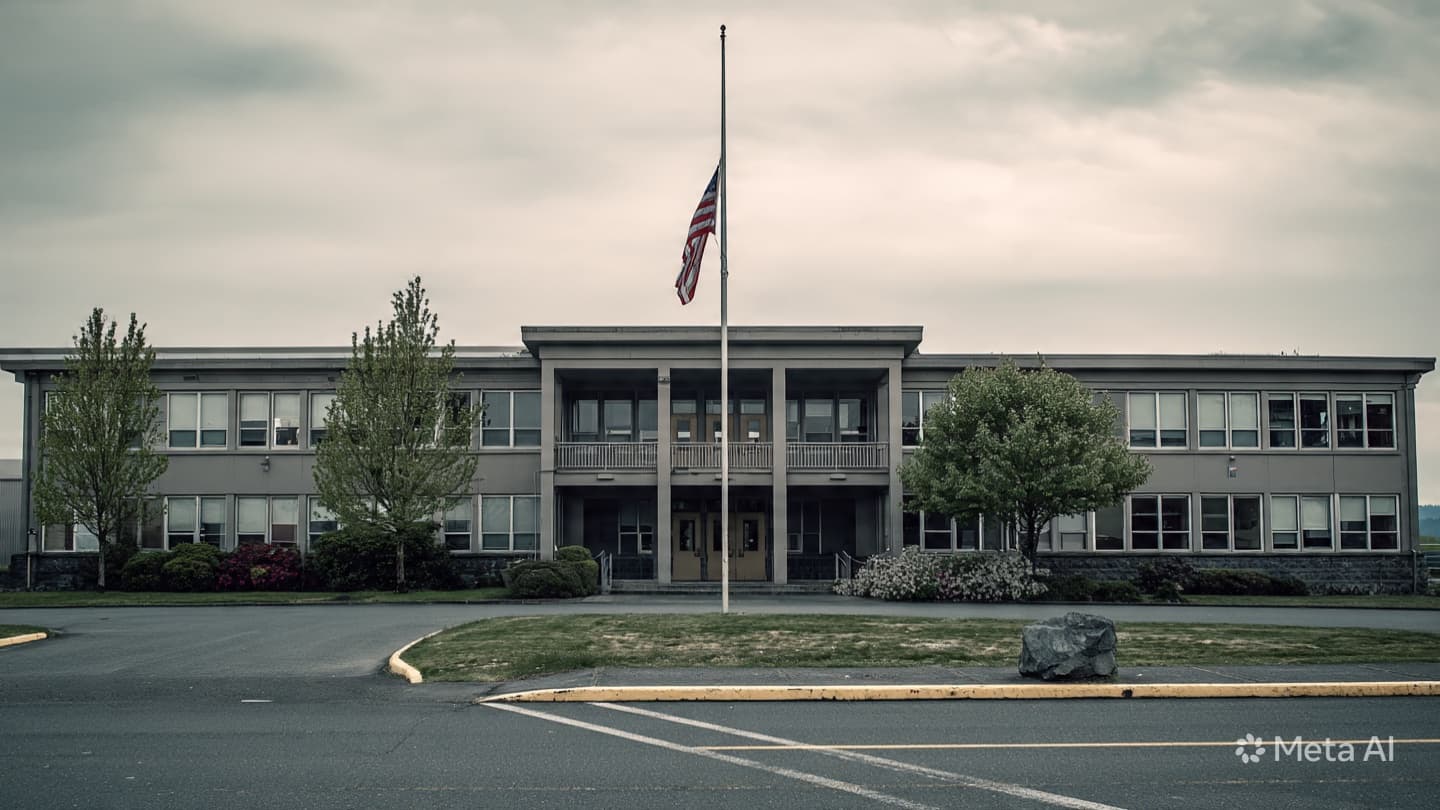
The streets of Axel and the surrounding rural villages have grown quiet, as if the very air has adopted the somber tempo of the community’s collective heart. In the wake of the collision that claimed the lives of four, including three students and an adult, a profound, heavy silence has settled over the region. One observes the rhythm of life slowing, the usual bustle of the morning replaced by a stillness that feels both sacred and fragile. It is a time for shared breath, for the turning of eyes toward one another, and for the silent, necessary work of acknowledging a loss that has shaken the foundation of the area.
There is a visceral, haunting quality to the way the community has responded. Flowers appear at the edge of the N290 not as an afterthought, but as an extension of the public spirit. Each bloom, placed with steady, shaking hands, serves as a testament to the lives lost—a parent and three young souls who were on their way to learn and to grow. One walks through the region and feels the weight of this mourning, an invisible shroud that drapes over the schools and the homes, binding everyone in a shared, painful understanding.
The tragedy of the school cycling trip brings an added layer of intimacy to the sorrow. These were children whose lives were woven into the tapestry of the community in ways that are quiet yet deeply felt, children who represented the best of our collective care and protection. To lose them is to confront the vulnerability of the very future we are striving to build. One sees it in the eyes of the parents, in the somber faces of the teachers, and in the quiet, reflective stance of those who stand in solidarity with the families who are now navigating the unthinkable.
In these moments, the language of consolation often feels inadequate, a series of hollow phrases against the vastness of the void. Yet, the community finds its strength not in words, but in presence. There is a profound, editorial necessity in the way we gather, in the way we hold space for each other’s grief, and in the way we recognize that our individual pain is a piece of the communal whole. It is a slow, difficult process, one that requires the patience to sit with the sadness before one can ever hope to begin moving forward.
The official response, from the Prime Minister’s expression of solidarity to the local vigils, has been a mirror to the town’s own internal state. We are seeing a reflection of the importance we place on the sanctity of our children’s lives and the depth of our commitment to those who care for them. One watches the news and reads the statements, but the true pulse of the mourning is found in the town square, in the whispered conversations, and in the simple, quiet act of being there for one another.
As the days turn into weeks, the process of mourning will continue to unfold, evolving from the initial shock into a more settled, reflective state. We are learning that grief is not a destination but a landscape that must be traversed with care. It is a testament to the resilience of the community that it can hold this much sadness without breaking, that it can maintain its poise even as its heart is heavy. One notes the way the towns continue, in their slow, muted way, to honor the memories of those who were taken.
Reflection here leads one to consider the interconnectedness of our lives. When a car, a cycling group, and a rural road collide, it is more than a failure of mechanics; it is a rupture in the social fabric. We are reminded, in this time of mourning, that we are responsible for one another’s safety, one another’s children, and one another’s peace. The loss of these four lives has served as a painful, permanent lesson in the fragility of our shared existence, a lesson that the region will carry forward in every movement and every interaction.
In the end, the mourning in Zeeland is an act of love. We grieve because we have cared, and we remember because the lives that were lost had profound, lasting meaning. As the community moves toward a new, altered future, it does so with the names of the victims etched into its memory, a collective vow to cherish the precious, fleeting nature of every day. We walk softly, we speak gently, and we hold the light of their memory in the quiet, enduring corners of our shared, somber landscape.
The communities surrounding Axel and Vogelwaarde remain in a period of deep reflection and official mourning following the June 11 collision. Local schools and public institutions have held moments of silence to honor the victims, including the three students and the accompanying chaperone. Support centers have been established for the families and the survivors, who continue their recovery. While the region begins to process the tragedy, a sense of unity prevails, with national leaders and local residents alike expressing enduring solidarity with those most affected by the loss.
Note: This article was published on BanxChange.com and is powered by the BXE Token on the XRP Ledger. For the latest articles and news, please visit BanxChange.com