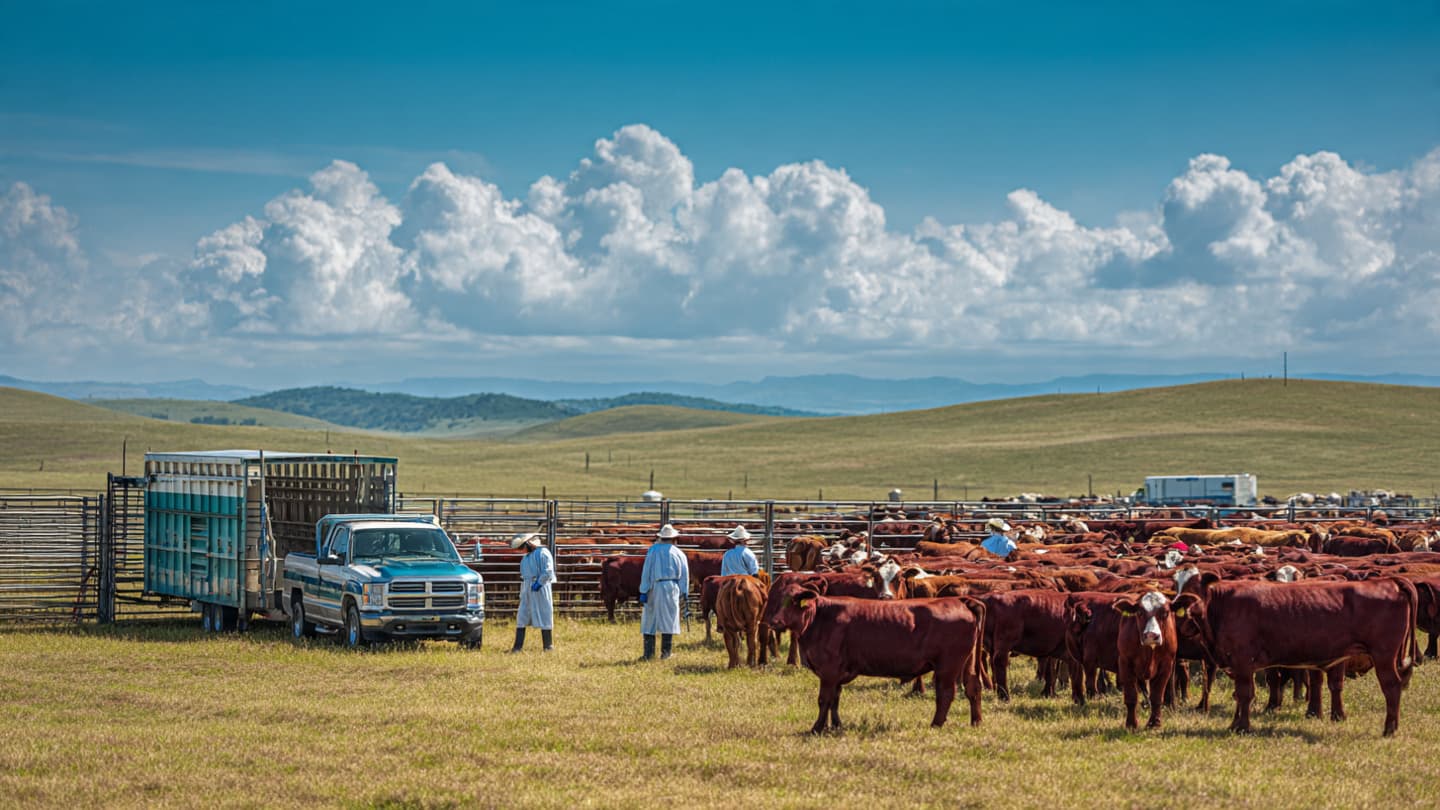
Across the vast landscapes of North America, livestock farming has long depended on a delicate balance between nature, science, and vigilance. Ranchers understand that prosperity is often tied not only to weather and markets but also to the health of the animals under their care. Recently, attention has turned toward a familiar but unwelcome threat: the flesh-eating screwworm.
U.S. agricultural authorities have increased monitoring and containment efforts following concerns about the parasite's movement closer to American territory. While the screwworm was eradicated from the United States decades ago, recent detections in parts of Central America and Mexico have renewed concerns among animal health officials.
The screwworm is not a typical pest. Unlike many insects that feed on dead tissue, screwworm larvae infest living animals, creating wounds that can become increasingly severe if left untreated. Livestock, wildlife, and in some cases even pets can be affected.
Officials are responding through surveillance programs, border inspections, and cooperation with neighboring countries. The goal is to identify potential outbreaks quickly and prevent the parasite from becoming established in new areas.
Experts note that successful containment efforts in the past relied heavily on scientific innovation. One of the most effective tools involved releasing sterile male flies into affected regions, disrupting reproduction cycles and gradually reducing populations.
The current concern highlights the interconnected nature of modern agriculture. Animal health challenges do not recognize national boundaries, making international cooperation an essential component of disease and pest management strategies.
For ranchers and livestock producers, vigilance remains critical. Early detection can significantly reduce the impact of infestations, helping protect both animal welfare and agricultural productivity.
The economic implications are also substantial. A widespread outbreak could affect livestock production, trade activities, and veterinary resources. Preventive action is therefore viewed as an investment in long-term agricultural stability.
Researchers continue to monitor developments while refining response strategies. Advances in diagnostics, surveillance technology, and pest control methods provide additional tools that were unavailable during earlier decades.
For now, authorities stress that the situation remains manageable. Yet the renewed attention serves as a reminder that protecting agricultural systems often requires constant awareness of even the smallest threats moving quietly across the landscape.
AI Image Disclaimer Graphics are AI-generated and intended for representation, not reality.
Sources Reuters U.S. Department of Agriculture Washington Post Animal health agencies Agricultural industry reports
Published by Banx Network. This article is part of the Banx decentralized media programme, powered by the BXE token on the XRP Ledger.