The universe is often imagined as a cold, sterile void, but recent discoveries suggest it may be far more chemically rich and perhaps even sweetly scented than we assumed. Astronomers have detected traces of erythrulose, a simple sugar found in raspberries, within a massive dust cloud near the center of the Milky Way. This finding is not merely a culinary curiosity; it is a profound clue to the origins of life. It invites us to reflect on the interconnectedness of cosmic chemistry and biological potential, suggesting that the building blocks of life are not unique to Earth but are scattered across the galaxy like stardust.
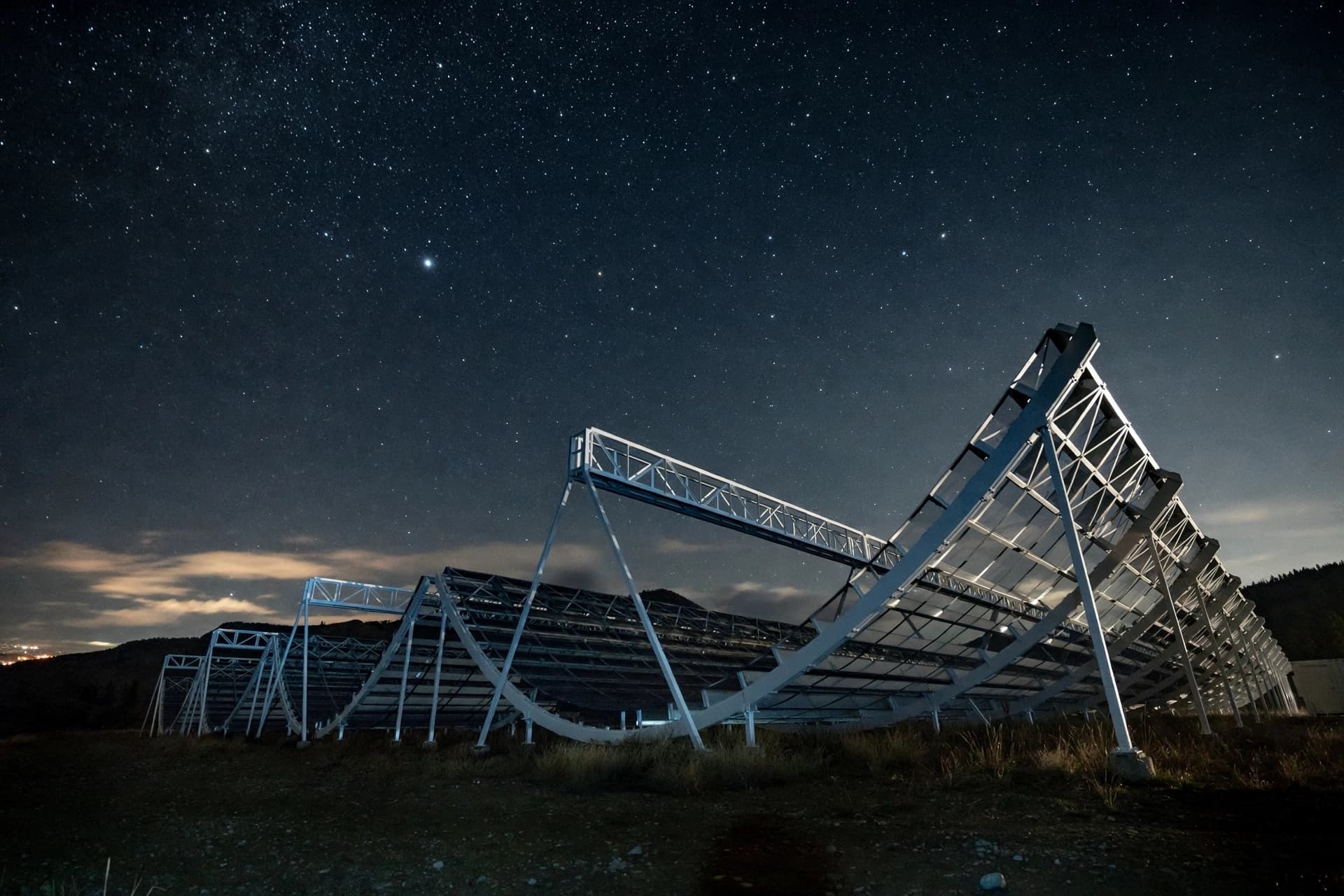
Body: The detection was made using advanced radio telescopes, which can identify specific molecular signatures by analyzing the light emitted by gas clouds. Erythrulose is a ketose sugar, structurally similar to other sugars essential for life, such as ribose. Its presence in interstellar space indicates that complex organic molecules can form naturally in the harsh conditions of the cosmos. This challenges the notion that life’s ingredients must be synthesized solely within planetary environments.
For astrobiologists, this discovery is a significant milestone. It supports the theory that prebiotic chemistry—the chemical reactions that precede life—can occur in space. These molecules may have been delivered to early Earth via comets and meteorites, seeding our planet with the necessary components for life to emerge. It transforms our understanding of abiogenesis from a local miracle to a universal possibility.
The dust cloud where the sugar was found is a stellar nursery, a region where new stars and planets are forming. The presence of organic molecules in these cradles of creation suggests that young planetary systems may start with a head start in chemical complexity. It raises the tantalizing question of whether life could be more common in the universe than we previously thought.
Identifying specific sugars in space is technically challenging due to the vast distances and weak signals involved. The success of this detection highlights the precision of modern astronomical instruments. It demonstrates how technology allows us to "smell" the cosmos, detecting chemical compounds that are invisible to the naked eye but distinct in their spectral fingerprints.
Public interest in such findings is often driven by the relatable nature of the discovery. The idea of "raspberry sugar" in space captures the imagination, making abstract science accessible and engaging. It bridges the gap between the everyday experience of eating fruit and the grand scale of galactic evolution. This connection fosters a sense of wonder and curiosity about our place in the universe.
However, scientists caution against overinterpretation. While erythrulose is a sugar, it is not direct evidence of life itself. It is a precursor, a step along the path rather than the destination. Nevertheless, its presence confirms that the universe is capable of producing the complex chemistry required for life. It is a foundational piece of the puzzle.
As research continues, astronomers will look for other complex organic molecules in similar regions. Each discovery adds depth to our understanding of cosmic chemistry. The goal is to map the distribution of these building blocks, creating a clearer picture of how life might arise elsewhere. It is a journey of exploration that expands our horizons.
Closing: In the end, the detection of raspberry sugar in the Milky Way is a reminder of the universe’s creative potential. It suggests that the ingredients for life are woven into the fabric of space itself. As we continue to explore, the hope is that we will uncover more secrets, deepening our appreciation for the cosmic connections that bind us all.
AI Image Disclaimer: Please note that any accompanying visuals for this narrative are artificially generated interpretations meant to evoke the spirit of the story, not documentary evidence.
Sources: The Guardian ABC News (Australia) National Radio Astronomy Observatory
Published by Banx Network. This article is part of the Banx decentralized media programme, powered by the BXE token on the XRP Ledger.