Cities often evolve the way rivers do. They shift gradually, carving new paths through familiar ground while communities decide whether the changes feel like progress or disruption. Every adjustment to a street, a sidewalk, or a public square can become a conversation about how people wish to share the spaces they call home.
That conversation is unfolding in Hobart, where a street trial designed to reshape traffic movement and public access has generated a range of opinions among residents, business owners, and visitors. Local authorities have encouraged public feedback as they assess whether the temporary changes should become permanent.
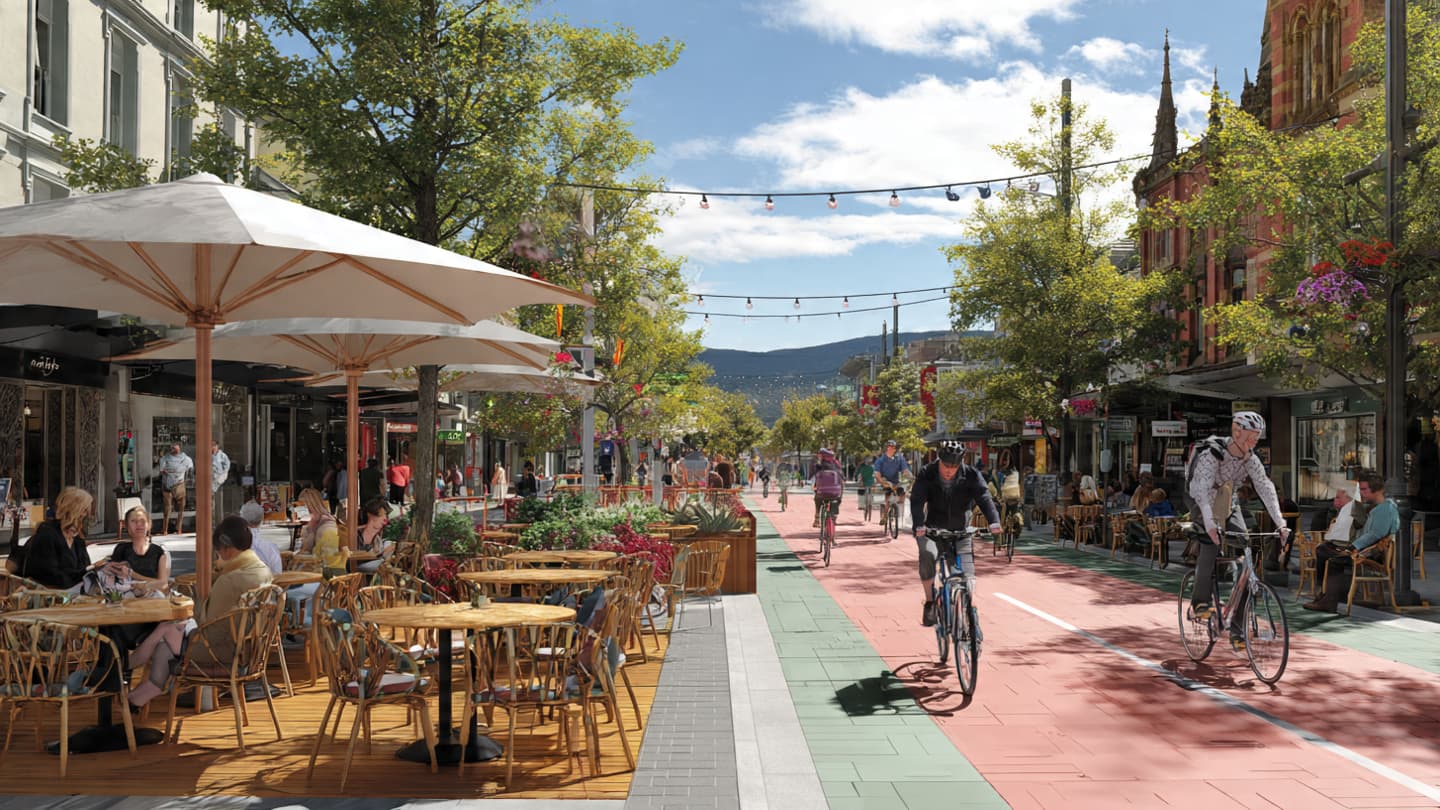
The trial has focused on altering how vehicles, cyclists, and pedestrians move through a busy section of the city. Supporters argue that the changes create a safer and more welcoming environment, particularly for people walking, dining outdoors, or spending time in public spaces.
Others have expressed concern about traffic flow, parking access, and the potential impact on local businesses. For some traders, accessibility remains closely tied to customer activity, making street redesign projects a matter of economic importance as well as urban planning.
Public consultations have become a central part of the process. Community surveys, council meetings, and public submissions are being used to gather opinions from residents who interact with the area in different ways and at different times of day.
Urban planners frequently describe such trials as opportunities to test ideas before long-term commitments are made. Temporary infrastructure allows councils to collect practical data while observing how behavior changes once people adapt to a redesigned environment.
The discussion in Hobart reflects a broader trend seen in cities across Australia and internationally. Local governments are increasingly experimenting with street layouts that prioritize walking, cycling, outdoor dining, and public gathering areas alongside traditional vehicle access.
At the same time, debates surrounding these projects often reveal competing expectations about what city centers should provide. While some residents welcome quieter and more pedestrian-friendly spaces, others remain focused on convenience, accessibility, and transport efficiency.
The trial remains under review, with council representatives expected to consider community feedback before making decisions about the future design of the street. Residents have been encouraged to continue participating in the consultation process.
AI Image Disclaimer: Certain visual materials accompanying this article may be AI-generated for illustrative and presentation purposes.
Sources (Verification Check): The Mercury, Hobart City Council materials, ABC News Australia
Published by Banx Network. This article is part of the Banx decentralized media programme, powered by the BXE token on the XRP Ledger.