
Key Highlights
- Rising Trend:Increasing numbers of individuals are opting for at-home ear piercings.
- Health Risks:Experts report severe complications from improper techniques.
- Professional Advice:Health authorities urge seeking licensed professionals for piercings.
The desire for self-expression often begins with small details—a new hairstyle, a favorite accessory, or a carefully chosen piece of jewelry. For many, ear piercings represent a personal style choice. However, health professionals are increasingly warning that when these procedures are performed at home, the consequences can extend far beyond aesthetics, sometimes resulting in permanent injury.
In the United Kingdom, professional piercers and wound-care specialists have reported a growing number of individuals seeking medical assistance after using at-home piercing kits or piercing guns purchased online. Experienced piercers have noted alarming cases involving severe cartilage damage, infections, and permanent deformities that cannot be fully corrected. One professional piercer recounted treating clients whose ear cartilage had been "completely shattered," resulting in a permanently misshapen ear.
Unlike the soft tissue of the earlobe, cartilage has a limited blood supply, making it more susceptible to infection and slower to heal after trauma. Medical literature has long documented that infections in cartilage can lead to lasting structural damage if treatment is delayed. Experts explain that piercing guns can create greater tissue trauma because they force relatively blunt jewelry through the ear rather than using a sterile hollow needle designed for body piercing. This method increases the risk of complications significantly.
The report also highlights concerns regarding the easy online access to inexpensive home piercing kits. Some teenagers interviewed admitted to purchasing kits without age verification after being influenced by self-piercing videos on social media. Health professionals believe that stronger safeguards and greater public awareness could help reduce preventable injuries associated with these practices.
Medical specialists have reported treating complications such as embedded jewelry, severe infections, granulomas, and damaged cartilage, which occasionally require emergency treatment or reconstructive surgery. While many piercings heal without difficulty, delayed treatment of complications can increase the likelihood of permanent changes to the ear's appearance.
Professional organizations, including the UK Association of Professional Piercers, have called for tighter regulation of at-home piercing devices. They continue to encourage individuals to seek licensed professionals who adhere to recognized hygiene and safety standards. Public health authorities similarly advise against using do-it-yourself piercing kits whenever possible.
As ear piercing remains a popular form of personal expression, healthcare professionals emphasize that careful preparation, sterile techniques, and prompt medical attention for signs of infection are essential. Their message is not to discourage self-expression but to help ensure that a simple cosmetic choice does not lead to long-term medical concerns.
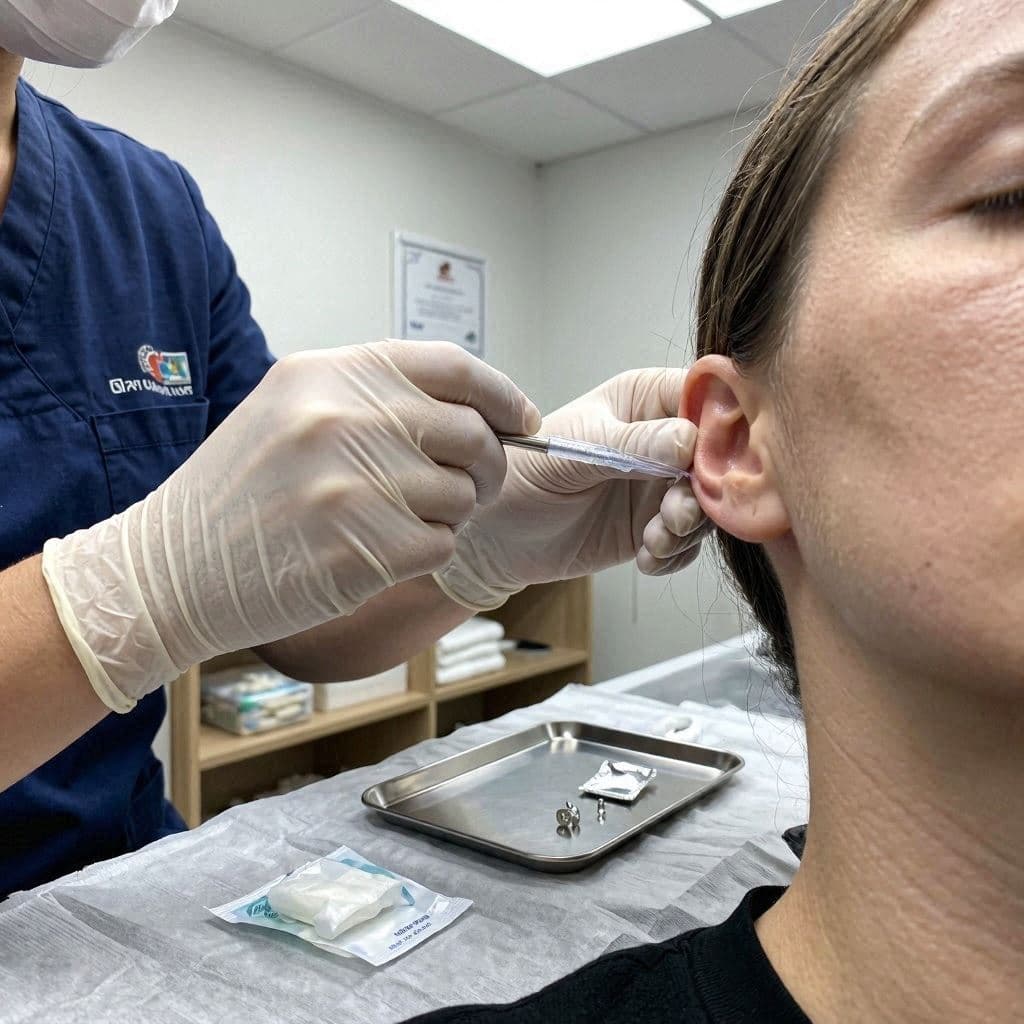
AI Image Disclaimer: The visual accompanying this article is an AI-generated illustration created to represent the topic and should not be interpreted as an actual photograph of the reported individuals or events.
Published by Banx Network. This article is part of the Banx decentralized media programme, powered by the BXE token on the XRP Ledger.



