Space exploration often unfolds less like a straight road and more like a long river bending quietly through darkness. Spacecraft travel for years across silent distances, using the gravity of planets like carefully placed stepping stones. Along these journeys, every maneuver becomes part engineering calculation and part patient navigation through an environment larger than ordinary imagination can easily hold.
NASA’s Psyche spacecraft recently performed a flyby of Mars as part of its ongoing journey toward the asteroid Psyche, a rare metal-rich object located in the asteroid belt between Mars and Jupiter. The maneuver was designed to use Mars’ gravitational pull to adjust the spacecraft’s speed and trajectory, helping conserve fuel during the mission.
Launched in October 2023, the Psyche mission aims to study an asteroid believed to contain unusually high amounts of metal, including iron and nickel. Scientists are interested in the asteroid because it may represent the exposed core of an early planetary body that lost its outer rocky layers billions of years ago.
The Mars flyby allowed mission teams to test spacecraft systems while collecting calibration data from the Red Planet. Although Psyche is not intended to conduct a detailed Mars science mission, the close approach provided engineers with valuable operational experience during a critical phase of the journey.
NASA officials described the mission as an opportunity to better understand how planets formed during the early history of the solar system. Researchers believe studying metal-rich asteroids could offer clues about planetary interiors that are otherwise hidden beneath thick layers of rock and magma.
The Psyche spacecraft also carries advanced technologies, including a deep-space laser communication experiment developed by NASA. The system aims to test faster methods of transmitting information across vast distances, potentially improving future communication capabilities for deep-space missions.
Traveling through space requires extraordinary precision. Even slight adjustments in timing or trajectory can influence a spacecraft’s path over millions of miles. Gravity assists, like the recent Mars flyby, have become an important technique in modern exploration because they allow missions to reach distant destinations more efficiently.
Scientists expect Psyche to arrive at its target asteroid in 2029. Once there, the spacecraft will map the asteroid’s surface, analyze its composition, and study its magnetic properties to better understand its structure and origins.
As the spacecraft continues beyond Mars and deeper into the solar system, the mission reflects humanity’s steady effort to study not only distant worlds, but also the hidden history contained within them. Quietly crossing the dark between planets, Psyche carries questions shaped billions of years ago.
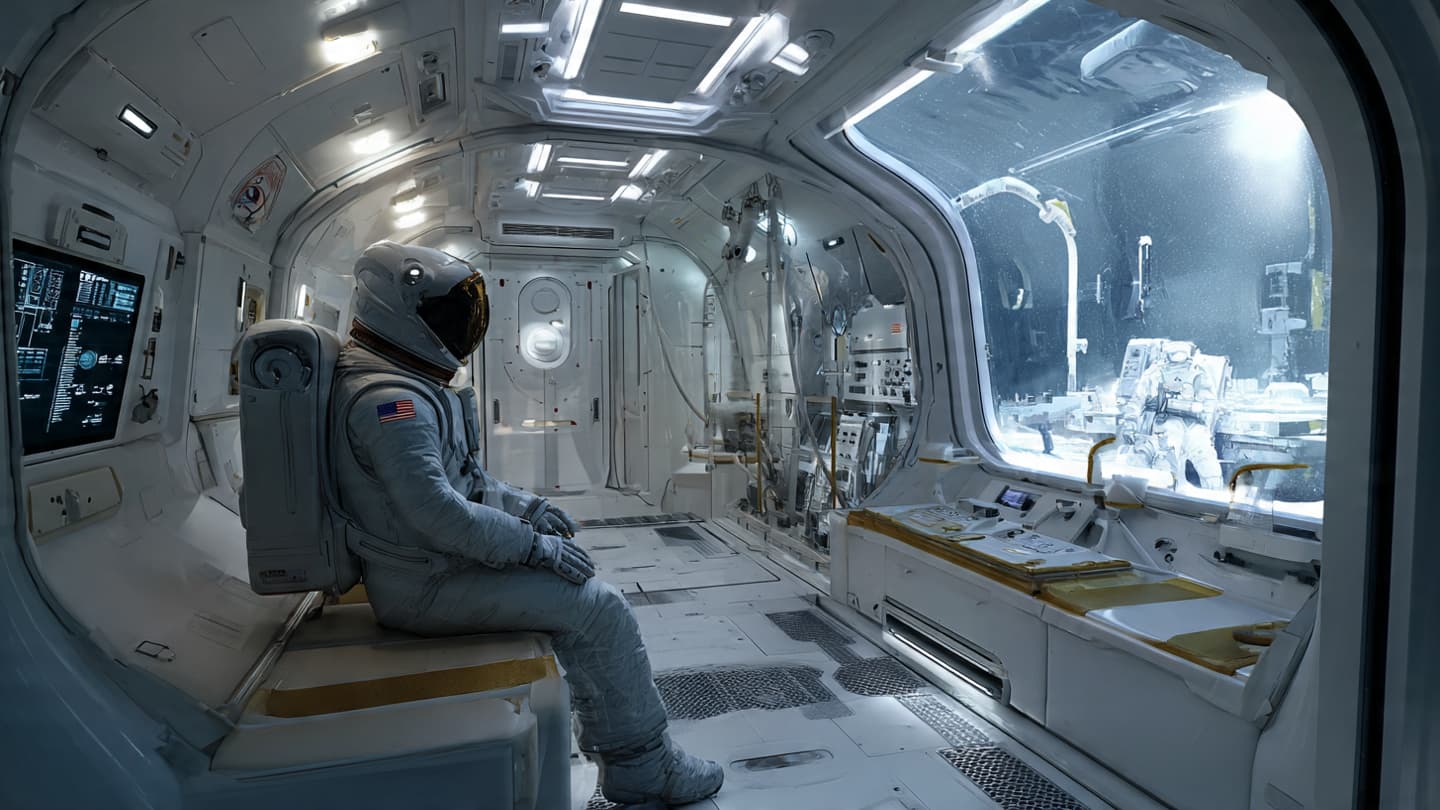
AI Image Disclaimer: Several visual depictions connected to this article were created using AI-generated space imagery for illustration purposes.
Sources: NASA, Space.com, Jet Propulsion Laboratory, Reuters, Astronomy Magazine
Published by Banx Network. This article is part of the Banx decentralized media programme, powered by the BXE token on the XRP Ledger.