
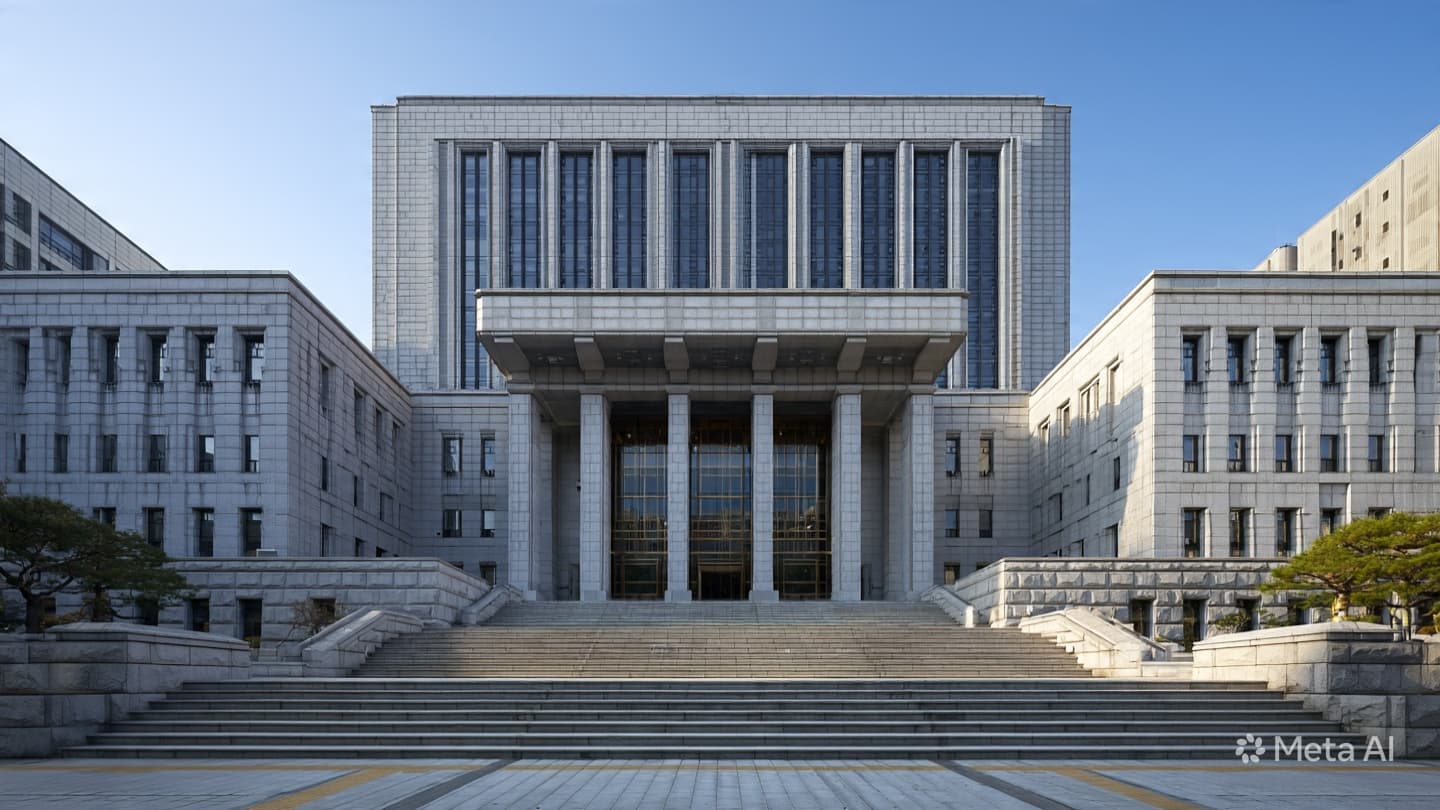
The halls of the Seoul Central District Court are built from heavy, pristine granite, architectural spaces designed to project an unyielding commitment to the rule of law over political impulse. Inside these chambers, the atmosphere is dictated by a clinical, measured examination of evidence, entirely removed from the high-stakes theater of partisan politics. For generations, the public has looked to this institution as the ultimate referee of the republic's democratic integrity, a court where the actions of the most powerful intelligence and military elites must eventually face the sober evaluation of constitutional law.
Yet, this institutional sanctity was brought into sharp focus when a panel of three judges handed down an eighteen-month prison sentence to Cho Tae-yong, the former director of the National Intelligence Service (NIS). The criminal trial, which centered on allegations of deliberate perjury and the creation of false public documents during hearings concerning former President Yoon Suk Yeol’s brief 2024 martial law declaration, concluded with a decisive rejection of the defendant’s legal maneuvers. The state’s verdict marks a rare, public fracture in the shield of immunity that has historically surrounded the upper echelons of South Korea's espionage community.
The mechanics of the perjury case involved a meticulous parsing of testimonies delivered by the former intelligence chief under oath before the National Assembly. Prosecutors argued that the executive knowingly falsified his statements by claiming he had never received or reviewed highly sensitive, martial law-related planning documents from the presidential office. In its final judgment, the court noted that the defendant chose to distribute false official papers and distort factual timelines in a calculated attempt to minimize his individual legal responsibility, a decision that directly undermined the oversight functions of the state.
The impact of the sentence extends far beyond the career of a single official, serving as a profound warning to an intelligence network that has frequently struggled with issues of domestic political alignment. The court explicitly emphasized that the nature of the crime is exceptionally heavy because the integrity of public testimony forms the baseline of transparent governance. While special counsel teams had initially sought a far more severe seven-year term by attempting to prove a broader failure to report the military plot, the final eighteen-month sentence stands as a precise, legally solid rebuke of the perjury itself.
Deconstructing an institutional cover-up requires investigators to look past official denials and unearth the digital and physical movements of communication logs across multiple government networks. The specialized task force assigned to the inquiry spent months analyzing encrypted phone lines, internal memos, and secure surveillance recordings from the intelligence headquarters to build an airtight timeline of events. This statistical and physical forensics work transformed routine bureaucratic actions into explicit pieces of incriminating evidence that left the defense with few viable arguments.
Within the corporate and administrative suites of the capital, the reaction to the judgment has been characterized by a heavy, pragmatic silence, with few former colleagues willing to challenge the court’s findings. The embarrassment is particularly acute for an agency that relies on absolute institutional credibility to coordinate sensitive intelligence-sharing agreements with international allies. The domestic political fallout could be long-lasting, prompting calls from civil society groups for a comprehensive legislative restructuring of the intelligence apparatus to ensure greater democratic accountability.
The legal mechanisms will now move forward with a mechanical, indifferent precision as the former chief prepares to be processed into the state correctional system. The defense has indicated its intent to appeal the ruling to a higher court, but legal experts note that the factual findings regarding the falsified official documents will be incredibly difficult to overturn. The message from the Seoul judiciary remains uncompromising: the obligation to speak the truth under the law applies universally, regardless of the security clearances an individual may hold.
As the late afternoon sun casts long shadows across the busy intersections of Seocho-gu, the normal business of the capital proceeds with its typical, frantic energy. The crowds stream out of the subway stations, the offices remain illuminated into the night, and the city moves forward under the watchful eyes of a society that has grown intensely vigilant against abuses of executive power. The intelligence file is cataloged away into the active annals of national judicial history, leaving a stark reminder that even the most powerful state secrets must eventually surrender to the light of the courtroom.
Note: This article was published on BanxChange.com and is powered by the BXE Token on the XRP Ledger. For the latest articles and news, please visit BanxChange.com