
The night sky often appears calm and still, yet telescopes reveal a universe filled with movement, growth, and interaction. Every deep-space image captures not only distant light but also moments from different chapters of cosmic history. A recent observation from the Hubble Space Telescope offers another striking glimpse into this vast and layered universe.
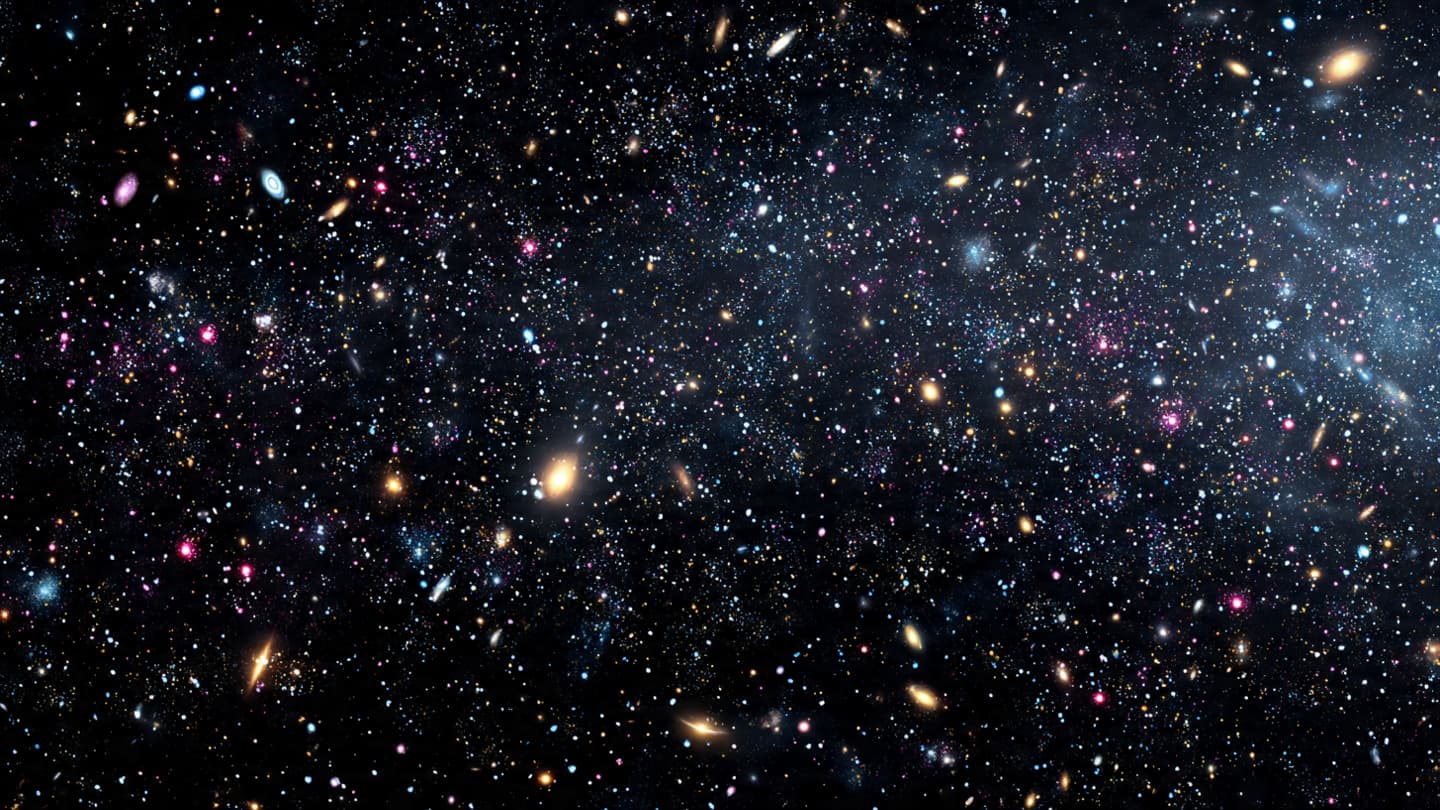
The newly highlighted image showcases a dense collection of galaxies gathered across an expansive region of deep space. Such observations allow astronomers to examine structures that formed over billions of years and continue evolving through gravitational interactions.
The has spent decades providing detailed views of distant galaxies, nebulae, and star clusters. Its observations have transformed scientific understanding of the universe while producing some of the most recognizable astronomical images ever captured.
Galaxy groups and clusters represent some of the largest gravitationally bound structures in existence. Within these environments, galaxies can influence one another through close encounters, mergers, and long-term gravitational effects that shape their development.
The image's visual complexity reflects enormous distances and timescales. Light reaching Hubble from these galaxies may have traveled millions or even billions of years before arriving at the telescope's instruments, effectively allowing astronomers to look back in time.
Researchers use observations like these to study galaxy formation, dark matter distribution, and large-scale cosmic structure. Detailed imagery helps scientists compare theoretical models with real astronomical data gathered from across the universe.
Beyond their scientific value, deep-space photographs often inspire public interest in astronomy. The intricate patterns, colors, and arrangements visible in such images offer a reminder of the scale and diversity of the cosmos.
As new telescopes join ongoing observational efforts, Hubble continues contributing valuable scientific data. Its long operational history has created one of the most important astronomical archives ever assembled.
The latest view of this galactic gathering demonstrates how even a single image can support both scientific investigation and public curiosity. Through observations like these, astronomers continue expanding humanity's understanding of the universe beyond our immediate surroundings.
AI Image Disclaimer: Certain visual elements accompanying this report may be AI-generated interpretations inspired by publicly available astronomical imagery.
Source Verification Check: NASA, ESA, HubbleSite, Space Telescope Science Institute, Space.com
Published by Banx Network. This article is part of the Banx decentralized media programme, powered by the BXE token on the XRP Ledger.



