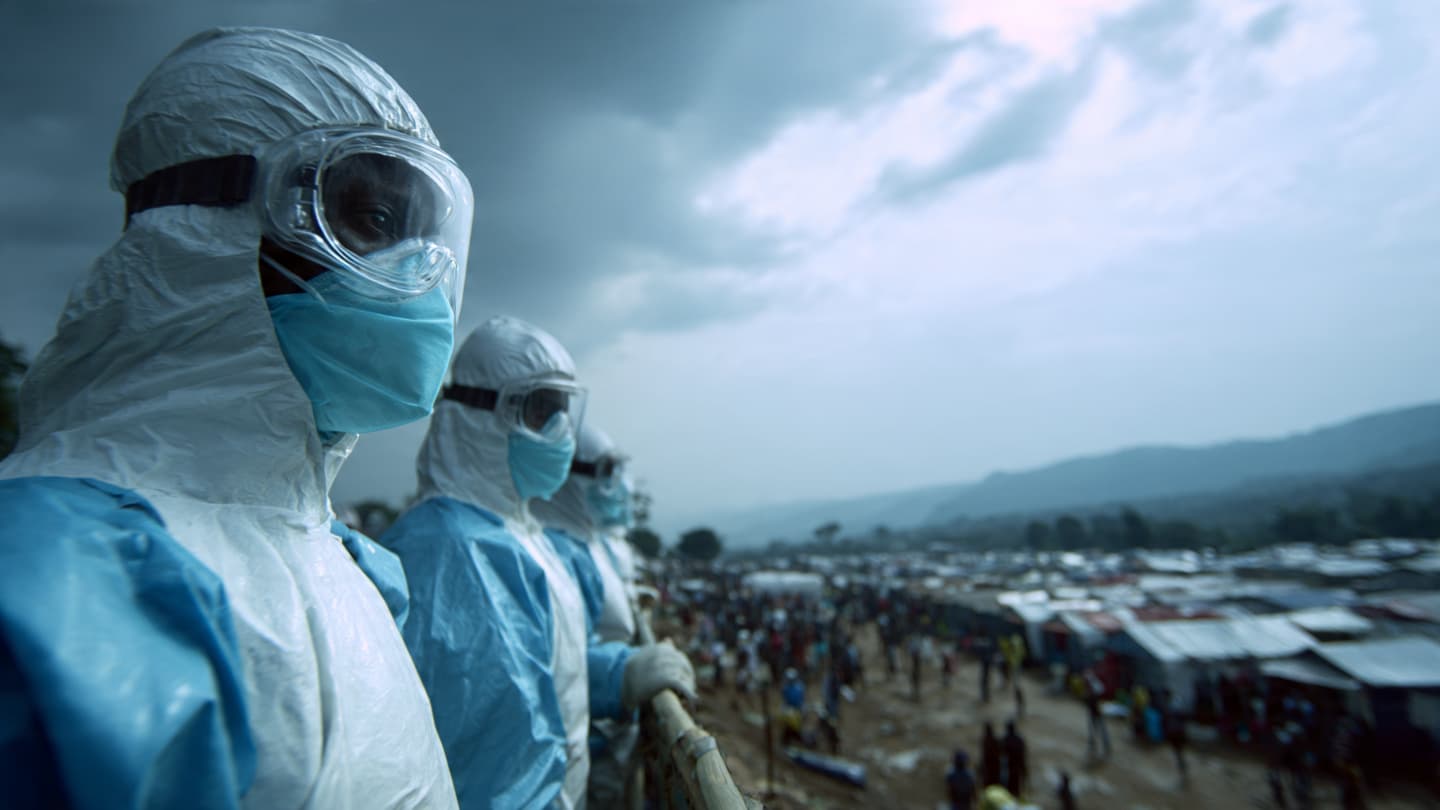
In some parts of the world, public health is measured not only by hospitals and medicine but by trust, distance, and the speed at which help can arrive. When an outbreak spreads across communities already facing hardship, the challenge becomes more than medical. It becomes a test of coordination, resilience, and the fragile connection between fear and hope.
Health authorities and humanitarian organizations have raised concerns over the accelerating Ebola outbreak in the Democratic Republic of Congo, where cases continue to rise in the eastern province of Ituri. The region has become the center of the country’s 17th recorded Ebola outbreak.
World Health Organization Director-General Tedros Adhanom Ghebreyesus traveled to the hardest-hit areas as international agencies sought to strengthen containment efforts. During his visit, he urged communities to seek treatment early and follow safe burial practices to reduce transmission.
The outbreak involves the Bundibugyo strain of Ebola, a rare variant for which there are currently no approved vaccines or specific treatments. Health workers have been relying on isolation measures, supportive care, and public education campaigns to limit spread.
According to health officials, confirmed and suspected cases have continued increasing in recent weeks. The World Health Organization has elevated its national risk assessment to “very high,” reflecting concerns that transmission is moving faster than response capacity in some areas.
Aid groups including Médecins Sans Frontières have described the situation as alarming, warning that shortages of supplies, funding, and healthcare infrastructure are complicating efforts to contain the disease.
The response has also faced challenges linked to community resistance, security concerns, and regional instability. In some locations, mistrust toward medical interventions has made public health outreach more difficult, particularly regarding burial procedures that can carry transmission risks.
Neighboring countries have increased monitoring and implemented precautionary measures as officials work to prevent cross-border spread. While some imported cases have been reported outside Congo, international health agencies continue to assess the broader global risk as relatively low.
Health authorities say containing the outbreak will depend heavily on community cooperation, medical support, and sustained international assistance in the weeks ahead.
AI-generated images are included for illustrative purposes and do not depict actual patients or outbreak locations.
Sources: Reuters, Associated Press, World Health Organization, Al Jazeera, Médecins Sans Frontières
Published by Banx Network. This article is part of the Banx decentralized media programme, powered by the BXE token on the XRP Ledger.

.jpg&w=3840&q=75 "Qantas Grounds Plane After Passengers Report Bedbug Bites")