
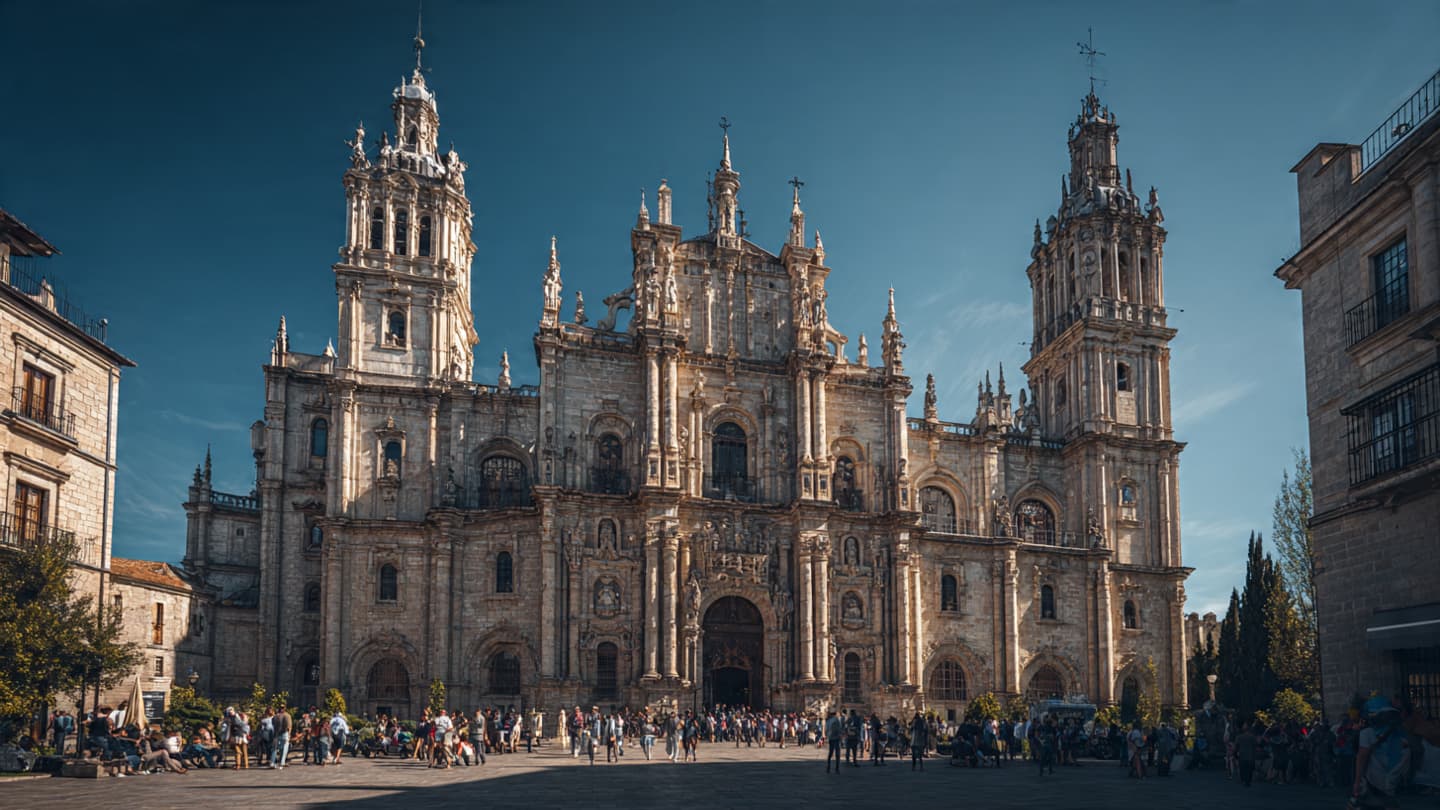
There are moments when a journey becomes more than a journey. A visit, a speech, or a gathering can reveal the deeper questions a society is asking itself. Pope Leo's arrival in Spain appears to be one of those moments, unfolding in a country where questions of faith, identity, and public life continue to evolve.
Spain's relationship with the Catholic Church stretches across centuries. Historic cathedrals, religious traditions, and cultural celebrations remain deeply woven into the nation's identity. Yet modern Spain is also a society shaped by demographic change, political diversity, and growing secular attitudes.
The papal visit comes during a period of visible polarization. Debates over migration, economic priorities, social values, and national identity have intensified in recent years. These discussions often extend beyond politics, influencing perceptions of institutions that have historically played prominent roles in public life.
Among those institutions is the Catholic Church. While many Spaniards continue to identify with Catholic traditions, attendance and participation patterns have changed over time. At the same time, disagreements have emerged regarding the Church's approach to social and political issues.
Some conservative groups have expressed frustration with positions adopted by church leaders on topics such as migration and social inclusion. Others argue that these priorities reflect longstanding religious teachings centered on compassion, dignity, and support for vulnerable communities.
Pope Leo has sought to emphasize unity rather than division. Throughout his public appearances, he has encouraged dialogue, mutual respect, and a willingness to listen across ideological differences. His message has focused less on political alignment and more on the shared values that connect communities.
Observers note that similar debates are occurring across Europe. Religious institutions increasingly find themselves navigating complex social environments where traditions are respected but also questioned. Balancing continuity and adaptation has become one of the defining challenges of modern faith communities.
The visit has attracted significant public interest. Crowds have gathered at religious events, while political commentators and social observers continue to examine what the Pope's presence may signify for Spain's evolving relationship with religion.
For many citizens, the discussions sparked by the visit extend beyond theology. They touch on broader questions about identity, belonging, and the role of institutions in a rapidly changing society. Such conversations are likely to continue long after the visit concludes.
As Pope Leo continues his journey through Spain, his message remains centered on dialogue and understanding. Whether viewed through a religious, cultural, or social lens, the visit highlights a nation reflecting on its future while remaining connected to its past.
Note: This article was published on BanxChange.com and is powered by the BXE Token on the XRP Ledger. For the latest articles and news, please visit BanxChange.com