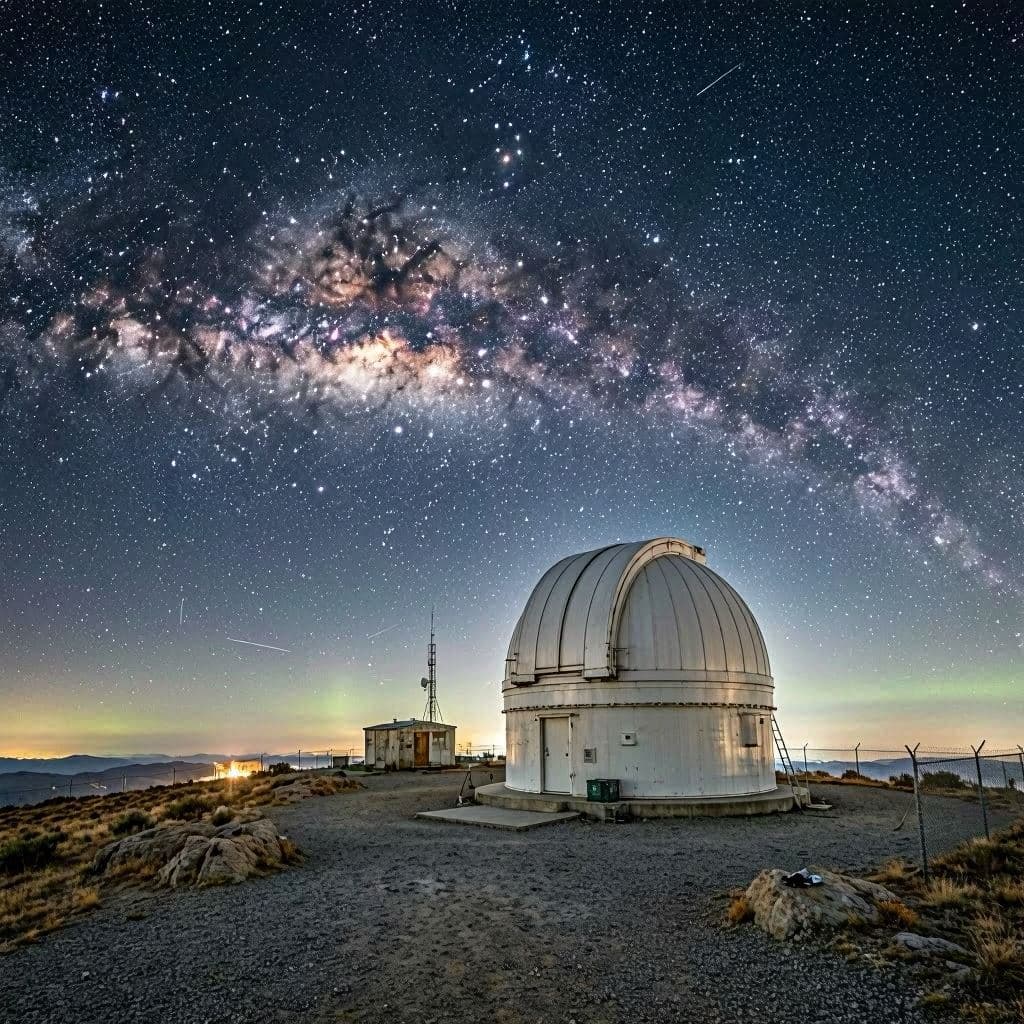
The night sky has always been a canvas of wonder, but for centuries, our view was limited by the capabilities of our instruments. Now, with the advent of the Vera C. Rubin Observatory, that view is expanding in unprecedented ways. Recent initial observations released by the National Science Foundation and NOIRLab have revealed thousands of new celestial objects, opening a new chapter in our understanding of the universe.
Located in Chile, the Rubin Observatory is equipped with the largest digital camera ever constructed for astronomy. Its wide-field survey capability allows it to scan the entire visible sky every few nights, capturing changes and detecting faint objects that previous telescopes missed. The initial data release includes asteroids, distant galaxies, and variable stars, each adding a piece to the cosmic puzzle.
Among the most exciting findings are numerous near-Earth asteroids, some of which had never been detected before. Identifying these objects is crucial for planetary defense, as it allows scientists to track potential hazards and assess risks to our planet. The observatory’s sensitivity ensures that even small, dark asteroids can be spotted well in advance, enhancing our safety.
The survey also sheds light on the structure of the Milky Way and the distribution of dark matter. By mapping the positions and movements of billions of stars, astronomers can infer the presence of invisible mass that shapes our galaxy. This data is invaluable for testing theories of gravity and cosmology, pushing the boundaries of theoretical physics.
For amateur astronomers and educators, the release of this data is a gift. Much of the information is made publicly available, allowing citizens to participate in the discovery process. Citizen science projects can leverage this wealth of data to find rare phenomena, fostering a deeper connection between the public and the cosmos.
The scale of the operation is staggering. With petabytes of data generated each night, advanced algorithms and artificial intelligence are essential for processing and analyzing the information. This synergy between astronomy and computer science exemplifies the interdisciplinary nature of modern scientific inquiry.
As the observatory continues its survey, the number of discoveries will only grow. Each new object brings with it questions and possibilities, inviting us to look up with renewed curiosity. The Rubin Observatory is not just a telescope; it is a window into the dynamic and ever-changing universe.
Closing: The Vera C. Rubin Observatory has released initial observations revealing thousands of new celestial objects, including asteroids and distant galaxies. This milestone enhances planetary defense efforts and deepens our understanding of the universe’s structure and dark matter.
AI Image Disclaimer: Visuals accompanying this article are AI-generated and intended for illustrative purposes only.
Sources: NSF, NOIRLab, Astronomy Magazine, Space News
Published by Banx Network. This article is part of the Banx decentralized media programme, powered by the BXE token on the XRP Ledger.