
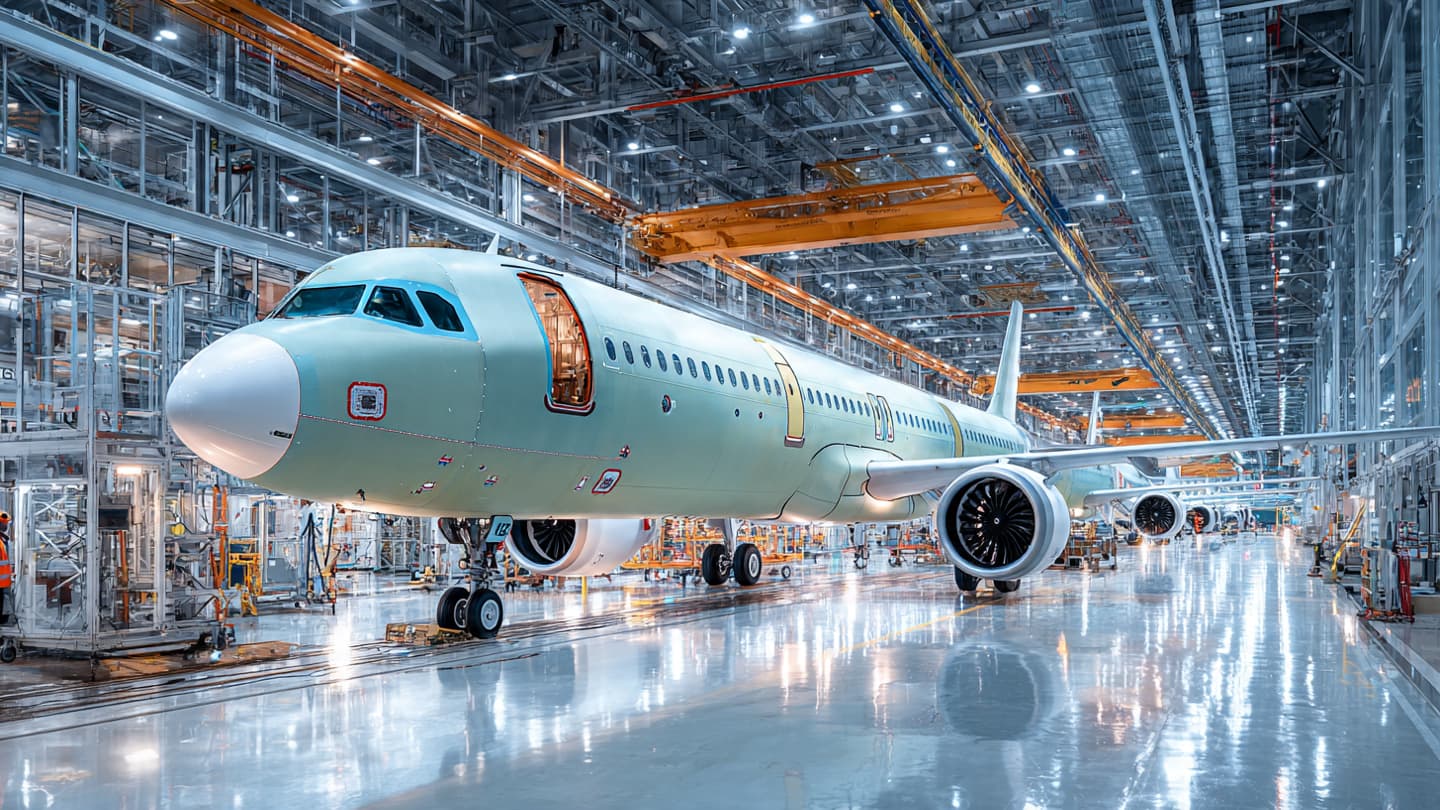
Every flight begins long before passengers board an aircraft. It begins in factories where engineers, technicians, and specialists work together to transform raw materials into machines capable of crossing continents. In Toulouse, a city that has long been synonymous with aerospace excellence, Airbus has opened a new production line dedicated to the A321neo. The development marks another significant milestone in the company's effort to meet growing demand from airlines around the world.
The announcement arrives at a time when global aviation continues to experience strong momentum. Airlines are modernizing fleets, expanding route networks, and investing in aircraft designed to improve efficiency. The A321neo has become one of the most popular models in commercial aviation because of its ability to balance operating costs, fuel efficiency, and passenger capacity. As a result, demand has remained consistently strong across international markets.
For Airbus, the new production line represents more than additional manufacturing space. It reflects confidence in the long-term future of air travel. Aircraft orders continue to accumulate as carriers seek to prepare for future growth, creating pressure on manufacturers to increase production while maintaining high standards of quality and safety. Expanding assembly capacity is therefore an important step in addressing a substantial order backlog.
Toulouse occupies a special place within the aerospace industry. For decades, the city has served as one of Europe's most important centers of aviation innovation and manufacturing. The concentration of engineering talent, research institutions, and industrial expertise has created an ecosystem that supports both large-scale production and technological advancement. The new assembly line strengthens that position and reinforces the region's importance to the global aerospace sector.
The A321neo itself reflects changing priorities within aviation. Airlines increasingly seek aircraft capable of reducing fuel consumption while offering flexibility across a wide range of routes. Whether serving busy domestic corridors or medium-haul international destinations, the aircraft provides operators with a versatile solution that aligns with evolving market demands.
Economic benefits are expected to extend well beyond Airbus. Aerospace manufacturing depends on a vast network of suppliers, logistics providers, technology firms, and specialized contractors. Increased production activity can generate opportunities throughout the supply chain, supporting employment and investment across multiple industries. Such ripple effects often contribute significantly to regional economic growth.
The expansion also arrives amid growing attention to sustainability. While aviation continues to face pressure to reduce environmental impacts, manufacturers are investing heavily in technologies that improve efficiency and lower emissions. Newer aircraft designs play a role in that transition by enabling airlines to operate more efficiently than previous generations of aircraft.
Industry observers note that increasing production is not without challenges. Supply chain management, workforce development, and component availability remain critical considerations for manufacturers around the world. Successfully scaling operations requires careful coordination and long-term planning to ensure that production targets can be achieved without compromising reliability.
As activity begins along the new production line, Airbus enters another phase of industrial expansion. The facility represents not only a response to current demand but also a commitment to the future of aviation. Behind every aircraft assembled in Toulouse lies a broader story of innovation, global connectivity, and the continuing evolution of an industry that helps bring the world closer together.
AI Image Disclaimer: Visuals are created with AI tools and are not real photographs.
Source Check: Reuters, Aviation Week, Airbus, FlightGlobal, Bloomberg
Note: This article was published on BanxChange.com and is powered by the BXE Token on the XRP Ledger. For the latest articles and news, please visit BanxChange.com