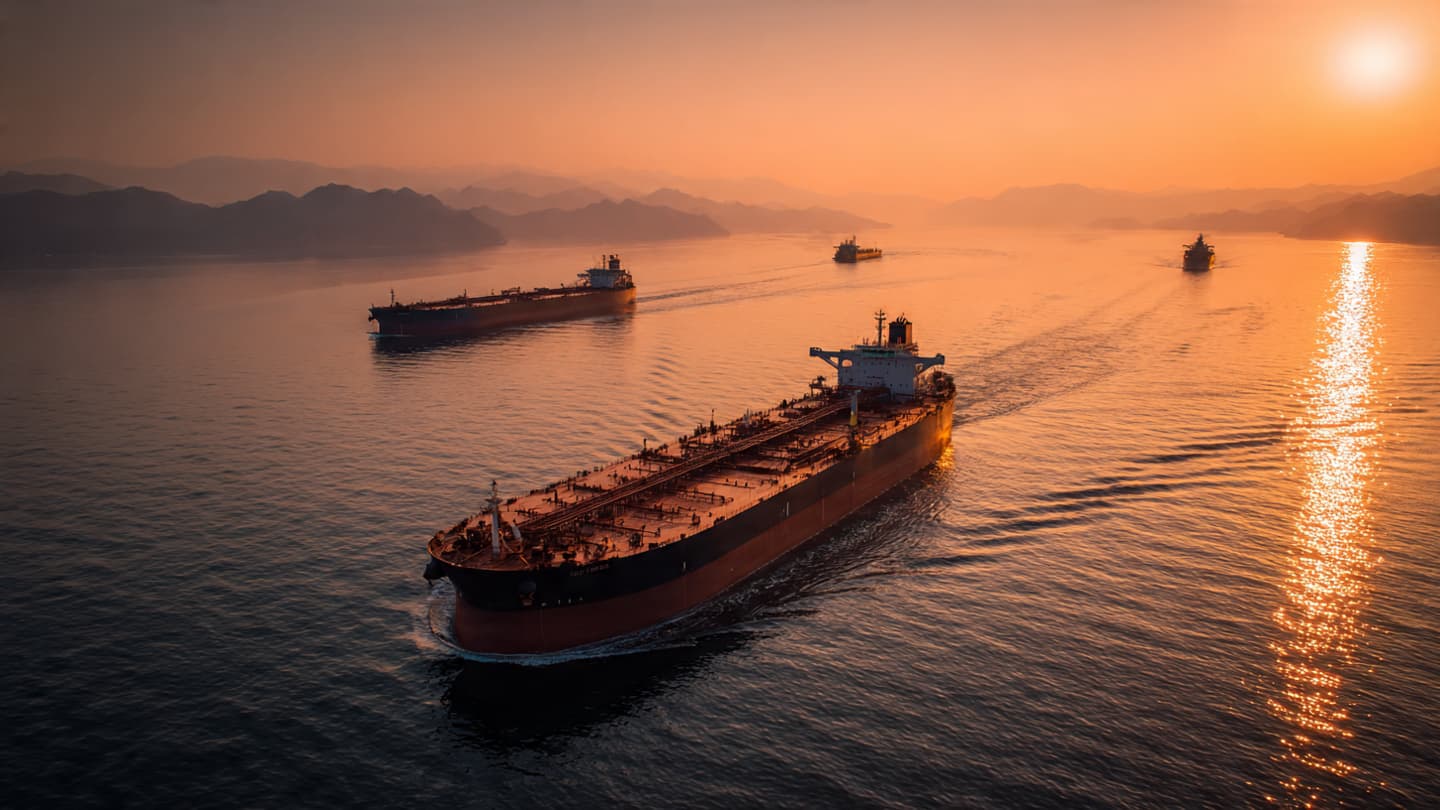
The waters of the Strait of Hormuz have long carried more than oil. They carry tension, negotiation, and the quiet weight of global dependence. Each tanker passing through the narrow channel reflects how geography can shape diplomacy, and how a stretch of sea can influence conversations in capitals thousands of miles away.
Recent reports indicate that Iran and Oman have discussed the possibility of a permanent tolling mechanism for commercial vessels passing through the Strait of Hormuz, despite strong warnings from former U.S. President Donald Trump and opposition from American officials. The discussions come amid fragile diplomatic efforts surrounding the broader conflict involving Iran, the United States, and regional allies.
The Strait of Hormuz remains one of the world’s most strategically important waterways, historically carrying a substantial share of global seaborne oil shipments. Since the outbreak of conflict earlier this year, shipping patterns and regional maritime security have faced continued uncertainty.
Iranian officials have argued that new oversight mechanisms are necessary following military escalation in the region. Reports suggest Tehran has framed the proposal as part of a broader security arrangement intended to regulate safe passage through the strait. Oman, which shares geographic responsibility for the waterway, has not publicly confirmed the full scope of the discussions.
American officials, however, have strongly opposed any permanent tolling system. U.S. Secretary of State Marco Rubio described the idea as unacceptable, warning that allowing fees on international waterways could create wider global precedents affecting maritime trade elsewhere.
The debate arrives at a delicate diplomatic moment. Reports from regional and international media indicate that indirect negotiations involving Iran, the United States, Pakistan, and Gulf states continue behind closed doors, with several governments attempting to prevent renewed military escalation.
Analysts have noted that the issue extends beyond economics. Control and management of the Strait of Hormuz carry symbolic and strategic significance for all parties involved. For Iran, the waterway represents leverage during negotiations. For global markets, it represents stability and continuity in energy supply.
Public discussion online has reflected uncertainty about how such a proposal could be implemented in practice. Some commentators questioned whether Oman would support a permanent arrangement, while others viewed the discussions primarily as negotiating leverage rather than settled policy.
Even as diplomacy cautiously continues, the situation around the Strait of Hormuz illustrates how quickly regional conflict can reshape international trade discussions. The narrow channel remains not only a shipping route, but also a mirror reflecting the broader balance between power, negotiation, and global interdependence.
AI-generated images are used for illustrative purposes only.
Sources: CBS News, The Guardian, Reuters, TRT World, Anadolu Agency, Economic Times
Published by Banx Network. This article is part of the Banx decentralized media programme, powered by the BXE token on the XRP Ledger.