
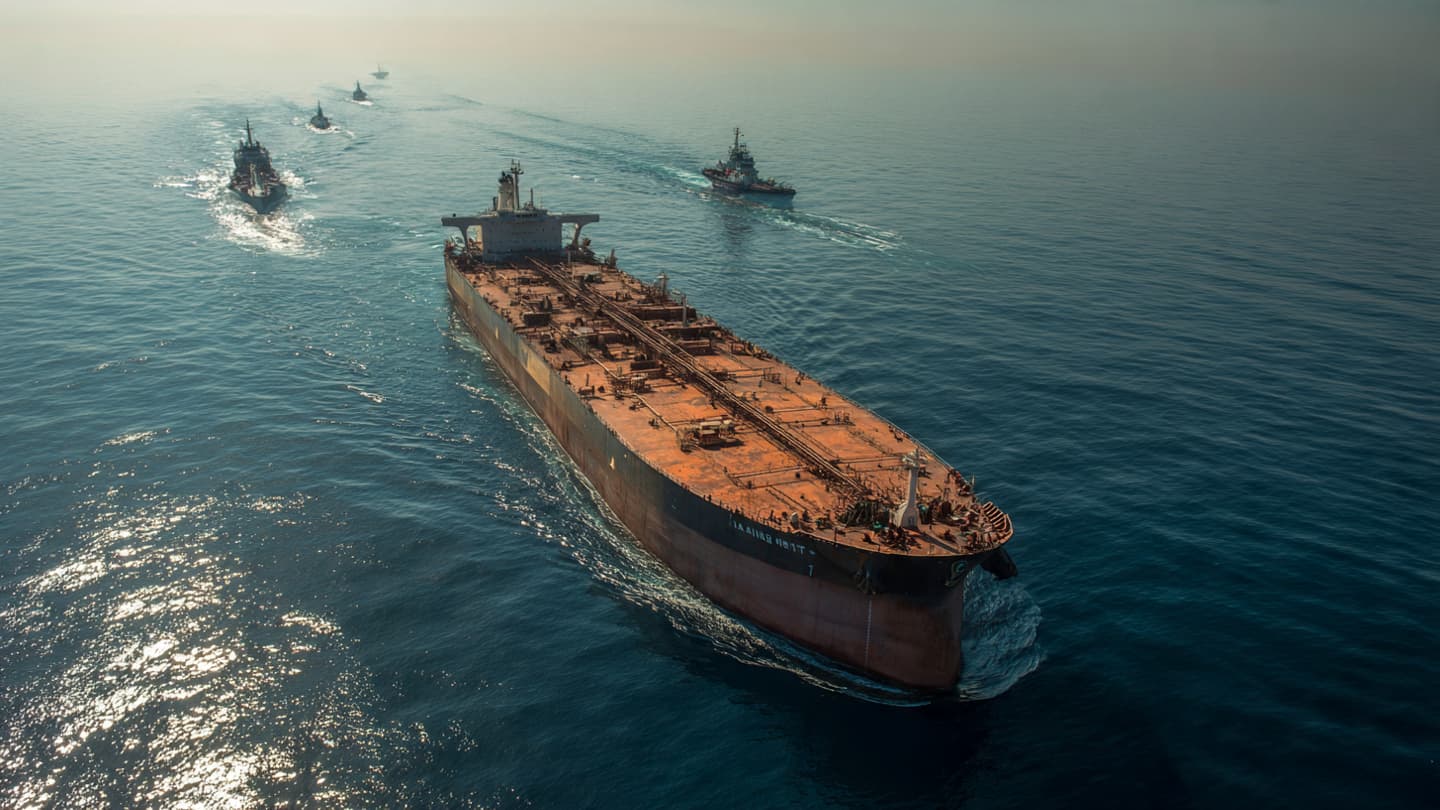
In global trade, certain waterways function less like borders and more like shared arteries, carrying energy and goods that sustain economies far beyond their shores. The Strait of Hormuz, a narrow passage linking the Persian Gulf to open seas, has long held that role—its importance quietly felt in fuel prices and shipping routes across the world. Recent reports that is introducing fees for “navigational services” through this corridor have added a new layer of complexity to an already sensitive maritime region.
The Strait of Hormuz itself remains one of the most strategically significant shipping lanes on the planet, with a substantial portion of global oil and liquefied natural gas exports passing through it daily. Any change in how the passage is regulated or priced can ripple quickly through energy markets.
According to the reported policy framing, the fees are described as payments for navigational services, though details about enforcement, scope, and international recognition remain unclear. Maritime law experts often note that such measures can raise questions about freedom of navigation in international waters.
Energy markets tend to respond quickly to developments involving the strait, reflecting its central role in global supply chains. Even announcements without immediate operational impact can influence trading sentiment, insurance costs, and shipping risk assessments.
Countries dependent on Gulf energy exports are particularly attentive to any changes in maritime access conditions. Shipping companies, meanwhile, often reassess routes, costs, and security arrangements when new fees or regulations are introduced in key transit zones.
The geopolitical context surrounding the region has long been shaped by overlapping security concerns, naval presence from multiple nations, and periodic diplomatic tensions. These factors contribute to a climate where even administrative changes can carry broader strategic implications.
International observers typically watch for clarity on implementation, as well as reactions from major trading partners and maritime organizations. The legal interpretation of such fees may also play a role in how widely they are accepted or contested.
As discussions continue, the development highlights how control over critical shipping corridors remains closely tied to both economic strategy and geopolitical positioning, with consequences that extend far beyond the waters of the Gulf.
AI Image Disclaimer: Some visuals used in relation to this article were generated with AI-assisted editorial illustration tools.
Sources: Reuters, Bloomberg, Financial Times, Associated Press, Al Jazeera
Note: This article was published on BanxChange.com and is powered by the BXE Token on the XRP Ledger. For the latest articles and news, please visit BanxChange.com