
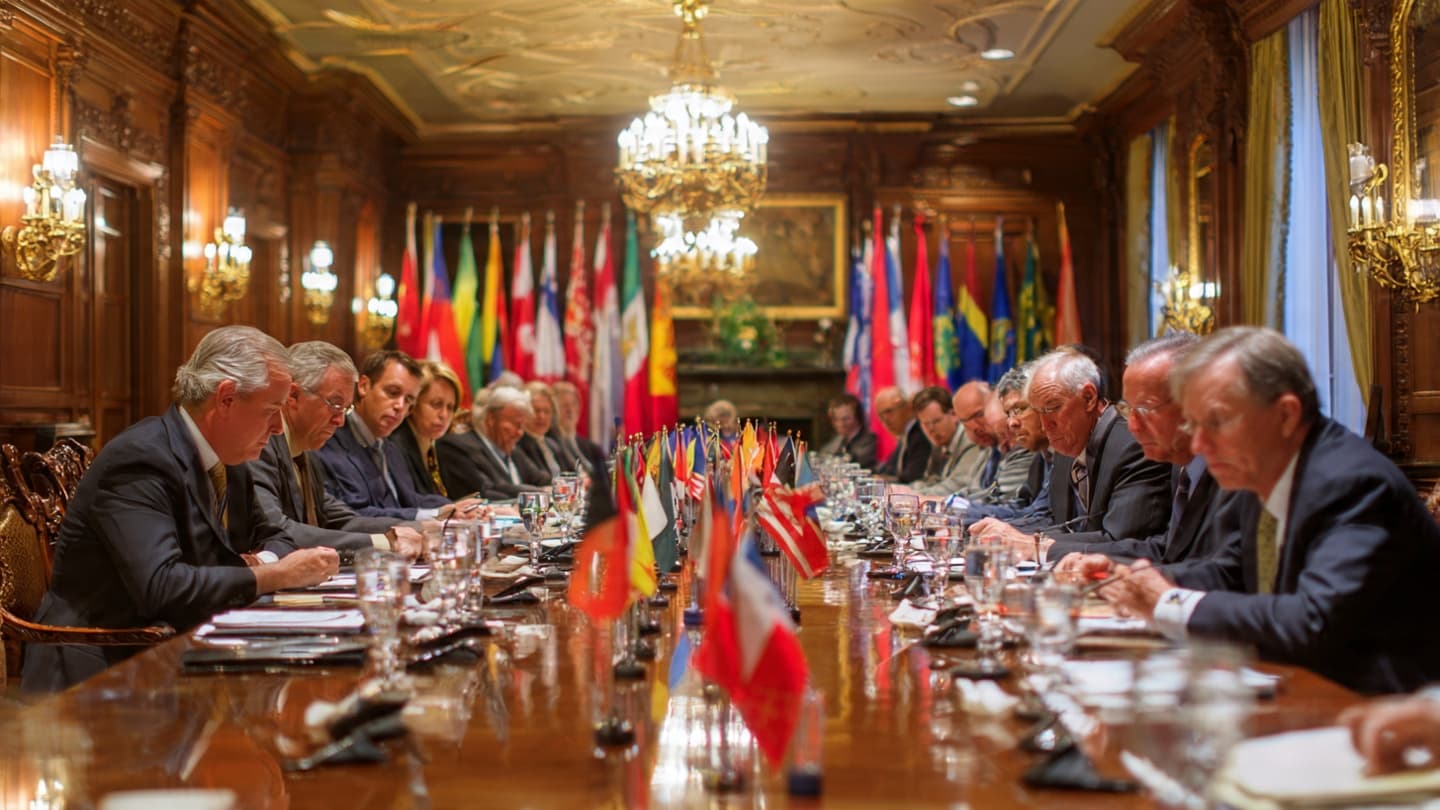
Diplomacy often moves quietly, far from public view, yet its consequences can shape the course of nations. Like a bridge slowly constructed across a difficult river, meaningful negotiations require patience, persistence, and a willingness to continue building even when progress appears uncertain. Recent reports suggesting that a framework for dialogue between the United States and Iran may be taking shape have therefore attracted considerable international attention.
Statements from regional leaders indicated that discussions involving both countries may have reached an early stage of understanding. Although details remain limited and no final agreement has been announced, the prospect of renewed diplomatic engagement has generated cautious interest among governments and observers across the world.
Relations between Washington and Tehran have been marked by decades of complexity. Political disagreements, security concerns, economic sanctions, and regional conflicts have frequently placed the two nations on opposing sides of international debates. As a result, any indication of dialogue is often viewed as a noteworthy development.
Over the years, periods of tension have occasionally raised fears of wider instability throughout the Middle East. Because the region plays a central role in global energy markets and international trade routes, developments involving the United States and Iran often carry implications that extend well beyond their borders.
Supporters of diplomatic engagement argue that communication remains one of the most effective tools for reducing uncertainty. Even when disagreements persist, structured dialogue can provide channels through which concerns are addressed and misunderstandings are minimized. Such processes rarely produce immediate results, but they can create opportunities for gradual progress.
Negotiations involving major geopolitical issues are typically long and complicated. Participants must navigate domestic political pressures, security considerations, and differing strategic priorities. Building confidence between parties that have experienced years of mistrust is often among the most difficult aspects of the process.
Regional governments continue to monitor the situation carefully. Many leaders have emphasized the importance of stability and predictability in a region that has faced numerous political and security challenges over recent decades. For neighboring countries, diplomatic progress could contribute to a more stable environment for economic growth and cooperation.
Analysts caution that early discussions should not be interpreted as guarantees of future agreements. History shows that negotiations can encounter setbacks and unexpected obstacles. Nevertheless, the existence of communication itself is often viewed as a constructive step in international relations.
For now, attention remains focused on whether these initial signals can evolve into more formal arrangements. While significant questions remain unanswered, the emergence of renewed diplomatic conversations represents an important development that many governments will continue to follow closely in the months ahead.
AI Image Disclaimer This article uses an AI-generated illustration created to visually support the topic in a neutral and informative manner.
Sources Reuters, Associated Press, Financial Times, The Washington Post
Note: This article was published on BanxChange.com and is powered by the BXE Token on the XRP Ledger. For the latest articles and news, please visit BanxChange.com