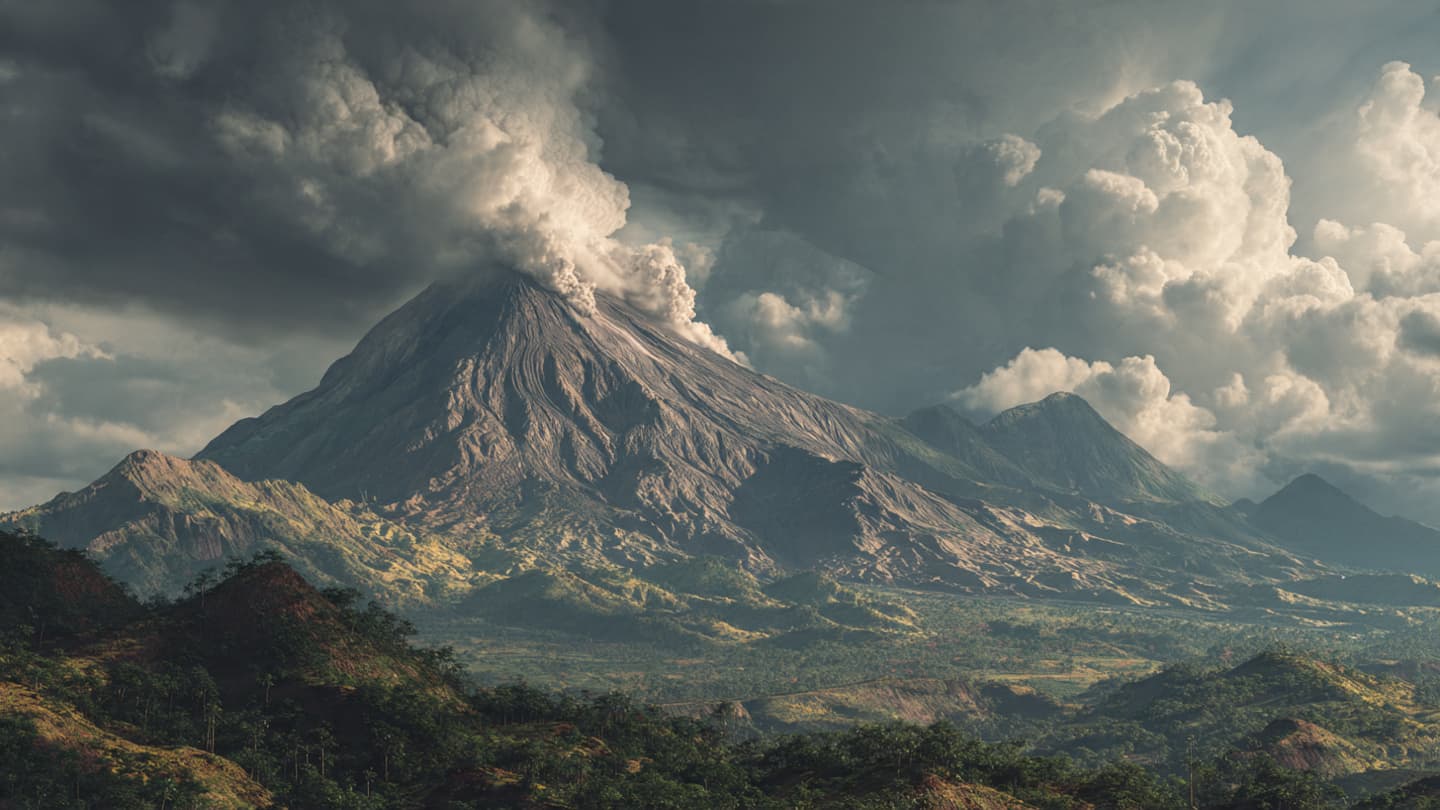
For centuries, mountains that no longer smoked or trembled were often treated as settled parts of the landscape, their violent histories softened by forests, weather, and time. Yet beneath some of these quiet surfaces, geological forces continue moving patiently in darkness. The recent awakening of a volcano believed to have remained dormant for roughly 700,000 years has reminded scientists that Earth’s interior rarely becomes completely still.
Researchers monitoring geological activity reported renewed signs of volcanic unrest in an area previously considered inactive for an exceptionally long period. Seismic activity, gas emissions, and underground magma movement have drawn scientific attention to the site, prompting closer observation from volcanologists and emergency agencies.
Dormant volcanoes differ from extinct volcanoes because they retain the potential to erupt again, even after long periods without visible activity. Scientists say that determining whether a volcano is truly extinct can be difficult, especially in regions where geological records remain incomplete or volcanic cycles span hundreds of thousands of years.
The renewed activity has encouraged researchers to reassess the volcano’s geological history. By studying rock formations, mineral deposits, and ancient lava flows, scientists hope to understand how magma systems beneath the region evolved over time. Modern monitoring technology also allows researchers to detect subtle underground changes that would once have gone unnoticed.
Volcanic awakenings often begin gradually. Small earthquakes may signal rising magma, while changes in gas composition can indicate increased geothermal movement beneath the surface. In many cases, these warning signs provide scientists and local authorities valuable time to assess risks and prepare nearby communities.
Experts emphasize that renewed activity does not automatically mean a major eruption is imminent. Some volcanoes experience periods of unrest without producing large eruptions. However, authorities continue monitoring conditions carefully because volcanic systems can change unpredictably over time.
The event has also drawn attention to the dynamic nature of Earth’s crust. Tectonic forces constantly reshape the planet through earthquakes, volcanic activity, and continental movement. Even landscapes that appear stable on human timescales may still be evolving slowly beneath the surface.
Communities living near volcanic regions often depend on accurate scientific communication during periods of uncertainty. Researchers and emergency officials are working to provide regular updates while avoiding unnecessary alarm. Satellite monitoring, seismic networks, and thermal imaging systems remain central to ongoing observation efforts.
Scientists say continued monitoring will determine whether the volcano’s renewed activity develops further or gradually subsides. Regardless of the outcome, the event offers another reminder that Earth’s geological systems continue operating far beyond the rhythms of recorded human history.
AI Image Disclaimer: The images presented alongside this report are AI-generated visual interpretations intended for illustrative use.
Sources: US Geological Survey, Reuters, Smithsonian Institution Global Volcanism Program, BBC News, National Geographic
Published by Banx Network. This article is part of the Banx decentralized media programme, powered by the BXE token on the XRP Ledger.