The universe often reveals its secrets gradually, offering clues that may remain incomplete for years before a clearer picture emerges. Astronomers frequently compare their work to assembling a cosmic puzzle, where even a small discovery can help explain vast structures spanning millions of light-years. Such a moment has arrived with the reported detection of a long-sought black hole wind within the Milky Way.
Researchers announced evidence of what some scientists have described as a "missing black hole wind," a powerful outflow of material associated with a black hole system inside our galaxy. The finding may help explain how black holes influence their surrounding environments and contribute to the evolution of galaxies.
Black holes are often portrayed as objects that only pull matter inward. In reality, many black holes also generate energetic outflows capable of pushing gas and particles back into space. These winds can affect star formation and alter the distribution of matter across entire regions.
For years, astronomers suspected that certain theoretical models predicted stronger outflows than observations appeared to show. The apparent absence of expected winds became a lingering question within astrophysics.
Using advanced observational instruments and detailed data analysis, researchers identified signatures that may correspond to the previously elusive phenomenon. The discovery provides new evidence supporting existing theories about black hole behavior.
Scientists believe these outflows play an important role in regulating galactic ecosystems. By influencing how gas moves through a galaxy, black hole winds can affect when and where new stars emerge.
The finding also demonstrates the growing capabilities of modern astronomy. Improvements in telescopes, detectors, and computational modeling continue to reveal details that were beyond reach only a generation ago.
Astrophysicists caution that additional observations will be needed to fully understand the characteristics of the newly detected wind. Future studies may help determine whether similar phenomena are common throughout the Milky Way and beyond.
As researchers continue examining the data, the discovery offers another reminder that even within our own galaxy, important mysteries remain unsolved. Each new observation brings humanity one step closer to understanding the forces that shape the cosmos.
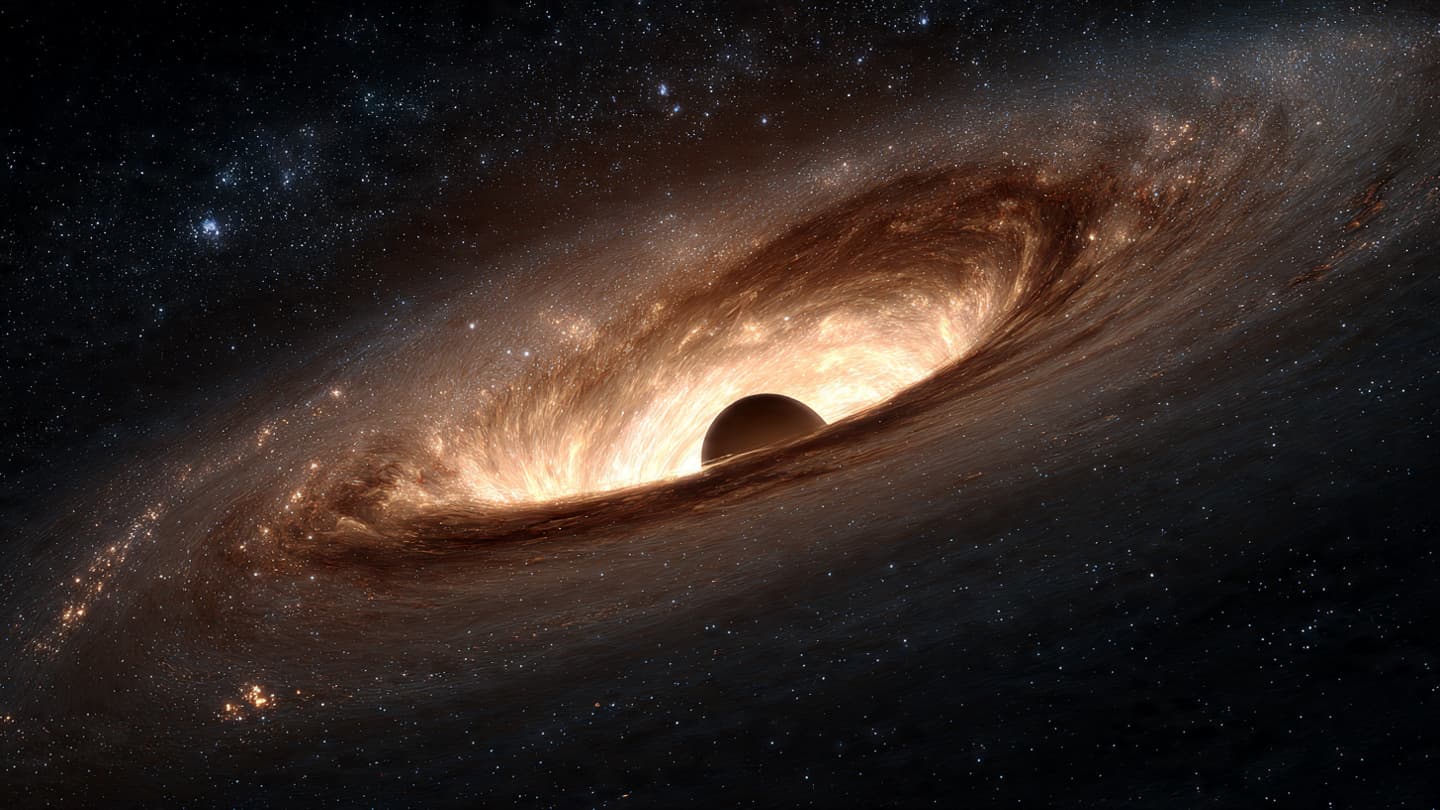
AI Image Disclaimer: The accompanying visual is AI-generated and intended to illustrate astronomical concepts discussed in the article.
Source Verification Check: Sci.News, Nature Astronomy, European Southern Observatory, Space.com, Science News
Published by Banx Network. This article is part of the Banx decentralized media programme, powered by the BXE token on the XRP Ledger.