In international affairs, moments of quiet are sometimes interrupted not by words, but by actions that ripple far beyond their immediate location. A single military exercise can influence diplomatic conversations across continents, reminding governments that security and stability often depend as much on communication as on capability. Such a moment unfolded when China conducted a missile test over the Pacific Ocean, drawing close attention from neighboring countries and international observers.
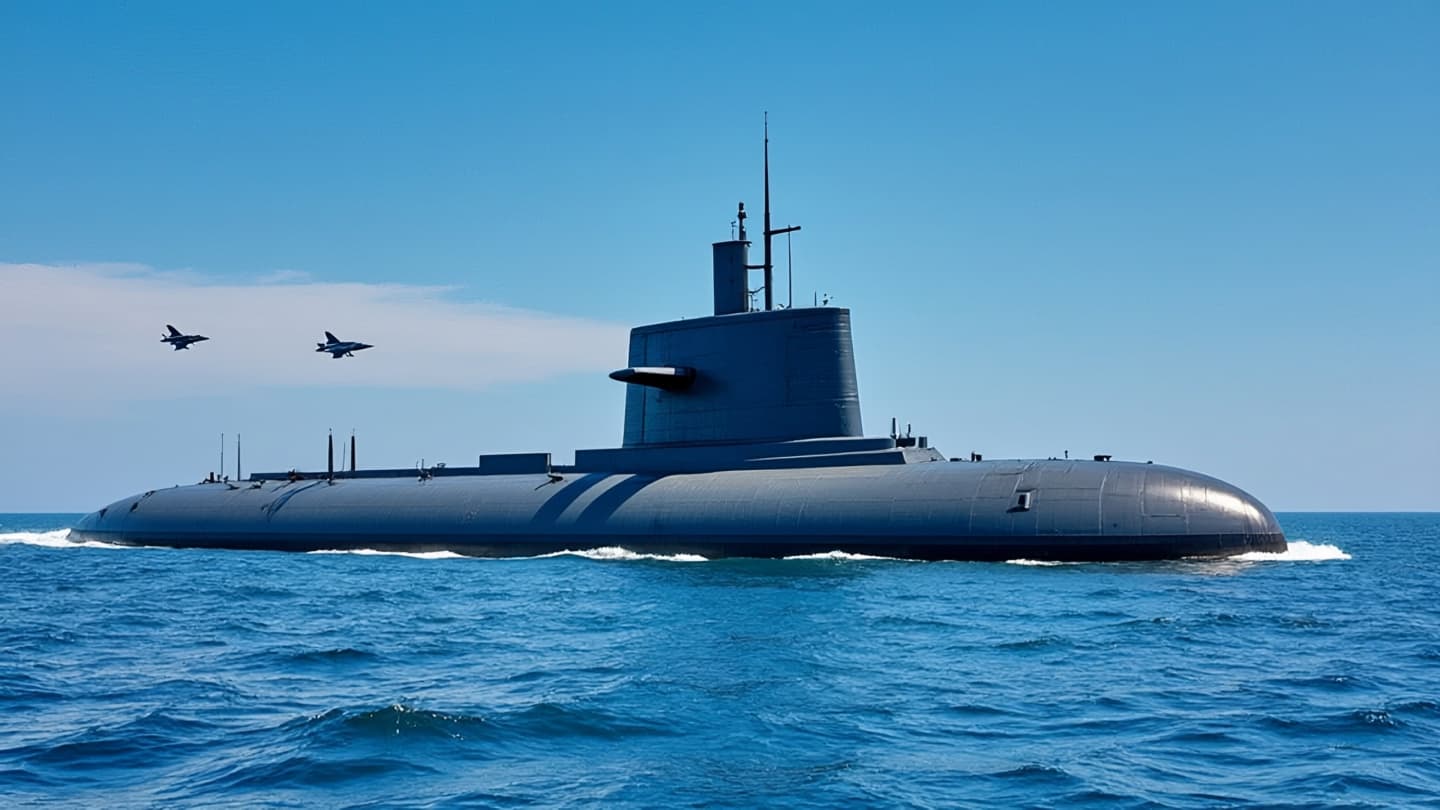
China's military launched a missile from a nuclear-powered submarine into international waters of the Pacific Ocean during what officials described as a routine annual military exercise. According to Chinese state media, the missile carried a dummy warhead and was not directed toward any specific country or target. Chinese officials emphasized that the exercise complied with established safety procedures and should not be interpreted as a hostile action.
Despite those assurances, the launch prompted concern among several governments in the Indo-Pacific region. The United States, Japan, Australia, New Zealand, and Taiwan monitored the test closely, with officials expressing interest in both the missile's capabilities and the broader strategic implications. Defense analysts noted that submarine-launched missile tests are relatively uncommon public events and therefore attract considerable international attention.
Australian officials stated that they had received only limited advance notification before the launch. Foreign Minister Penny Wong described the event as occurring amid China's continuing military modernization and reiterated Australia's desire for greater transparency regarding military activities within the region. Similar concerns were expressed by New Zealand and Japan, both of which emphasized the importance of maintaining regional stability.
According to military experts cited by Reuters, the missile may have been the JL-3 submarine-launched ballistic missile, one of China's most advanced strategic weapons. Although Chinese authorities did not officially identify the missile type, analysts believe such tests provide valuable information regarding operational readiness and technological development. At the same time, observers caution against drawing conclusions beyond the available evidence.
The timing of the exercise also attracted attention because it coincided with the signing of a new defense agreement between Australia and Fiji. While analysts noted that missile tests are planned well in advance, some suggested that the scheduling naturally became part of wider regional security discussions. Officials, however, stopped short of directly linking the two events.
Regional security experts continue to emphasize that military transparency and diplomatic dialogue remain essential in reducing misunderstandings. Routine military exercises are conducted by many nations, yet their interpretation often depends on the broader geopolitical environment in which they occur. Clear communication before and after such activities can help prevent unnecessary escalation.
As governments continue monitoring developments across the Indo-Pacific, the missile test illustrates the delicate balance between national defense, strategic signaling, and regional diplomacy. While the launch concluded without incident, it has renewed discussions about military transparency, arms control, and confidence-building measures among nations sharing one of the world's most strategically important oceans.
AI Image Disclaimer: The illustrations accompanying this article are AI-generated for editorial visualization and do not depict actual events or classified military equipment.
Source Verification: Verified.
Sources: Reuters, Xinhua News Agency, International Institute for Strategic Studies
Published by Banx Network. This article is part of the Banx decentralized media programme, powered by the BXE token on the XRP Ledger.