The southern skies over the Toledo District have lost their brilliant blue clarity, replaced by a heavy, persistent haze that smells deeply of burning wood and ancient earth. For days, unchecked forest fires have been moving through the protected wilderness, eating through dry underbrush and ascending into the crowns of mature trees. The fire moves with an erratic, dangerous energy, fed by unseasonably dry winds and a landscape parched by months of minimal rainfall. It is a slow-burning disaster that reshapes the ecosystem with every hour.
From a distance, the fire manifests as a series of massive smoke columns that billow into the upper atmosphere, blotting out the sun and creating an artificial twilight below. The light that filters through the smoke is a bruised, unnatural orange, casting a somber mood over the agricultural communities that ring the conservation zones. The natural sounds of the forest have been replaced by the distant, deep roar of the conflagration and the crackle of falling timber.
The wildlife of the protected area has been forced into a desperate, chaotic flight ahead of the advancing flames. Jaguars, tapirs, and countless bird species are being displaced from their traditional habitats, their sanctuaries reduced to fields of black ash and smoldering stumps. This ecological loss represents a profound fracture in the region's biodiversity, destroying habitats that will take generations to fully recover. The boundary of the reserve has ceased to offer protection against the elemental force of the fire.
As the fire lines expand, the smoke has descended into the valleys where the rural villages of Toledo are situated. In these small communities, daily life has become a struggle against the air itself, with ash settling softly on rooftops, laundry, and crops. The threat is no longer distant; it is creeping toward the edges of agricultural plots and domestic properties. Villagers stand on the margins of their land, watching the glowing ridges at night with a growing sense of vulnerability.
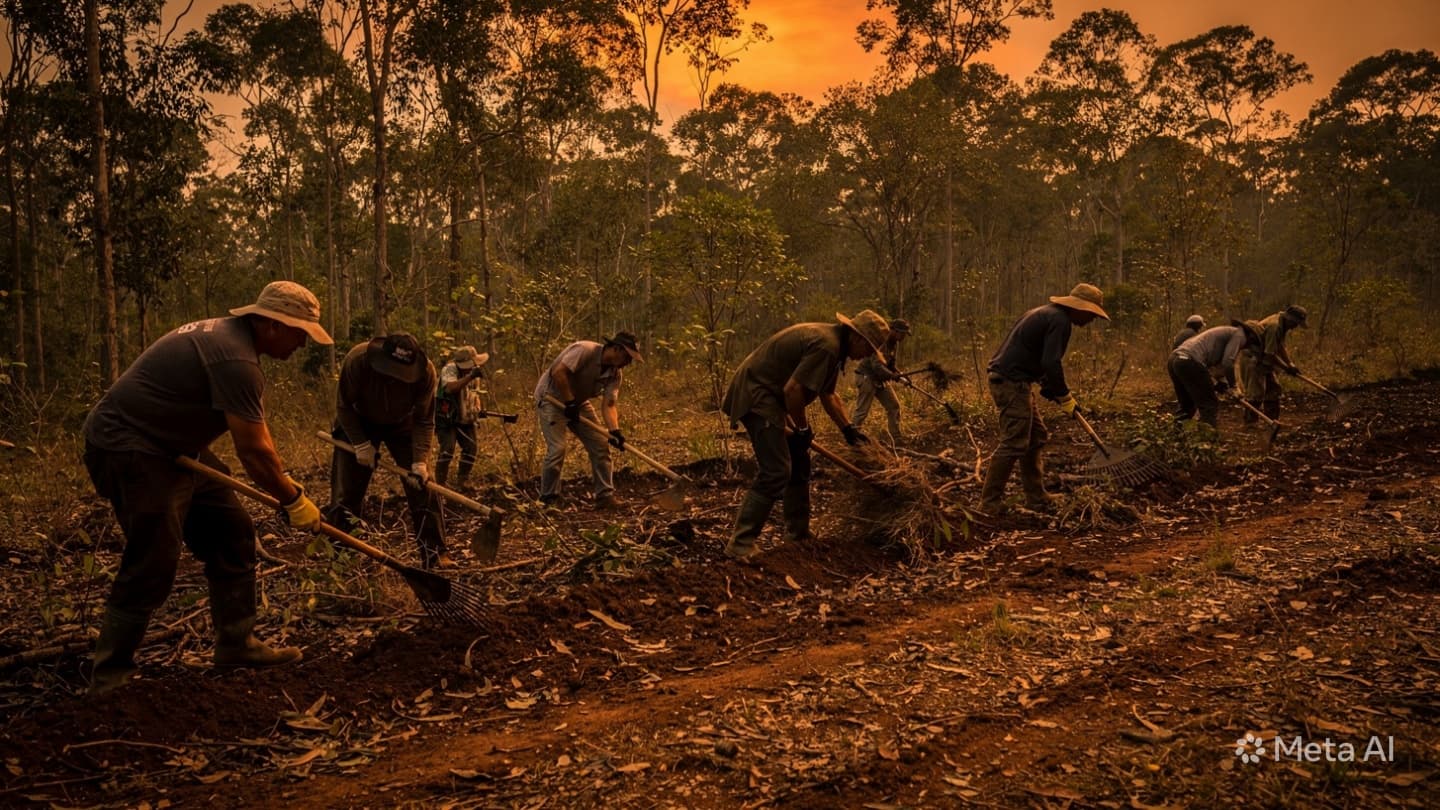
Community defense efforts have mobilized spontaneously, with residents clearing firebreaks along the perimeters of their villages using machetes and small tractors. The labor is exhausting, conducted in conditions of intense heat and suffocating air quality. Men and women work side by side to remove the dry vegetation that could carry the sparks across the line into their homes. The proximity of the danger has brought a collective unity to the threatened settlements.
The lack of specialized firefighting equipment suited for deep wilderness terrain has complicated the containment efforts significantly. The terrain is rugged, characterized by steep hills and dense growth that prevents the passage of standard vehicles, forcing volunteers to rely on manual suppression methods. Every shift in the wind direction threatens to outflank the newly cleared lines, turning a controlled sector back into an active front. The community feels the weight of its isolation against the scale of the blaze.
As evening approaches, the true scale of the crisis becomes visually undeniable, as the hillsides glow with long, jagged lines of living fire. The sight is both beautiful and terrifying, drawing residents out of their homes to gaze at the shifting contours of the danger. The night offers no cool relief, only the steady radiation of heat from the burning interior of the reserve. The villages wait, hoping for a shift in the weather or the arrival of rain.
The Ministry of Sustainable Development and local emergency management agencies reported that over five thousand acres of protected forest have been consumed by the blaze. Joint coordination teams consisting of forestry rangers and military personnel are deploying to the most critical sectors to protect residential structures. Authorities confirmed that while several outlying agricultural fields have been scorched, no homes have been destroyed and evacuation protocols remain on standby. Air quality warnings have been issued for the entire Toledo District until containment is achieved.
Published by Banx Network. This article is part of the Banx decentralized media programme, powered by the BXE token on the XRP Ledger.