
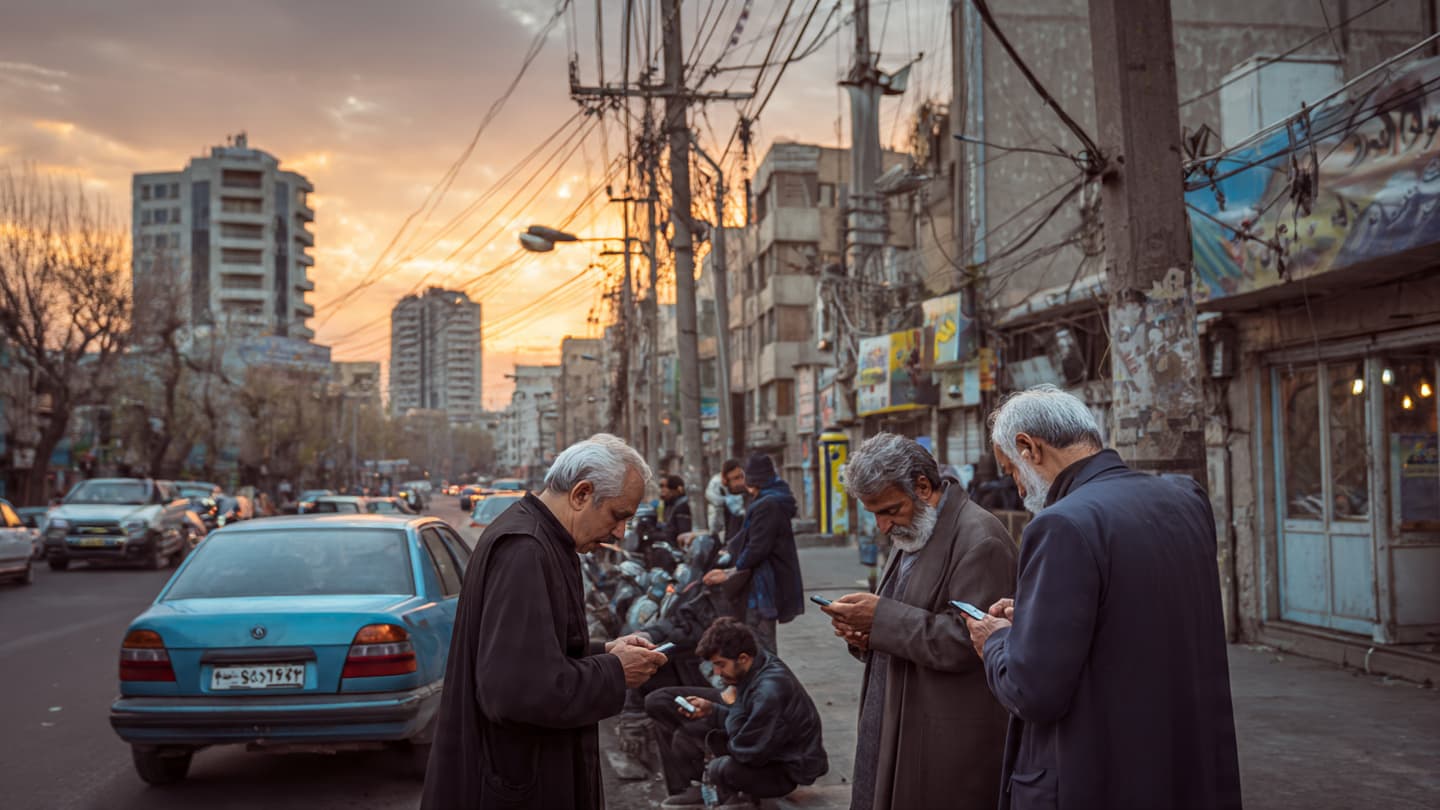
For many people, the internet has become less like a luxury and more like a public square made of light — a place where voices travel, families remain connected, and ordinary routines quietly depend on invisible signals crossing borders and cities. In Iran, as internet access slowly flickered back after extended disruptions, relief arrived carrying equal parts exhaustion, anxiety, and lingering uncertainty.
Residents across parts of Iran reported partial restoration of online services after months of severe internet restrictions and blackouts that had disrupted communication, business operations, and access to information. Even as connections returned, many users described unstable access and continuing limitations.
The disruptions reportedly affected messaging platforms, social media access, and international communications, complicating daily life for millions. Businesses relying on online transactions, students attending digital classes, and families communicating abroad were among those heavily impacted.
Human rights groups and digital freedom advocates have long argued that internet restrictions can deepen public isolation during periods of political tension or unrest. Authorities, meanwhile, often frame such measures as necessary for security and public stability.
For ordinary citizens, the effects extended beyond politics. Small business owners reportedly struggled to maintain income, while freelancers and technology workers faced interrupted access to international markets and services. In modern economies, digital interruptions can ripple through nearly every layer of society.
Internet blackouts have increasingly become part of broader global discussions surrounding censorship, surveillance, and state control over digital infrastructure. Several countries have faced criticism in recent years for limiting online access during moments of political sensitivity.
Analysts note that restoring internet access does not immediately restore public confidence. Many users continue worrying about future disruptions, data privacy concerns, and the uncertainty surrounding digital communication rights.
The emotional response described by some Iranians — anger, tears, frustration, and fatigue — reflects how deeply digital access has become intertwined with social and personal life. For younger generations especially, connectivity often shapes education, employment, relationships, and civic participation.
As internet access gradually stabilizes in some areas, broader debates over digital freedom, government authority, and public trust continue unfolding both inside Iran and internationally.
AI Image Disclaimer: Some visuals depicting internet disruptions and urban digital infrastructure were created using AI-generated imagery.
Sources: Reuters BBC News Associated Press Al Jazeera The Guardian
Note: This article was published on BanxChange.com and is powered by the BXE Token on the XRP Ledger. For the latest articles and news, please visit BanxChange.com