Far beyond the familiar rhythm of Earth’s skies, other worlds move through climates that seem almost dreamlike. Some planets endure eternal daylight on one side and endless darkness on the other, while others experience storms unlike anything seen in the solar system. Recently, astronomers studying a distant “Hot Jupiter” exoplanet reported an unusual atmospheric pattern: cloudy mornings followed by clearer evenings.
The planet belongs to a class of giant gas worlds known as Hot Jupiters, enormous planets that orbit extremely close to their parent stars. Because of their tight orbits, these planets often experience intense heat and unusual atmospheric circulation shaped by powerful stellar radiation.
Using advanced space telescopes and atmospheric analysis techniques, scientists observed changing cloud formations across different regions of the exoplanet. Researchers believe the planet’s morning side contains thicker cloud cover, while the evening side appears comparatively clearer due to shifting temperatures and high-speed winds.
The discovery helps scientists better understand how atmospheres behave under extreme conditions. On Earth, weather systems emerge through interactions among oceans, land, sunlight, and atmospheric chemistry. Hot Jupiters, by contrast, exist in environments where temperatures can exceed thousands of degrees and winds may travel faster than sound.
Astronomers explain that many Hot Jupiters are tidally locked, meaning one side constantly faces their star while the other remains in darkness. This creates dramatic temperature differences that drive strong atmospheric circulation. Clouds may form as material cools on one side before being swept across the planet by powerful winds.
The observations were made possible through increasingly precise methods of studying exoplanets as they pass in front of their stars. Tiny changes in light allow scientists to estimate atmospheric composition, temperature, and cloud behavior despite the immense distances involved.
Researchers say understanding these alien weather systems also improves broader planetary science. By comparing atmospheric dynamics across many worlds, scientists refine models that may eventually help identify planets capable of supporting more Earth-like environments elsewhere in the galaxy.
There is also a quieter fascination surrounding such discoveries. Even from unimaginable distances, humanity continues finding patterns that feel strangely familiar — mornings, evenings, clouds, and changing skies — unfolding on planets orbiting stars far beyond the solar system.
Scientists plan to continue observing the exoplanet using next-generation telescopes capable of providing more detailed atmospheric measurements. Each new observation adds depth to the growing portrait of worlds once invisible to human knowledge.
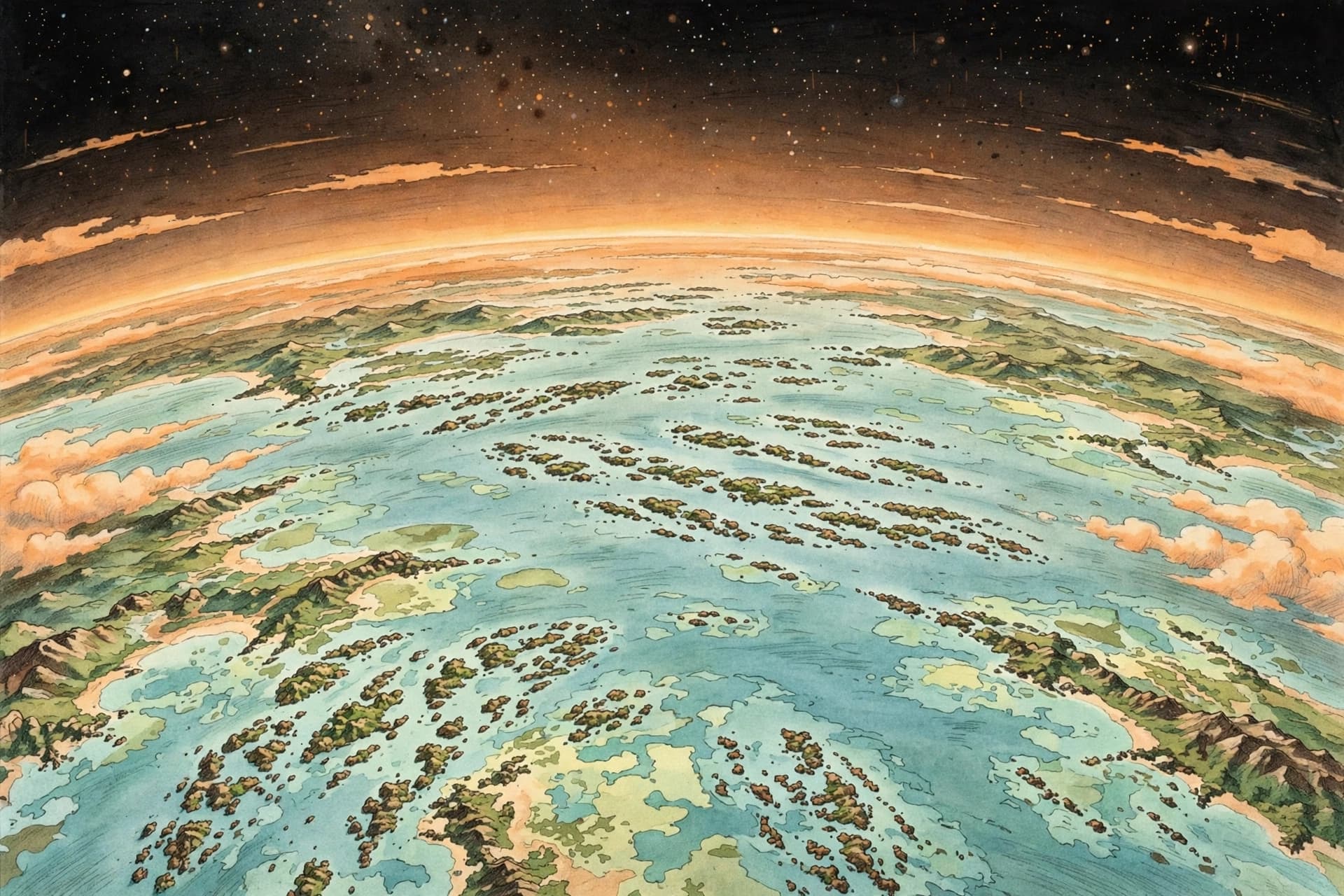
AI Image Disclaimer: Some accompanying space visuals were generated through AI-assisted astronomical illustration.
Sources: NASA, Nature Astronomy, European Southern Observatory, Space.com, Scientific American
Published by Banx Network. This article is part of the Banx decentralized media programme, powered by the BXE token on the XRP Ledger.