In the frozen expanse of Antarctica, change often occurs slowly enough to escape everyday notice. Yet beneath that appearance of permanence, scientists continue to observe processes capable of influencing coastlines around the world. Recent research regarding Thwaites Glacier has renewed attention on one of the most closely monitored ice formations on Earth.
Often referred to as the “Doomsday Glacier” in popular media, Thwaites has become a focal point for climate researchers because of its immense size and potential contribution to sea-level rise. Scientists emphasize that while the nickname attracts attention, understanding the glacier requires careful analysis rather than dramatic conclusions.
New findings suggest portions of the glacier may experience substantial ice loss under current environmental conditions. Researchers have been studying interactions between ocean water, ice shelves, and atmospheric changes to better understand how the glacier responds to a warming climate.
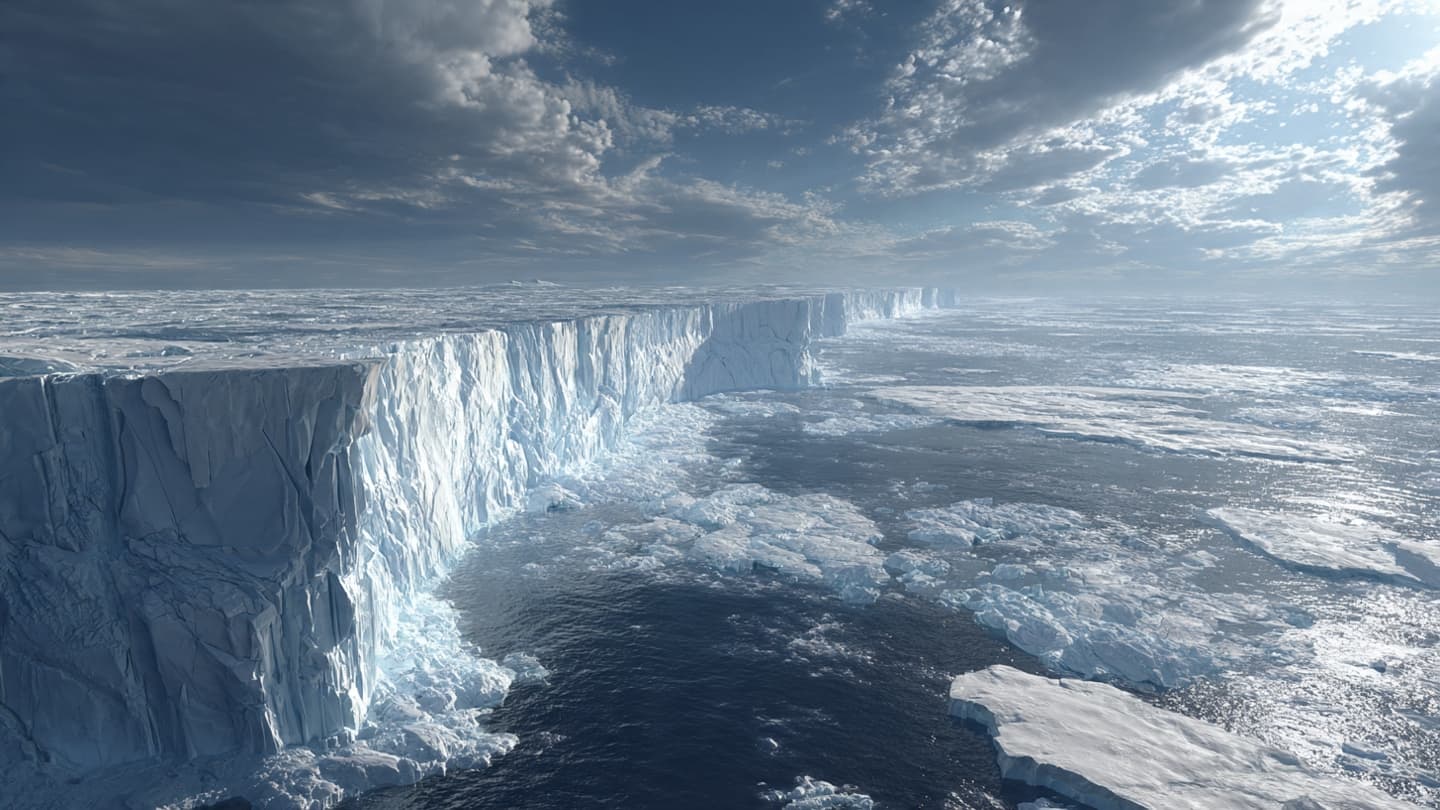
One key concern involves the glacier’s floating ice shelf, which acts as a stabilizing structure. If sections of this shelf weaken or collapse, the flow of inland ice toward the ocean could accelerate, increasing contributions to global sea-level rise over time.
International research teams have spent years collecting data through satellites, underwater vehicles, field expeditions, and computer simulations. These efforts provide increasingly detailed insights into one of the most complex environments on the planet.
Scientists note that changes occurring in Antarctica are connected to broader climate systems. Ocean temperatures, atmospheric circulation, and global greenhouse gas concentrations all influence the stability of polar ice. Understanding these relationships remains a major scientific priority.
Coastal communities around the world have a strong interest in these findings. Although sea-level rise occurs gradually, long-term planning for infrastructure, transportation networks, and population centers often depends on accurate projections from climate science.
Researchers caution that uncertainty remains regarding the exact pace and scale of future changes. Scientific models continue to evolve as new observations become available. Continued monitoring is therefore essential to improving forecasts and informing policy decisions.
While Antarctica may seem distant from daily life, its ice sheets remain deeply connected to global environmental systems. The ongoing study of Thwaites Glacier reflects the importance of understanding these connections as societies prepare for future climate challenges.
AI Image Disclaimer: The visual accompanying this article was created using artificial intelligence to represent the scientific topic discussed.
Source Verification Check: Live Science, British Antarctic Survey, Nature, Reuters, National Snow and Ice Data Center
Published by Banx Network. This article is part of the Banx decentralized media programme, powered by the BXE token on the XRP Ledger.