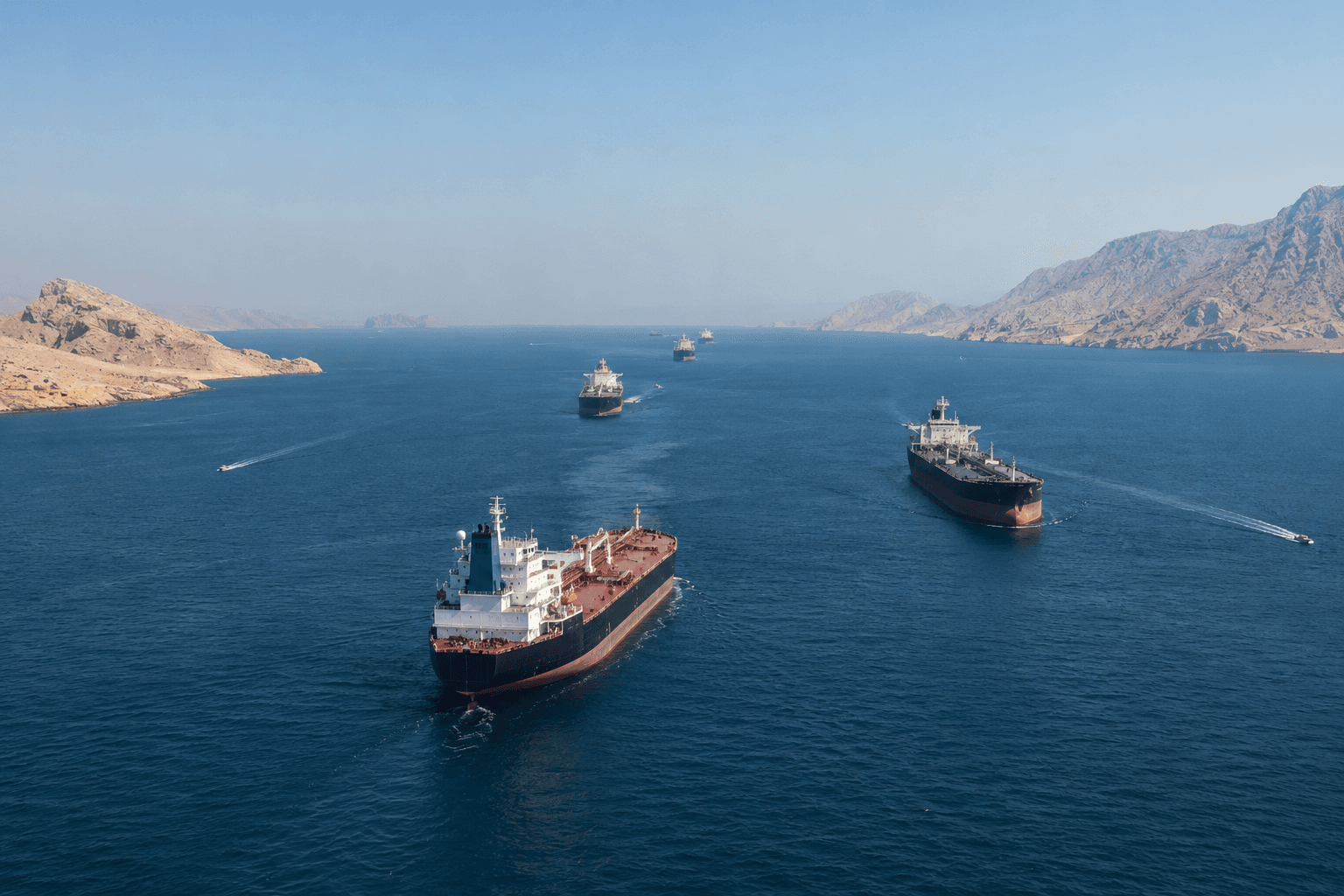
The Strait of Hormuz has long resembled a narrow doorway through which much of the world's energy quietly passes. Day after day, tankers move across its waters like travelers crossing a bridge few notice until the bridge begins to shake. In moments of calm, the strait is simply a maritime route. In moments of tension, it becomes a symbol of how closely global markets, regional security, and international diplomacy are intertwined. That symbolism returned to the forefront this week after the United States military reported that it intercepted and shot down at least four Iranian drones that were launched toward the Strait of Hormuz. According to U.S. officials, the drones were considered an immediate threat to maritime traffic operating in one of the world's most strategically important waterways. The incident added another layer of uncertainty to an already fragile security environment in the Gulf. The reported drone launches occurred amid continuing tensions between Washington and Tehran. U.S. Central Command stated that American forces successfully intercepted the drones before they could pose a greater risk to vessels navigating the area. Following the interceptions, U.S. forces also carried out strikes against Iranian coastal surveillance radar sites, describing the action as defensive and intended to prevent further threats to maritime activity. For observers of the region, the significance of the event extends beyond the number of drones involved. The Strait of Hormuz occupies a unique place in global commerce. A substantial portion of internationally traded oil and natural gas passes through the narrow channel connecting the Persian Gulf to the Gulf of Oman and the Arabian Sea. Any perceived threat to freedom of navigation there can influence shipping decisions, insurance costs, energy markets, and geopolitical calculations far beyond the Middle East. Like ripples spreading across still water, developments in the strait often travel quickly through financial markets and diplomatic circles. Even when attacks are intercepted, the mere possibility of disruption can shape expectations. Shipping companies, energy traders, and governments frequently monitor the waterway with particular attention because stability in the region remains closely linked to broader economic confidence. The latest episode also arrives during a period in which efforts to maintain ceasefires and diplomatic understandings have faced repeated challenges. Reports indicate that exchanges involving missiles, drones, and military responses have continued to test the durability of existing arrangements. In that environment, each new incident carries the risk of being interpreted not only as an isolated event but also as part of a larger pattern of regional confrontation. Yet history has often shown that moments of escalation and moments of restraint can exist side by side. Military actions may capture headlines, but diplomatic channels frequently continue operating behind the scenes. The challenge for policymakers is ensuring that tactical encounters do not evolve into strategic miscalculations. As vessels continue their journeys through the Strait of Hormuz, the waterway remains what it has long been: a narrow passage carrying not only oil and commerce but also the hopes that stability can prevail over confrontation. The latest drone incident may ultimately be remembered as another reminder of how quickly tensions can surface in a region where geography and geopolitics meet. For now, the immediate episode appears contained, with U.S. forces reporting successful interceptions and no indication of damage to maritime traffic from the drones involved. Even so, the event serves as a fresh signal that the security of the world's most important shipping corridors remains closely watched, and that developments there can resonate far beyond the waters where they begin. AI Image Disclaimer Visuals are created with AI tools and are not real photographs. Sources Reuters Associated Press (AP) The Washington Post The Guardian U.S. Central Command (CENTCOM) statements cited by major media outlets.
Published by Banx Network. This article is part of the Banx decentralized media programme, powered by the BXE token on the XRP Ledger.