
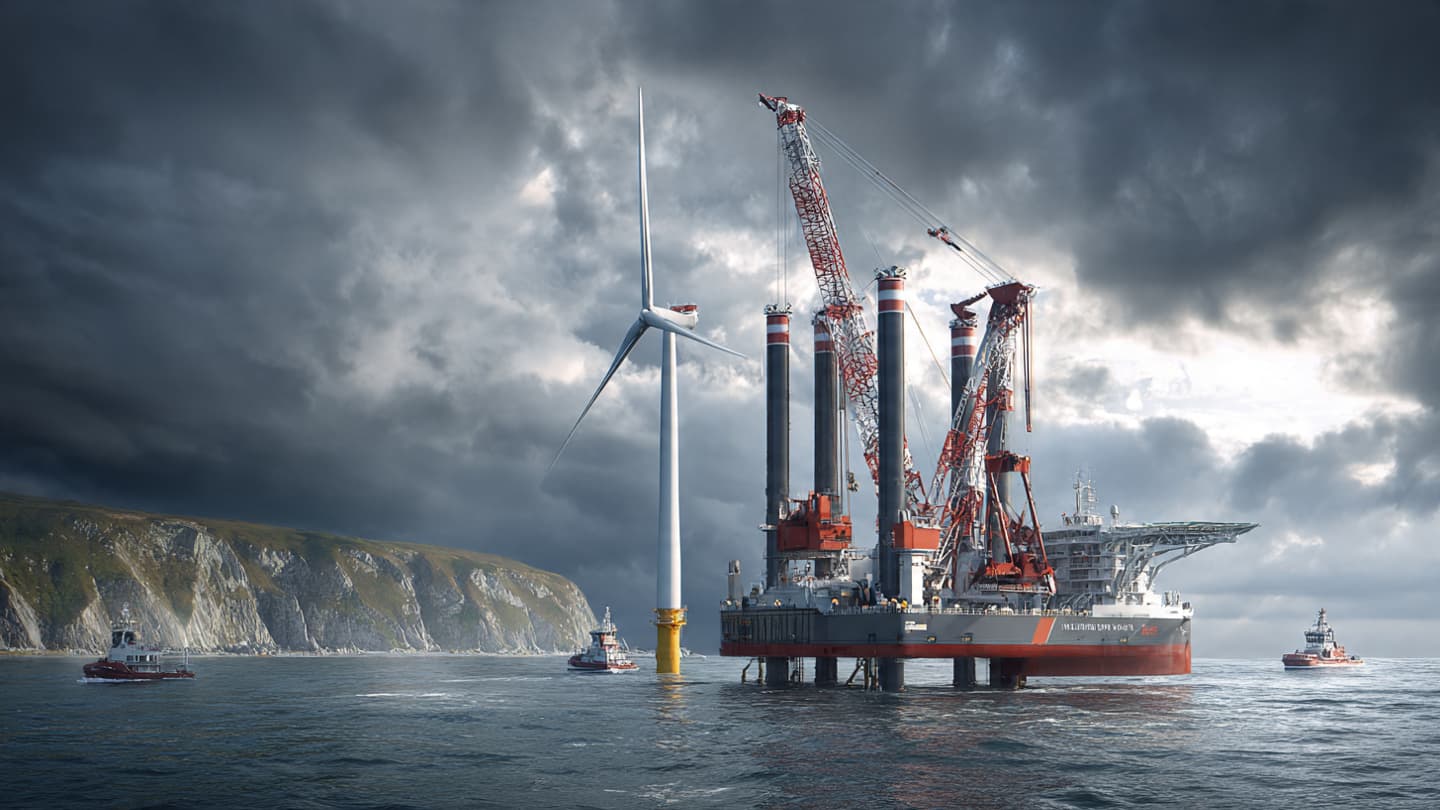
The coastline often represents a meeting point between permanence and change. Waves return day after day, yet no two tides are ever quite the same. Along France's western coast, a different kind of tide is now arriving—one driven not by nature alone, but by investment, technology, and a growing commitment to renewable energy development.
A series of major energy projects is beginning to reshape parts of the Atlantic coastline as public and private stakeholders increase investment in renewable infrastructure. The developments are expected to contribute to France's long-term energy objectives while generating economic activity across coastal regions.
For communities near project sites, the changes may become visible through new construction, upgraded port facilities, and increased industrial activity. While renewable energy is often discussed in terms of electricity generation, its impact frequently extends into transportation, manufacturing, engineering, and workforce development.
Economic planners view such investments as opportunities to strengthen regional growth. Infrastructure projects of this scale typically require years of planning and implementation, creating demand for a wide range of professional and technical skills. The resulting activity can support local businesses while attracting additional investment.
The renewable energy sector has become increasingly important within Europe's broader economic strategy. As countries seek to reduce emissions and improve energy security, large-scale projects are being viewed not only as environmental initiatives but also as engines of industrial development.
France's western coast offers several advantages for renewable energy deployment. Strong wind resources, established maritime infrastructure, and access to industrial networks make the region particularly attractive for offshore development and related activities.
Businesses operating in engineering, construction, logistics, and maintenance services are expected to benefit from the expansion. The projects may also encourage the growth of specialized supply chains supporting renewable energy technologies.
Investors are paying close attention to developments in the region. Long-term infrastructure projects can provide stable opportunities while supporting broader trends associated with the global energy transition. Confidence in regulatory frameworks and project execution remains an important factor.
Technological innovation continues to influence the sector as companies seek ways to improve efficiency and reduce costs. Advances in energy storage, grid integration, and turbine technology may further enhance the value of future investments.
As work progresses along France's western shoreline, the transformation underway reflects more than a shift in energy production. It represents a broader effort to align economic development, technological innovation, and environmental objectives. The coastline may still be shaped by the tides, but it is increasingly being shaped by investment as well.
AI IMAGE DISCLAIMER Illustrations were produced with AI and serve as conceptual depictions.
SOURCES Reuters, Bloomberg, AFP, Financial Times, Les Echos
Note: This article was published on BanxChange.com and is powered by the BXE Token on the XRP Ledger. For the latest articles and news, please visit BanxChange.com