
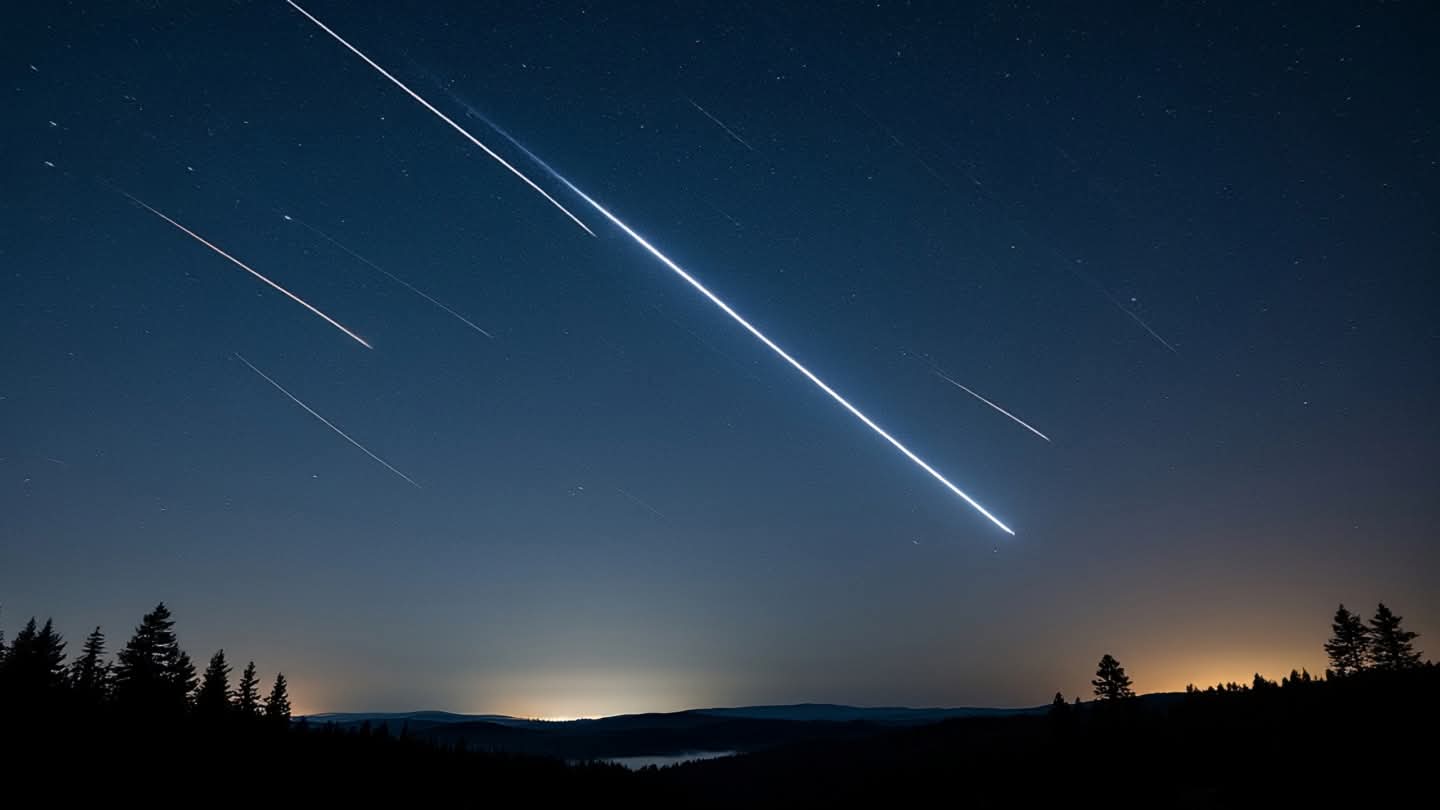
There is a timeless magic in watching the night sky streak with light, a celestial dance that has captivated humans for millennia. The Perseid meteor shower, one of the most reliable and vibrant annual displays, may soon become even more breathtaking. Recent astronomical models suggest that Jupiter’s gravitational influence could steer more debris toward Earth in 2028, potentially enhancing the shower’s intensity. This cosmic interaction reminds us of the dynamic and interconnected nature of our solar system.
The Perseids are caused by Earth passing through the trail of dust and ice left behind by Comet Swift-Tuttle. Each year, as our planet intersects this debris field, particles burn up in the atmosphere, creating the familiar streaks of light. However, the density of the debris field is not constant. It varies due to gravitational perturbations from planets, particularly Jupiter, the solar system’s largest gas giant.
Jupiter’s massive gravity acts as a shepherd, guiding the flow of cometary debris. In 2028, calculations indicate that the planet’s position will align in a way that concentrates more particles into Earth’s path. This alignment could result in a higher rate of meteors, possibly doubling the usual hourly count. For skywatchers, this means a more frequent and dazzling display, with brighter fireballs likely to occur.
Astronomers are preparing for the event by refining their predictions and encouraging public engagement. Citizen science projects allow amateur astronomers to contribute data, helping to validate models and improve future forecasts. This collaborative effort enhances our understanding of meteoroid streams and their behavior over time. It also fosters a sense of community among those who share a love for the night sky.
While the prospect of a enhanced shower is exciting, it also raises questions about planetary defense. Understanding how Jupiter influences debris paths helps scientists assess the risk of larger impacts. Although the Perseid particles are small and harmless, studying their dynamics provides valuable insights into the movement of larger asteroids and comets. This knowledge is crucial for protecting Earth from potential threats.
Weather and light pollution will still play a role in visibility. To enjoy the best view, observers should seek out dark skies away from city lights. Patience and comfort are key, as the peak activity often occurs in the pre-dawn hours. Bringing a blanket and a warm drink can make the experience more enjoyable, turning a scientific observation into a memorable night under the stars.
The 2028 Perseid shower serves as a reminder of the delicate balance of forces in our solar system. It highlights the role of Jupiter as both a protector and a disruptor, shaping the environment in which Earth exists. This interplay of gravity and motion is a fundamental aspect of celestial mechanics.
The potential enhancement of the Perseid meteor shower in 2028 offers a rare opportunity to witness the power of planetary dynamics. It invites us to look up, wonder, and appreciate the intricate choreography of the cosmos.
AI Image Disclaimer: Any images used in conjunction with this article are AI-generated conceptualizations meant to illustrate the themes of media and justice.
Sources: NASA, EarthSky, Royal Astronomical Society, SpaceWeather.com
Published by Banx Network. This article is part of the Banx decentralized media programme, powered by the BXE token on the XRP Ledger.



