
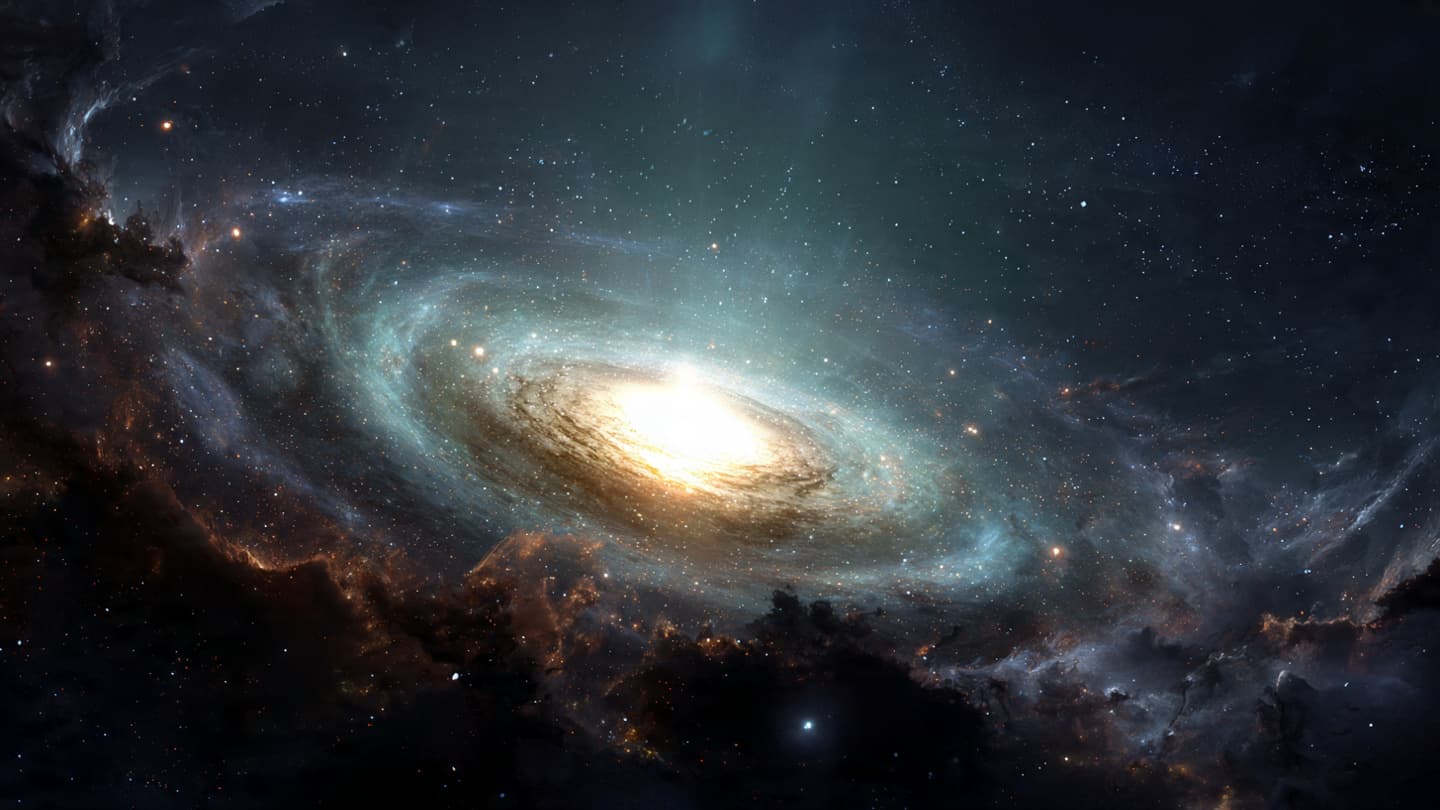
In the earliest chapters of the universe, where light itself was still learning how to travel across expanding space, the discovery of a supermassive black hole challenges familiar assumptions. It suggests that cosmic giants may have formed far earlier than previously believed.
The James Webb Space Telescope has been instrumental in revealing distant regions of the universe that existed only a few hundred million years after the Big Bang. Within these ancient observations lies evidence of an unexpectedly massive black hole.
What makes this discovery particularly intriguing is its apparent age. The black hole appears to have formed at a time when its surrounding galaxy was still in an early developmental stage, raising questions about how such massive objects emerge so quickly.
Astrophysicists have long debated whether black holes grow gradually from smaller stellar remnants or whether some form directly from dense early-universe conditions. This finding adds weight to the latter possibility.
The relationship between the black hole and its host galaxy is still being studied, but early data suggests that the black hole may have influenced the galaxy’s formation rather than simply existing within it.
Such a scenario would reshape current models of cosmic evolution, where galaxies and black holes are often seen as co-developing systems over long periods.
Researchers caution that further observation is needed, but the implications are already significant enough to spark renewed discussion about the timeline of the early universe.
As more deep-field data arrives, the universe continues to reveal that its earliest moments may have been far more dynamic—and far more complex—than once imagined.
AI Image Disclaimer: This article’s visuals are AI-generated conceptual illustrations based on scientific interpretation and do not represent actual telescope imagery.
Sources (source verification check): NASA, ESA Webb Telescope Releases, Nature Astronomy, Space.com
Published by Banx Network. This article is part of the Banx decentralized media programme, powered by the BXE token on the XRP Ledger.



