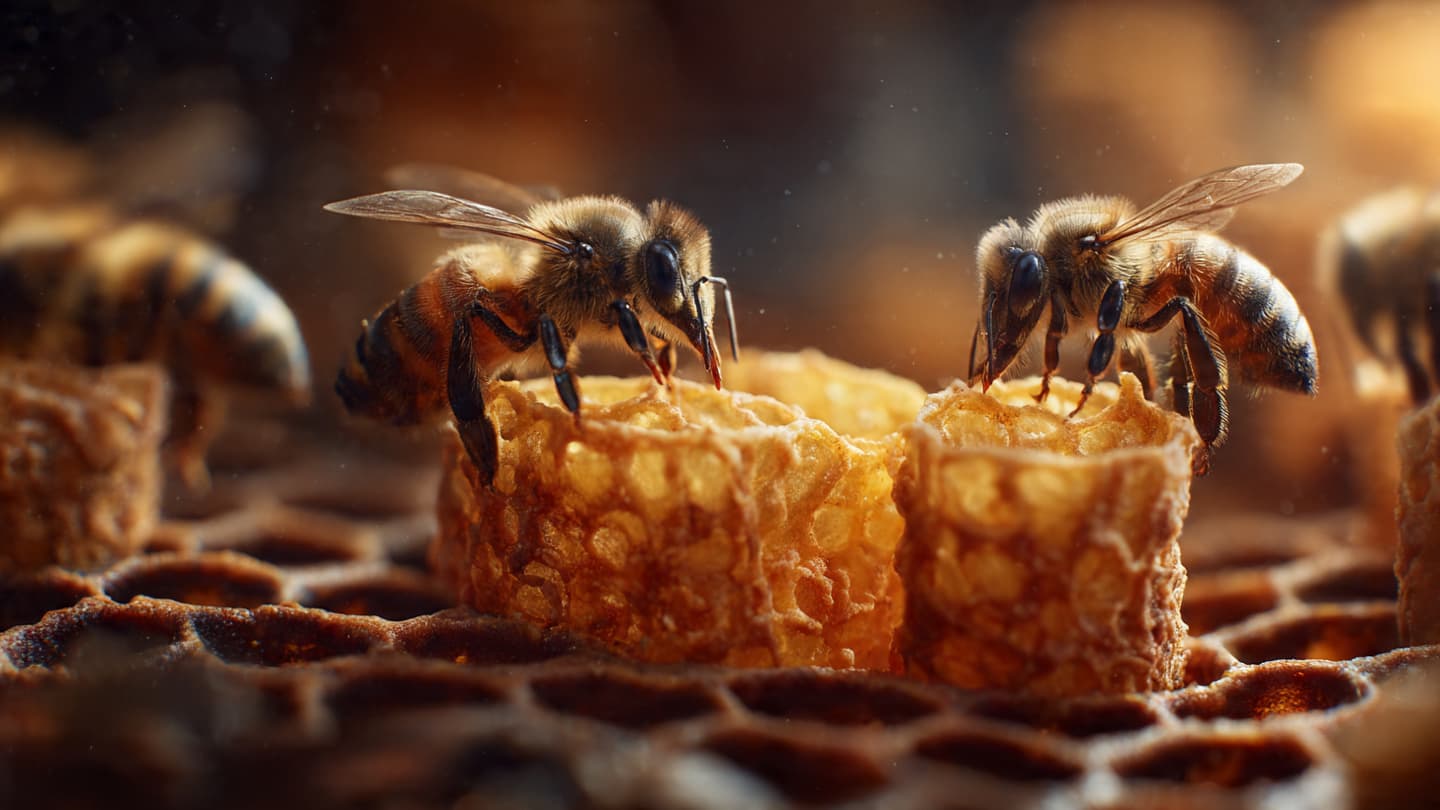
A beehive may appear simple from the outside, but within its walls exists a carefully organized society shaped by cooperation and instinct. New scientific research has provided additional insight into how worker bees construct specialized structures for their queen, revealing another example of the remarkable social behavior found in the natural world.
Honeybees live in highly organized colonies where different groups perform specific tasks. Worker bees gather food, maintain the hive, protect the colony, and care for developing larvae, while the queen's primary role involves reproduction and sustaining the population.
Researchers recently examined how worker bees create larger, uniquely shaped chambers known as queen cells. These structures provide space for developing queens and differ significantly from the smaller cells used for workers and drones. Careful observation allowed scientists to study the building process in greater detail.
The construction of queen cells involves coordinated activity among many worker bees. Using wax produced by their own bodies, they shape and expand the structures according to the needs of the colony. Timing and organization play important roles in ensuring successful development.
Scientists believe that understanding bee behavior contributes to broader knowledge about collective decision-making in nature. Individual insects follow relatively simple rules, yet their combined actions produce complex and efficient outcomes that support the colony's survival.
Honeybees also play an important ecological role as pollinators. Many crops and wild plants depend on pollination for reproduction, making healthy bee populations valuable for agriculture and biodiversity. Research into bee biology supports conservation and sustainable farming efforts.
Modern imaging techniques and careful field observations have improved the study of insect societies. Researchers can monitor hive activity while minimizing disruption, collecting detailed information about communication and construction behavior.
Environmental changes continue to influence pollinator populations around the world. Habitat management, responsible agricultural practices, and scientific research all contribute to efforts aimed at supporting healthy bee communities.
The latest findings remind us that even small creatures can display extraordinary forms of cooperation. The careful construction of a queen's chamber reflects the intricate social organization that has helped honeybees thrive for millions of years.
AI Image Disclaimer: This article includes an AI-generated illustration intended to complement the scientific findings.
Sources: Reuters, Science, National Geographic, Smithsonian Magazine
Published by Banx Network. This article is part of the Banx decentralized media programme, powered by the BXE token on the XRP Ledger.