
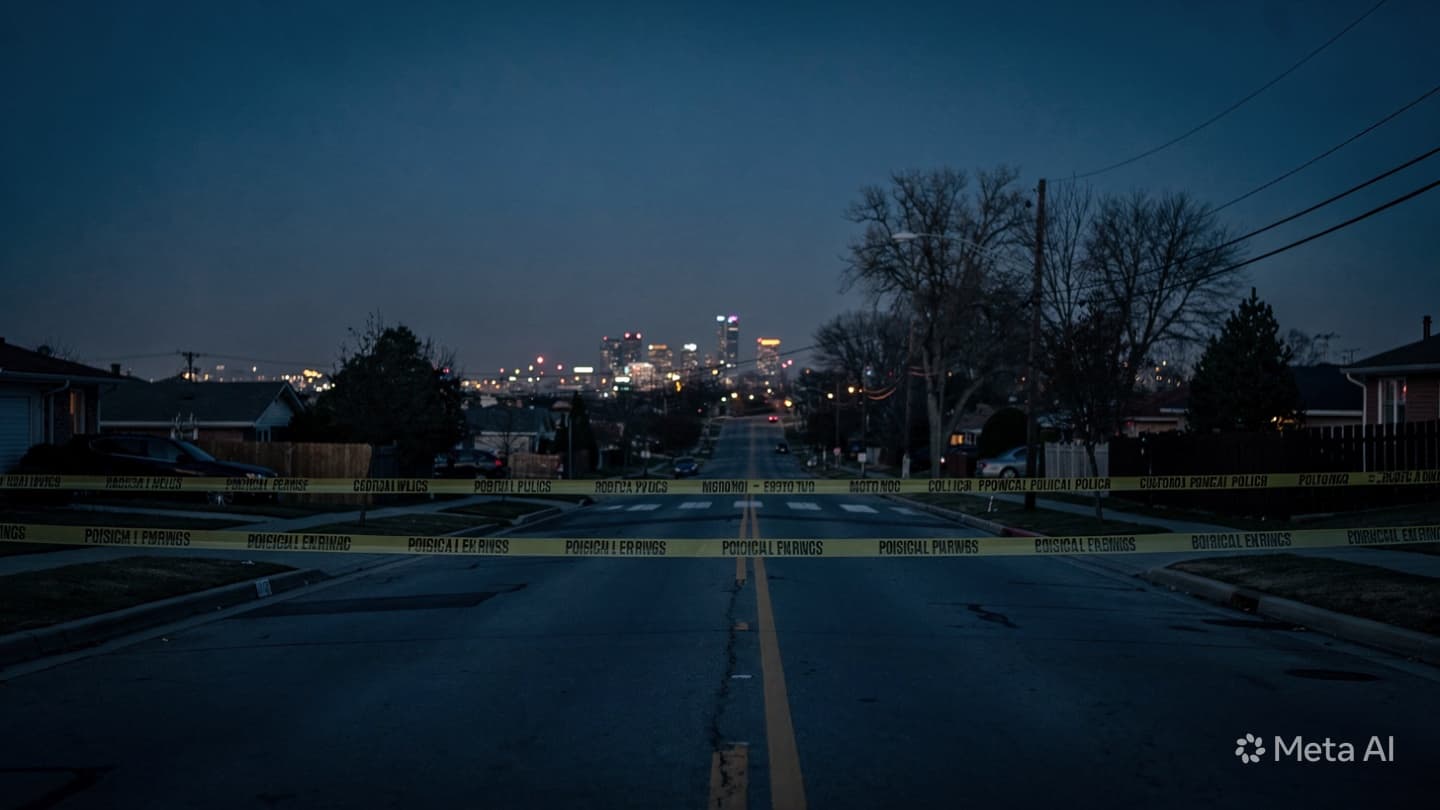
The outskirts of a city often possess a different rhythm than the dense, frantic core, a space where the pace of life feels less compressed and more aligned with the open horizon. Here, the road stretches out in long, inviting ribbons, promising a sense of liberation to those who traverse them on two wheels. It is a landscape defined by the interplay of nature and asphalt, a corridor where the commute or the leisurely ride is meant to be a moment of personal clarity. Yet, even in these expansive reaches, the unpredictability of human motion can tear through the calm, leaving behind a silence that is as heavy as it is unexpected.
There is a particular vulnerability inherent in the act of cycling along a major route, a state of exposure that most navigate with a quiet, practiced caution. The cyclist occupies a space of grace, moving with the momentum of their own effort, a silent participant in the complex machinery of city transit. When that momentum is abruptly halted by the intervention of a heavier, faster force, the world seems to pause. The road, which usually facilitates the forward movement of life, becomes a place of permanent, static reflection, marked by the arrival of sirens and the sudden shift from motion to stillness.
The scene remains etched in the quiet of the aftermath, a stark reminder of how quickly the mundane can descend into the profound. The periphery, where the city begins to dissolve into the surrounding countryside, feels suddenly isolated, cut off from the hum of the surrounding day. Those who arrive to document the site do so with a deliberate gravity, moving around the quiet evidence of the tragedy as if stepping through a sacred, albeit sorrowful, space. Each observation is a thread in the narrative of what was lost, a small attempt to organize the chaos of the immediate impact.
In the wake of such an event, the surrounding community often finds itself confronted with a visceral disruption of its daily patterns. The thoroughfare, once a conduit for the routine, is transformed into a site of inquiry. Voices lower, and the collective consciousness of the area shifts toward an unspoken acknowledgment of loss. It is a phenomenon of human connection, where the anonymity of a suburban road is briefly set aside in favor of a shared, solemn recognition of how fragile the fabric of our public life truly is.
Local authorities now move through the area with measured, careful steps, searching for the small details that might weave together the fragmented story of what transpired. Their presence is a quiet plea for clarity, an invitation to those who might have witnessed the fleeting seconds leading to the incident to come forward. It is a slow, methodical process that contrasts sharply with the sudden, violent nature of the occurrence itself. The act of gathering information serves as a bridge, however fragile, between the silence of the scene and the answers sought by those left behind.
There is no solace to be found in the mechanics of the investigation, yet it remains a necessary endeavor for the sake of those involved. The intersection or the stretch of road becomes a focal point of activity, even as the world around it continues to accelerate toward the inevitable horizon of the coming evening. For those caught in the orbit of this event, the cycle of the day is permanently altered, anchored to a singular point of static, unyielding reality. The city, in its vast, breathing complexity, pauses just long enough to acknowledge the weight of a life interrupted.
As dusk approaches and the artificial lights begin to hum, the road may reopen, but the atmosphere retains a lingering, heavy resonance. The transition from a site of inquiry to a functioning thoroughfare is a gradual one, mirroring the slow, uneven process of coming to terms with such a loss. The rhythm of the city eventually returns, though it is felt with a different, more cautious cadence. We move forward, carrying the quiet understanding that the paths we travel are only as steady as the moments that comprise them.
Northumbria Police have confirmed that a cyclist has died following a collision with a private vehicle on the outskirts of Newcastle. The incident necessitated a lengthy closure of the affected route as forensic teams completed their examination of the scene. Authorities have initiated an investigation into the circumstances of the collision and are currently seeking any witnesses who may have been in the area or who possess relevant dashcam footage to assist with their ongoing inquiries.
Note: This article was published on BanxChange.com and is powered by the BXE Token on the XRP Ledger. For the latest articles and news, please visit BanxChange.com