
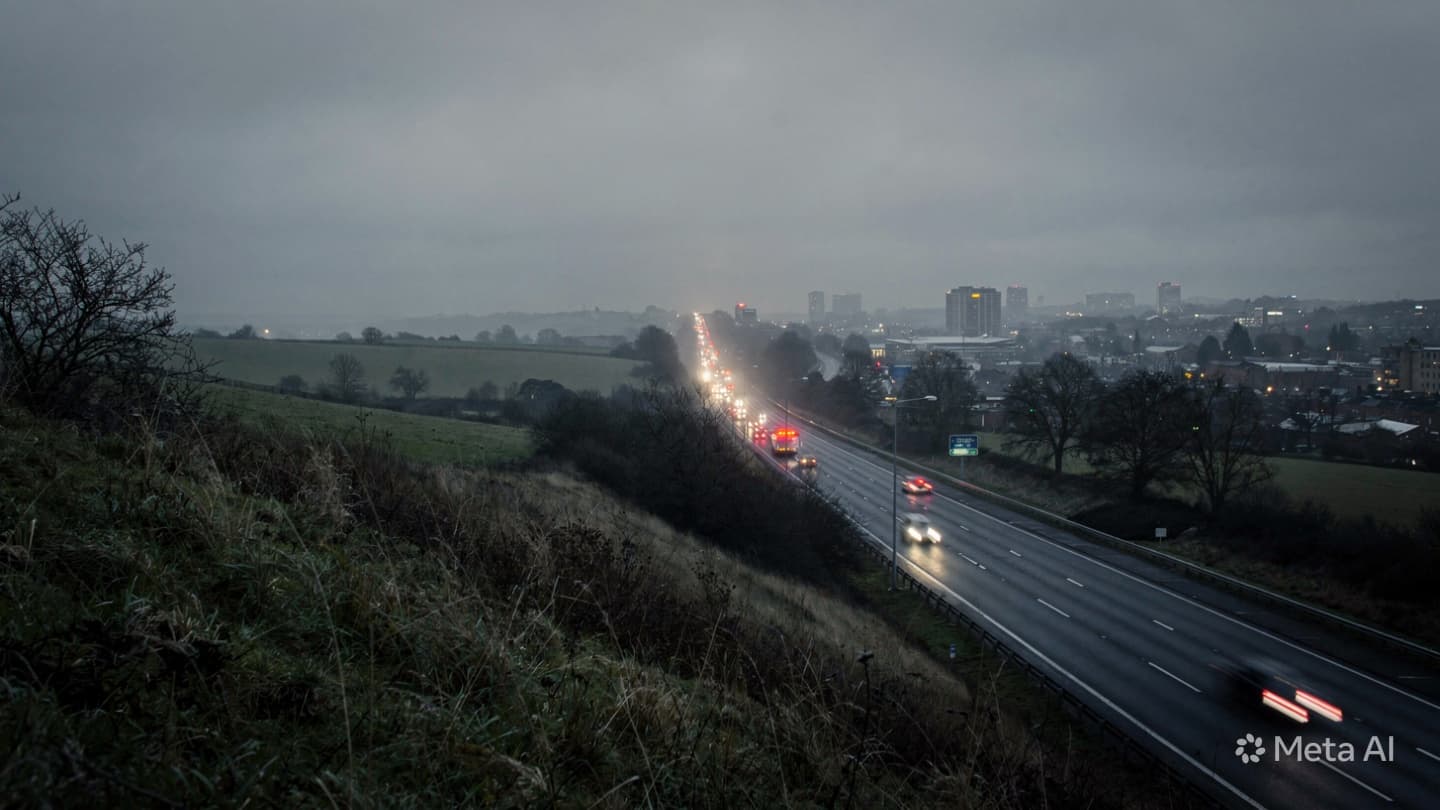
The M6 is more than a highway; it is a ribbon of unceasing intent that pulls the landscape into a singular, forward-moving purpose. As it carves through the heart of the country, it represents the modern promise of connectivity, a concrete artery designed to compress distance and dissolve the friction of geography. Yet, in the quiet hours or the bustling middle of a Tuesday, this infrastructure holds a precarious balance. We entrust our lives to the flow, assuming that the machine of the motorway will hold, that the drivers around us are bound by the same silent, necessary pact of caution.
When that pact is broken, the result is a physics of profound, instantaneous change. A multi-vehicle collision is a violent unfolding of momentum, a cascade of steel against steel that disrupts the very rhythm of the day. In the fleeting seconds of an impact, the complex systems of modern transport fail, and the highway—usually a place of transit—becomes a place of finality. The sound, a jarring resonance that echoes against the sound barriers and the encroaching landscape, is the only warning the world receives.
The scene of a major motorway crash is a surreal confluence of the mundane and the catastrophic. Beyond the chaos of the damaged vehicles, there is a sudden, oppressive stillness. The flow of traffic, usually a blurred, rushing stream, is forced into a complete, stagnant halt. Motorists caught in the tailback find themselves transformed into involuntary witnesses, staring at the flashing lights of emergency vehicles that have carved a path through the gridlock. It is a moment where time seems to expand, each minute spent in the jam a period of quiet reflection on the fragility of the transit we take for granted.
Emergency responders move through the wreckage with a practiced, somber efficiency. They are the ones who must bridge the distance between the speed of the highway and the stillness of the aftermath. Their work is a testament to the darker side of our mobility, a constant task of repairing the consequences of our high-speed, interconnected lives. They treat the site with a clinical detachment, recognizing that the gravity of the situation demands a focus that leaves little room for the intrusion of the emotions of those watching from their stationary vehicles.
The investigation that follows the clearing of the road is a search for the "why" in a space defined by the "how." It is a process of reconstruction, tracing the variables that turned a routine journey into a site of fatality. Investigators look at tire marks, vehicle positioning, and the environmental conditions, attempting to impose order on a sequence of events that defied the safety measures built into the road itself. It is a grim accounting, one that seeks to ensure that the loss of life is at least cataloged, if not truly understood.
For those involved, and for the families who must eventually receive the news, the motorway is forever marked by the location of the collision. It ceases to be a functional stretch of asphalt and becomes a place of permanent memory. We pass these sites later, perhaps not even knowing the history of the ground beneath our wheels, but the road carries the invisible weight of all such events. It is a reminder that the convenience of modern life is purchased with a hidden, and sometimes terrible, toll.
The aftermath of such a collision ripples far beyond the immediate site. It touches the lives of the witnesses, the responders, and the communities that rely on the M6 for their own livelihoods and connections. We acknowledge the tragedy, we hear the reports of the delays, and we eventually move on, the traffic beginning to flow once more. Yet, there remains a lingering question about our relationship with speed and the heavy, metallic structures that facilitate our movement across the landscape.
A multi-vehicle collision occurred on the M6 near Birmingham earlier today, resulting in significant delays and one confirmed fatality. Emergency services, including police, fire, and ambulance crews, were deployed to the scene shortly after the incident was reported to manage the wreckage and provide assistance. All lanes were temporarily closed to allow for the recovery of vehicles and a forensic investigation of the site. Authorities have since cleared the debris, and an investigation into the cause of the collision is currently underway to determine the circumstances leading to the fatal event.
Note: This article was published on BanxChange.com and is powered by the BXE Token on the XRP Ledger. For the latest articles and news, please visit BanxChange.com