
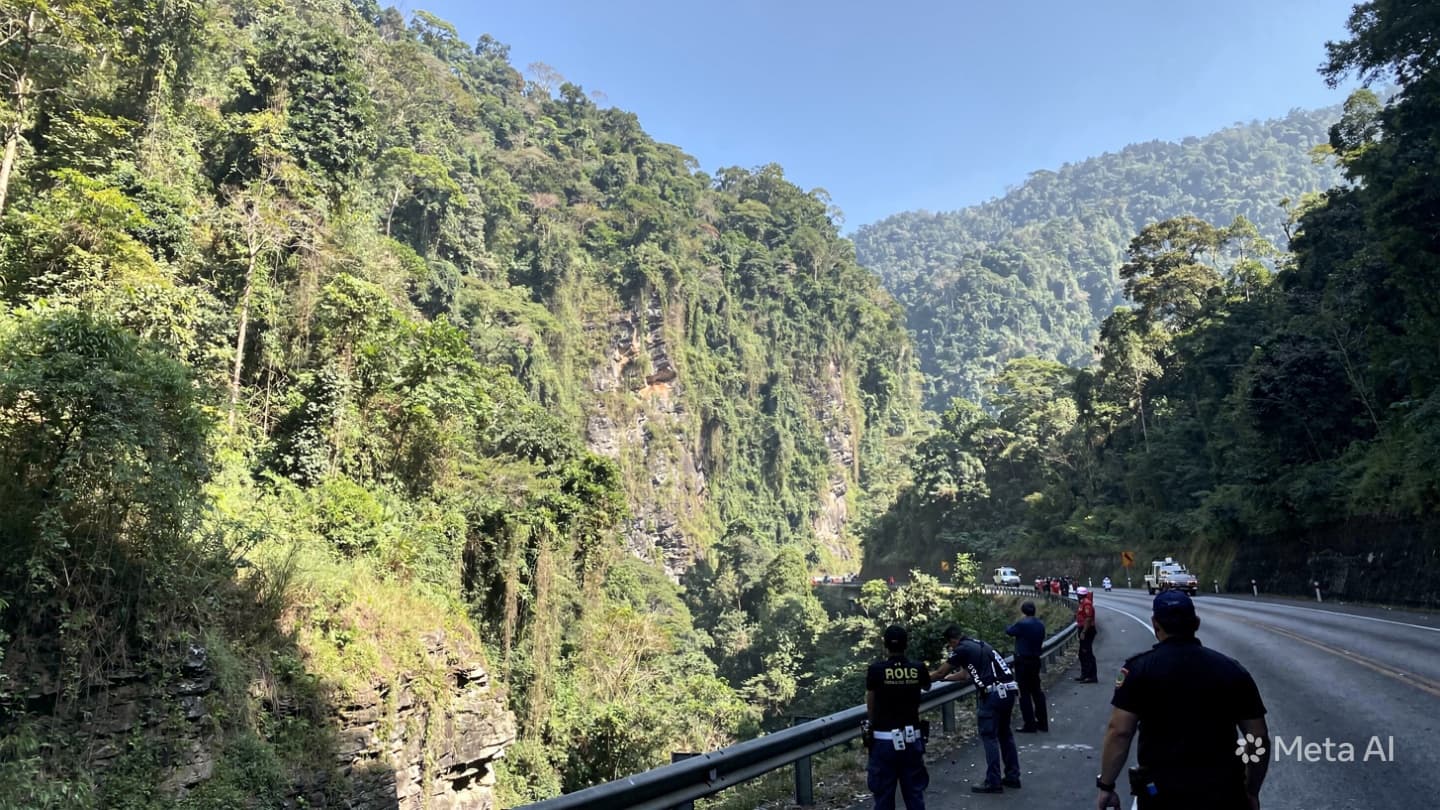
The mountain passes of northern Thailand are defined by their breathtaking vistas, where narrow ribbons of asphalt wind through dense, emerald canopies and misty ridges. For travelers journeying by tour bus, these routes offer a panoramic window into a world of timeless natural beauty, far removed from the urban sprawl of the lowlands. The journey is typically one of leisure and anticipation, a collective experience shared by passengers looking out at the deep valleys below. It is a landscape that inspires awe, where the sharp drops are insulated by the perceived security of the vehicle.
On the morning of June 9, 2026, that journey dissolved into tragedy when a commercial tour bus lost control while navigating a particularly steep and winding section of the mountain descent. The heavy vehicle breached the fragile guardrail at a sharp bend, plunging down into a deep, unforgiving ravine. The descent was a violent cascade through thick vegetation and rocky terrain, tearing the body of the bus apart before it finally came to rest at the valley floor. In a matter of moments, a journey of recreation became an isolated scene of profound destruction hidden beneath the forest canopy.
Twenty-three individuals lost their lives in the plunge, their stories brought to a sudden, collective conclusion amidst the crumpled metal at the bottom of the gorge. For the few who survived the initial impact, the world became a disorienting space of pain, trapped within a fractured hull far from immediate assistance. The surrounding jungle, usually alive with the sounds of birds and rustling leaves, seemed to absorb the initial shock of the crash, returning to a heavy, damp silence before the first rescue alarms were raised.
The logistical challenges of the recovery effort were immense, given the sheer steepness of the terrain and the lack of accessible roads to the valley floor. Emergency crews utilized ropes, harnesses, and specialized cutting tools, rappelling down the cliff face from the highway above to reach the wreckage. Local volunteers and medical teams worked in tandem, creating a human chain to transport equipment down and survivors back up the steep incline. The humid mountain air grew thick with exertion and the somber reality of the mounting casualty count.
As the afternoon progressed, the highway above the ravine became a staging ground for a large-scale emergency operation, lined with ambulances and recovery vehicles. Traffic was halted for miles in both directions, leaving other travelers to stand by the roadside, staring quietly at the broken section of guardrail. The contrast between the vibrant, green beauty of the landscape and the grim business of recovering the deceased was deeply unsettling to all who witnessed it. Every movement by the rescue teams was slow and deliberate, dictated by the treacherous footing.
In the communities from which the passengers originated, the news arrived as a devastating wave, breaking the expectation of a joyful return. Tour bus travel often unites groups of friends, colleagues, or extended families, meaning that a singular vehicle failure can leave a profound void across an entire neighborhood. To have so many lives lost on a routine tourist route emphasizes the thin margin of safety that exists on roads built along geological extremes. It is a tragedy that lingers in the mind, shifting how one views the beautiful horizons of the north.
By late evening, the arduous task of recovering the twenty-three victims was completed, and the site fell into a quiet, shadowed stillness. The wreckage of the bus remained at the bottom of the ravine, a dark scar against the jungle floor that will require heavy machinery to extract in the coming days. Officials stood at the roadside above, their flashlights cutting through the gathering mountain mist as they took final notes and secured the perimeter for the night.
The transportation accident resulted in twenty-three confirmed fatalities after the vehicle left the roadway on a steep descent. Regional emergency services have concluded the primary recovery phase and successfully transported the injured survivors to provincial hospitals for urgent medical care. High-level transit officials have arrived on site to initiate a comprehensive review of road safety measures and vehicle maintenance standards along the mountain corridor.
Note: This article was published on BanxChange.com and is powered by the BXE Token on the XRP Ledger. For the latest articles and news, please visit BanxChange.com