
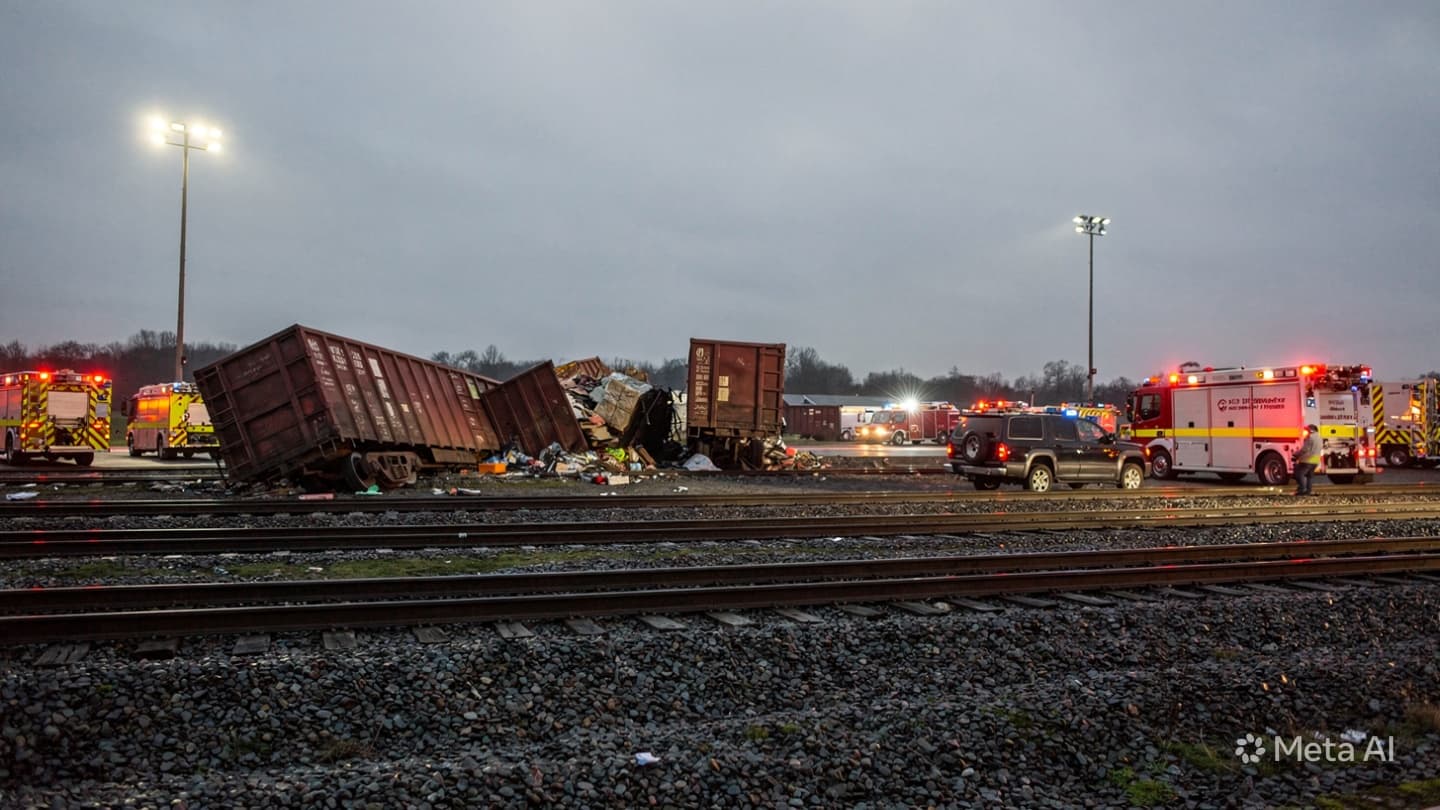
The rail yard at twilight is a place of specific, industrial poetry, where the vastness of the Canadian landscape is organized into parallel lines of steel. Here, the low hum of idling engines and the rhythmic clanking of switching tracks form a familiar symphony of transport and trade. It is a world operating on its own schedule, independent of the surrounding city, where night shifts transition smoothly into dawn under the steady glow of high-mast floodlights. Workers move with practiced ease among the massive cars, their high-visibility jackets catching the fading light as they guide the lifeblood of commerce across the continent.
On this evening, the steady routine of the yard was broken by an unfamiliar, gathering roar echoing from the outer approach tracks. A heavy freight train, separated from the mechanical restraints that govern its immense weight, was advancing toward the terminal with unchecked velocity. The sound grew from a distant vibration in the rails to an all-encompassing thud that shook the foundations of the nearby maintenance sheds. In the twilight, the approaching silhouette lacked the predictable decelerating rhythm that workers rely on to coordinate their movements across the gravel ballast.
The impact within the station yard was immediate and cataclysmic, a violent convergence of kinetic energy and static iron. Heavy transport cars buckled against one another, their steel shells tearing open with a sound that reverberated across the entire neighborhood. The meticulous order of the yard was instantly undone as thousands of tons of freight shifted violently off the rails, plowing through storage platforms and structural barriers. In those few seconds, the historic station yard became a chaotic landscape of overturned steel and displaced earth.
For those working within the immediate vicinity, the collision represented a sudden, terrifying shift from a familiar workplace to an active disaster zone. The dust cloud raised by the pulverized stone and splintering timbers hung thick in the cool air, obscuring the view of the wreckage. Sirens began to sound in the distance, a rising chorus of emergency vehicles rushing toward the industrial perimeter from various sectors of the city. Inside the gates, surviving crew members began the harrowing search for colleagues who had been positioned along the path of the runaway train.
The response from municipal emergency teams was swift, turning the dark rail corridor into a brightly illuminated theater of rescue operations. Heavy rescue units and specialized technical squads navigated the unstable mounds of debris, their movements tracked by the beam of searchlights. The physical scale of the overturned locomotives required industrial cranes to clear pathways toward the heart of the collision site. Every worker involved in the effort carried a deep understanding of the immense forces that had been unleashed within the confined space of the yard.
As night deepened over Ontario, the full extent of the tragedy began to clarify for the families and colleagues waiting outside the security gates. The rail yard, which had stood for generations as a symbol of connectivity and reliable labor, was now isolated by emergency tape and flashing lights. The normal movement of passenger and cargo trains throughout the corridor came to a complete halt, leaving distant stations in an uncharacteristic state of silence. This localized disruption underscored the fragile dependency connecting communities to these iron lifelines.
Investigators from federal safety boards arrived while the metal was still cooling, their notebooks and measuring instruments ready to document the physical evidence. They walked the line of the approach track, examining the braking mechanisms and digital switch logs to reconstruct the final moments of the train’s descent. The inquiry would eventually yield complex technical reports, but for the community, the immediate reality was defined by the empty lockers and quiet breakrooms left behind. The human cost of the momentum was already deeply felt.
By the early morning hours, the intense activity of the rescue phase transitioned into the slow, somber process of site clearance and recovery. The silhouettes of the investigators and clearing crews moved like shadows against the glowing floodlights, working to restore a sense of order to the broken tracks. The physical debris would eventually be hauled away and the rails re-laid, but the memory of the runaway force would remain a permanent part of the yard’s long history, remembered by every worker who steps onto the gravel at twilight.
Note: This article was published on BanxChange.com and is powered by the BXE Token on the XRP Ledger. For the latest articles and news, please visit BanxChange.com