
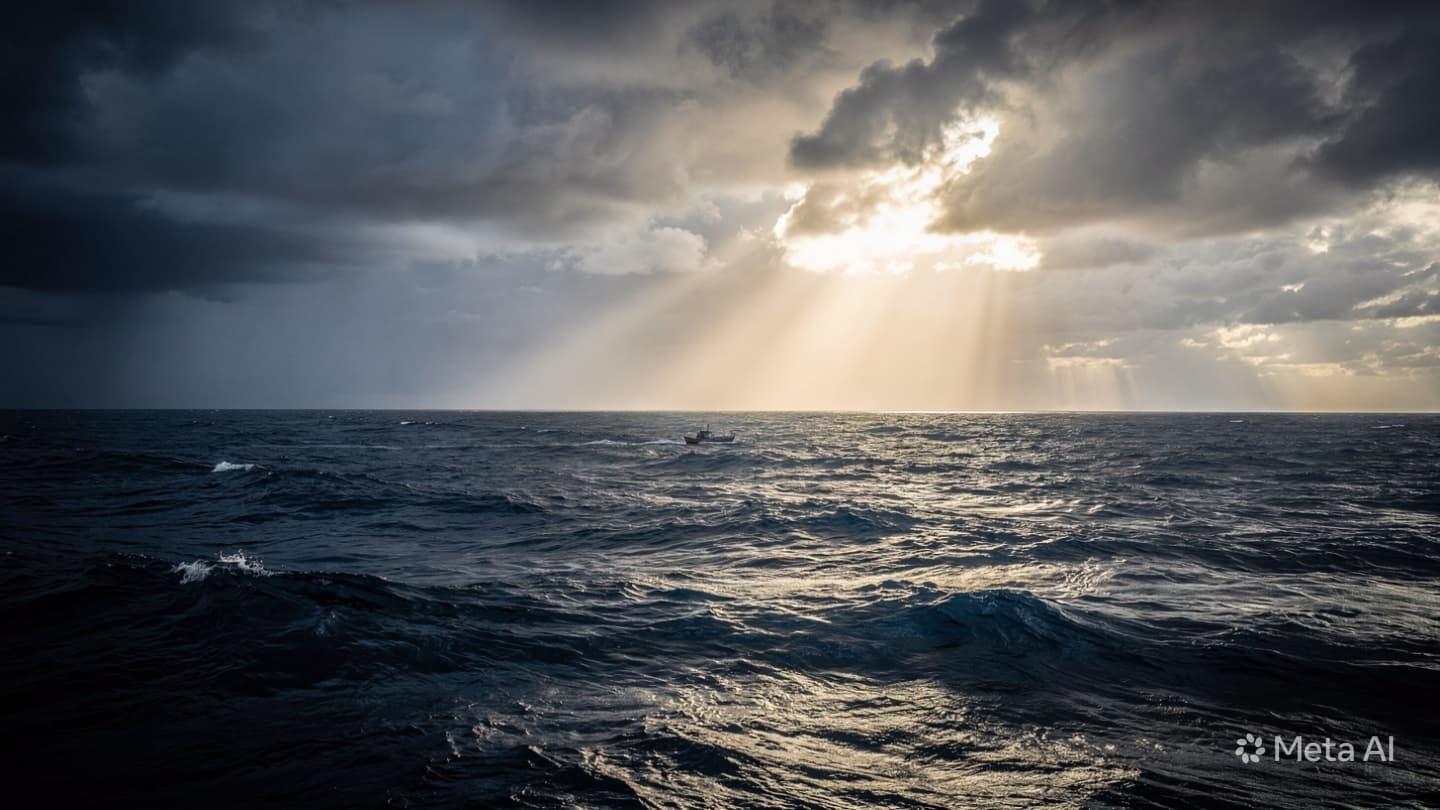
The Eastern Pacific, a vast and seemingly endless expanse of blue, has long been a place of solitude, a canvas upon which the weather, the currents, and the movements of nature draw their own quiet patterns. It is a region far removed from the sight of most, yet in recent months, it has become the focal point of a persistent, unfolding narrative of maritime confrontation. Here, the U.S. military’s campaign—a series of strikes against vessels alleged to be engaged in drug trafficking—has transformed the serenity of the open sea into a theater of calculated, high-stakes action.
To watch the grainy, black-and-white footage of these strikes is to confront a strange, disquieting reality. One sees a boat, a tiny speck upon the vastness of the ocean, before the screen is suddenly filled with the bloom of an explosion. The vessel, just moments before a part of the maritime landscape, is reduced to wreckage and fire. It is a scene that, while presented as a matter of security, carries with it an immense, heavy finality. One life has been claimed, and two others are left stranded upon the water, their fates now tied to the aftermath of a decision made from a great distance.
These actions, part of the “Southern Spear” operation, are framed by the administration as a necessary escalation in the ongoing, multi-decade struggle against the cartels. The logic is clear: the drug trade is an “unacceptable threat,” and these vessels are the conduits for that danger. Yet, for the observer, there is a fundamental disconnect. The distance between the policy room and the ocean wave creates a narrative of abstraction, where the individuals on the boats are classified as “narco-terrorists,” yet the evidence of their specific cargo remains a point of intense, unresolved debate among critics and legal experts.
In the silence that follows each strike, one is forced to consider the legality and the morality of such remote engagements. When a strike occurs, the search-and-rescue systems are activated, an attempt to mitigate the loss of life after the military objective has been fulfilled. It is a contradictory rhythm—the strike, followed by the rescue—that characterizes this campaign. Critics suggest that these operations may sit on the edges of international norms, posing questions about the nature of a conflict that lacks a declared battlefield and a clear, verifiable enemy.
The death toll, now rising into the hundreds since the campaign began last September, serves as a grim marker of the intensity of this effort. It is a campaign that feels both constant and invisible, occurring far from the gaze of the public yet carrying profound consequences for the individuals involved. The soldiers operating these systems are executing a strategy of elimination, while the world watches from afar, trying to reconcile the stated security goals with the imagery of boats burning on the high seas.
As the survivors are left to the mercy of the current and the uncertainty of rescue, the broader campaign continues. There is a sense of inevitability to the next strike, a cycle of action and reaction that seems to have no clear conclusion. The Eastern Pacific, once defined by its indifference to human affairs, has been brought into the center of a geopolitical strategy, its waters now marked by the smoke of a conflict that challenges our understanding of traditional engagement and the definition of a threat.
Ultimately, these incidents invite a reflection on the changing nature of our global security. When the tools of war are applied to the trafficking routes of the ocean, the distinction between the soldier, the law enforcement agent, and the civilian becomes increasingly blurred. We are left to wonder what the long-term cost will be, not just in terms of the lives lost at sea, but in the precedent set for how nations manage the conflicts of the future—battles fought in the shadows, upon the vast, silent waters where the outcome is often decided before it is fully understood.
U.S. Southern Command (SOUTHCOM) confirmed a recent strike on a vessel in the Eastern Pacific, resulting in one fatality and two survivors. The military maintains that the boat was engaged in narco-trafficking operations linked to designated terrorist organizations. The U.S. Coast Guard was notified to initiate search-and-rescue protocols for the survivors, while the incident remains the latest in an ongoing campaign targeting vessels suspected of involvement in transnational drug smuggling.
Note: This article was published on BanxChange.com and is powered by the BXE Token on the XRP Ledger. For the latest articles and news, please visit BanxChange.com