
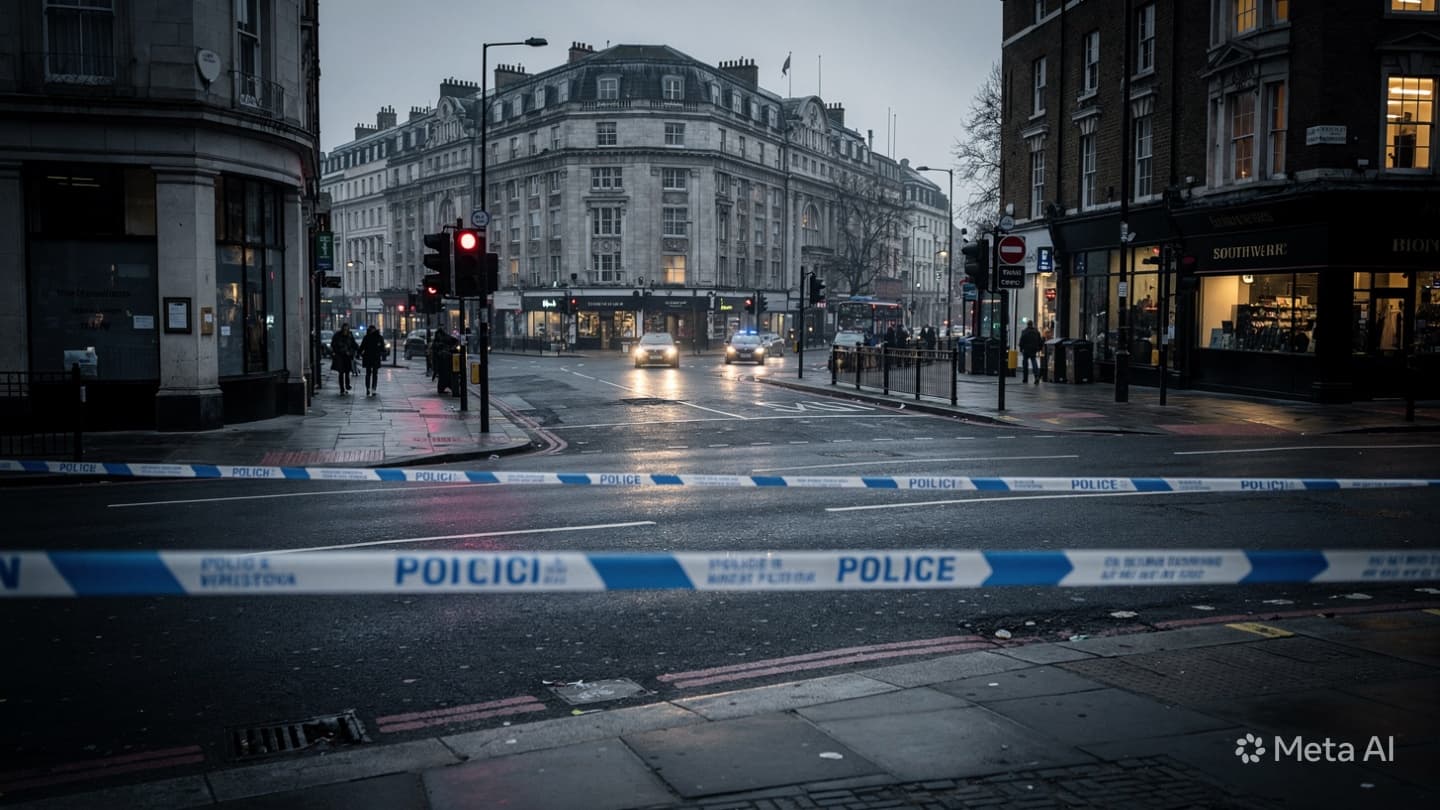
The city wakes not with a single breath, but with the collective hum of millions, a mechanical rhythm that pulses through the arteries of glass and asphalt. In the heart of Southwark, where the storied layers of history press close against the modern surge of commerce, the morning light often struggles to pierce the veil of heavy industry. It is a place of perpetual motion, where the weight of goods and the lightness of human footfalls share a narrow, unforgiving corridor. To walk these streets is to engage in a silent, unspoken pact with the landscape, a trust placed in the predictable geometry of curb and lane.
Yet, there are moments when the rhythm falters, when the smooth progression of time is arrested by an abrupt and jarring stillness. A heavy goods vehicle, a towering presence of steel and shadow, navigates the turn with a grace that belies its immense mass, carving a path through the urban density. The pedestrian, a singular figure in the expanse of gray, moves with the singular purpose of a day yet unfolding. It is a scene repeated countless times in the life of a metropolis, a mundane choreography that usually resolves in safe passage and continued momentum.
When these trajectories intersect in ways never intended, the atmosphere shifts, thickening with an immediate, suffocating gravity. The roar of the engine, once merely a part of the city’s background static, suddenly becomes the center of a profound and hollow silence. Pedestrians and drivers alike find themselves suspended in the aftermath, witnesses to the fragility that defines our shared spaces. The physics of the encounter—the sheer force of momentum against the vulnerability of the human form—renders the surrounding brick and mortar suddenly distant.
In the aftermath, the streetscape becomes a theater of urgent, clinical precision. The flashing lights of emergency services paint the facades in strobes of blue and crimson, transforming the familiar corner into a landscape of stark, unyielding reality. Observers, drawn to the spectacle of the unforeseen, carry the weight of the moment in their averted gazes. There is an inherent, chilling realization that the distance between life’s routine and its finality is often no wider than the width of a painted white line.
Authorities arrived to cordon the intersection, the tape fluttering like a warning against the encroaching tide of commuters. The investigation, meticulous and somber, began as the sun climbed higher, casting long, accusing shadows across the site of the impact. Each fragment of evidence, each stray tire mark, is documented with a reverence reserved for the irreversible. The city, however, remains stubbornly indifferent, its engines humming and its trains pulling into stations with a cold, relentless punctuality.
This incident serves as a quiet reminder of the unseen precariousness embedded in our daily navigations. We move through these environments with a confidence born of repetition, often forgetting that the machinery we inhabit exists in a fragile equilibrium. When that balance is disrupted, the loss is not merely an interruption of traffic, but a severance of a life’s narrative. The victim, whose name and history are now the focus of official records, becomes a symbol of the dangers inherent in our interconnected, high-speed existence.
As the day deepens, the scene begins to dissolve back into the fabric of the borough. The debris is cleared, the markers are removed, and the pavement is left to dry, bearing no visible scar of the event. Yet, for those who witnessed the stillness, the memory lingers, a phantom sensation of the collision’s force. The city’s indifference is its most defining trait; it moves forward, burying the past beneath the relentless cycle of commerce and transit.
The incident occurred in Southwark when a pedestrian was involved in a collision with a heavy goods vehicle. Emergency services were dispatched to the location, but despite the rapid intervention of medical personnel, the pedestrian was pronounced dead at the scene. Local police have initiated an investigation into the circumstances of the collision to determine the factors that led to the incident. Traffic diversions were put in place while forensic teams examined the area, and authorities are now appealing for witnesses to assist with their ongoing inquiries into the fatal event.
Note: This article was published on BanxChange.com and is powered by the BXE Token on the XRP Ledger. For the latest articles and news, please visit BanxChange.com