
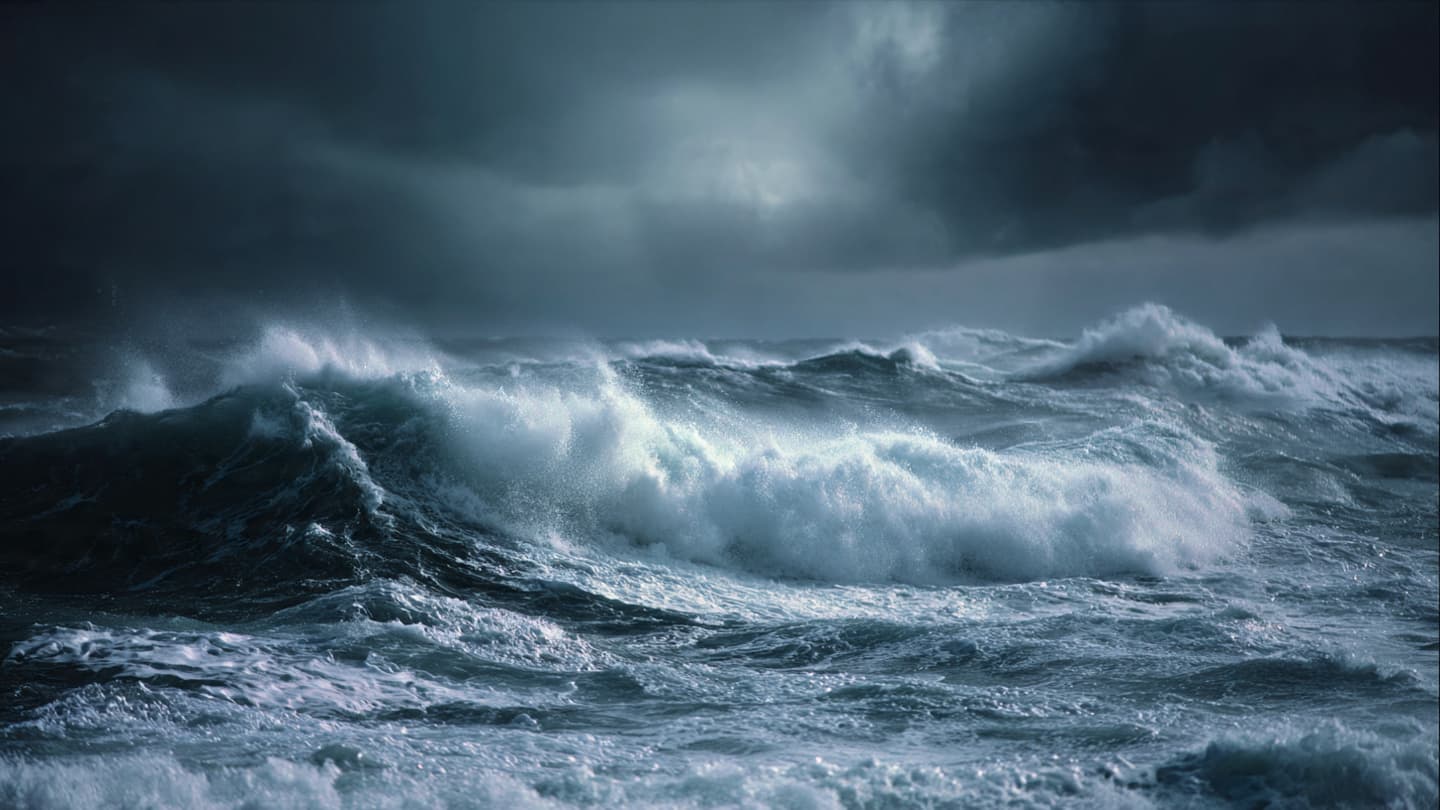
The North Sea is a legendary expanse of water, known among mariners for its shallow depths and its capacity to generate sudden, violent storms that challenge the sturdiest of hulls. For those who navigate its waters for sport or commerce, it demands an unwavering vigilance and an understanding that the weather can alter from a pleasant cruise to a survival situation within a few hours. The coastline of Denmark is defined by this sea, its sandy dunes and small fishing harbors serving as a fragile border against the vast ocean.
On an afternoon when a sudden gale swept down from the northern latitudes, catching the coastal waters in a grip of immediate violence, a sailing vessel found itself in extreme distress. The wind climbed to storm force within an hour, creating short, steep waves that pounded the hull with relentless energy. Despite the experienced efforts of the crew, the vessel’s rigging failed under the pressure, leading to a sudden, catastrophic capsize in the freezing waters.
The transition from a controlled sailing transit to an immediate life-and-death struggle occurred miles from the nearest harbor, leaving the crew clinging to the upturned hull as the cold spray washed over them. In the open water during a gale, the human body loses heat at an alarming rate, turning every minute into a countdown against hypothermia. The activation of the vessel's emergency beacon was their final, desperate connection to the land.
Coastal rescue services responded with the rapid coordination that defines their maritime calling, deploying search and rescue helicopters directly into the teeth of the gale. The aircraft navigated through heavy cloud cover and shifting winds, their rotors churning the air as they scanned the white-capped surface for any sign of the orange hull. To locate a small object in a vast, moving desert of water requires exceptional aerial precision.
Once the vessel was spotted, the rescue swimmers were lowered into the freezing, turbulent sea, a demonstration of deliberate bravery conducted in an environment of maximum risk. The mechanics of the rescue were a precise dance between the hovering helicopter, the moving waves, and the exhausted crew members who had to be lifted one by one into the aircraft. The roar of the helicopter engine was the only sound against the ocean’s fury.
The evacuation was successful, the crew hoisted from the shadow of the capsized mast into the warm cabin of the aircraft just as dusk began to claim the horizon. Inside, medical technicians immediately began the process of rewarming and stabilizing the mariners, whose hands were white from the salt and cold. The helicopter tilted its nose back toward the Danish mainland, leaving the empty hull to the waves.
The abandoned vessel remained as a temporary hazard to navigation, rolling slowly in the trough of the sea until a salvage tug could be dispatched once the weather relented. The physical loss of the boat is a secondary concern for the families who waited in the harbor, their relief absolute when the rescue fleet returned with all lives accounted for. The North Sea had taken the ship, but the crew had been returned.
As the storm began to lose its intensity over the coastal towns, the helicopters returned to their base, their engines cooling in the quiet hangars. The sea remained outside the harbor wall, dark and rhythmic, a permanent reminder of the thin margin that separates human exploration from the raw power of the natural world.
Danish Coastal Rescue Services confirmed the successful helicopter evacuation of a distressed sailing crew after their vessel capsized during a sudden gale in the North Sea. Rescue swimmers successfully extricated all crew members from the water, transferring them to a regional hospital where they are currently being treated for exposure and hypothermia.
Note: This article was published on BanxChange.com and is powered by the BXE Token on the XRP Ledger. For the latest articles and news, please visit BanxChange.com