
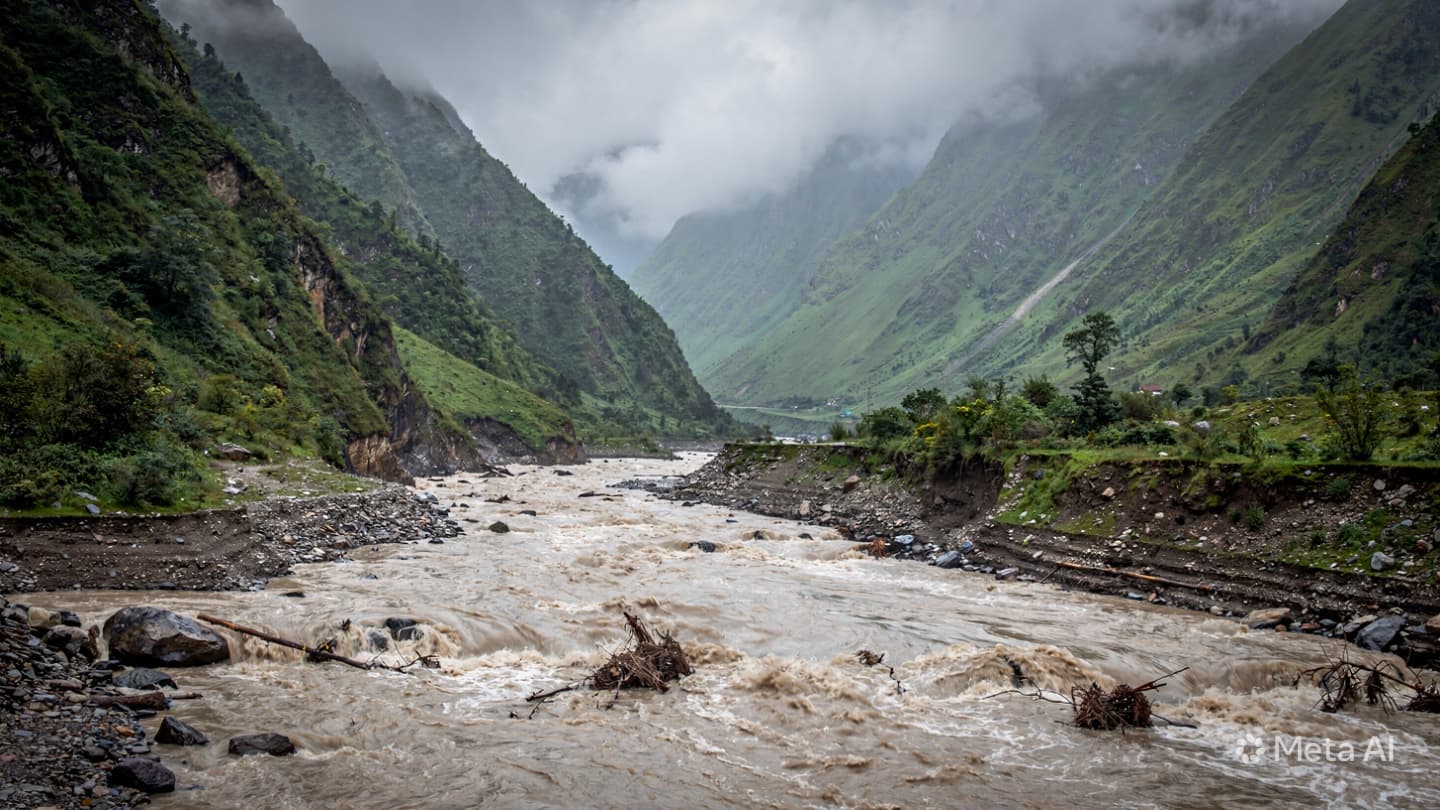
The high-altitude valleys of the Himalayas have long existed in a state of quiet grace, balanced delicately between the timeless stillness of the snowfields and the seasonal life of the lower villages. Up where the air grows thin, glacial lakes pool like blue gems in the hollows left by ancient ice, contained only by fragile walls of loose rock, gravel, and permafrost. The communities living along the riverbeds below look to these high summits as eternal protectors, mapping their seasons by the predictable flow of meltwater. Yet, there is a quiet mutability hidden within the high crags, where shifting thermal patterns can silently compromise the natural dams over the course of an unseasonably warm season.
Without the traditional warning of a gathering monsoon storm, the natural moraine dam holding back the upper glacial lake gave way in a single, catastrophic fracture. The immense volume of trapped water, suddenly liberated from its high-altitude basin, transformed into a vertical wall of dark, sediment-heavy energy that roared down the steep canyons. It moved with a terrifying velocity, gathering boulders, ancient pine forests, and topsoil as it descended into the narrow gorges. For the remote settlements situated along the river banks, the sound arrived not as thunder, but as a deep, resonant shaking of the bedrock itself, signaling an immediate rearrangement of the valley’s geography.
In these mountainous outposts, where the steep terrain offers few paths for rapid escape, the speed of the inundation left families with virtually no time to seek higher ground. The torrential current swept through the terraced hillsides, dissolving footbridges, stone dwellings, and the fragile infrastructure that connects these isolated communities to the wider world. The water moved through the lower channels with a fluid, destructive majesty, submerging the riverside trails under several meters of churning, gray foam. By the time the initial crest had passed, the familiar contours of the valley floor had been completely erased beneath a smooth blanket of river silt and debris.
There is a profound, quiet bewilderment that settles over an alpine district when the natural world turns so suddenly against those who cultivate its slopes. The loss of nine individuals within the immediate path of the outburst, compounded by the agonizing uncertainty of dozens who remain missing, has left a deep fracture in the close-knit social fabric of the region. This grief is not expressed through dramatic public declarations, but lingers in the quiet vigils held in mountain monasteries and the hushed tones of neighbors searching the riverbanks. The vulnerability of these high-altitude settlements is laid bare when the upper snowfields release their contents so abruptly into the valleys below.
In the immediate aftermath of the flood's passage, the downstream corridors presented a somber, monochrome study in ruin, with the skeletal remains of suspension bridges dangling uselessly over the swollen river. Local volunteers and emergency crews moved methodically through the mud-slick flats, using simple tools and bare hands to clear debris from the sites where homes had stood. The isolation of the worst-affected sectors, cut off by landslides and severed communication lines, has turned the rescue effort into an exercise in patience and endurance. The air remains damp and heavy with the scent of wet earth and pulverized stone brought down from the high ridges.
The final communications filtering from the regional administrative centers confirm that the catastrophic glacial lake outburst has claimed nine victims, while search teams continue their difficult work to locate dozens of missing residents. Local authorities have coordinated with emergency services to establish temporary relief centers in safer, elevated areas to provide food and medical care to those displaced by the water. Technical teams are using satellite imagery and aerial surveys to monitor the upper glacial system for any signs of secondary instability that could threaten the ongoing recovery efforts down the valley.
Note: This article was published on BanxChange.com and is powered by the BXE Token on the XRP Ledger. For the latest articles and news, please visit BanxChange.com