
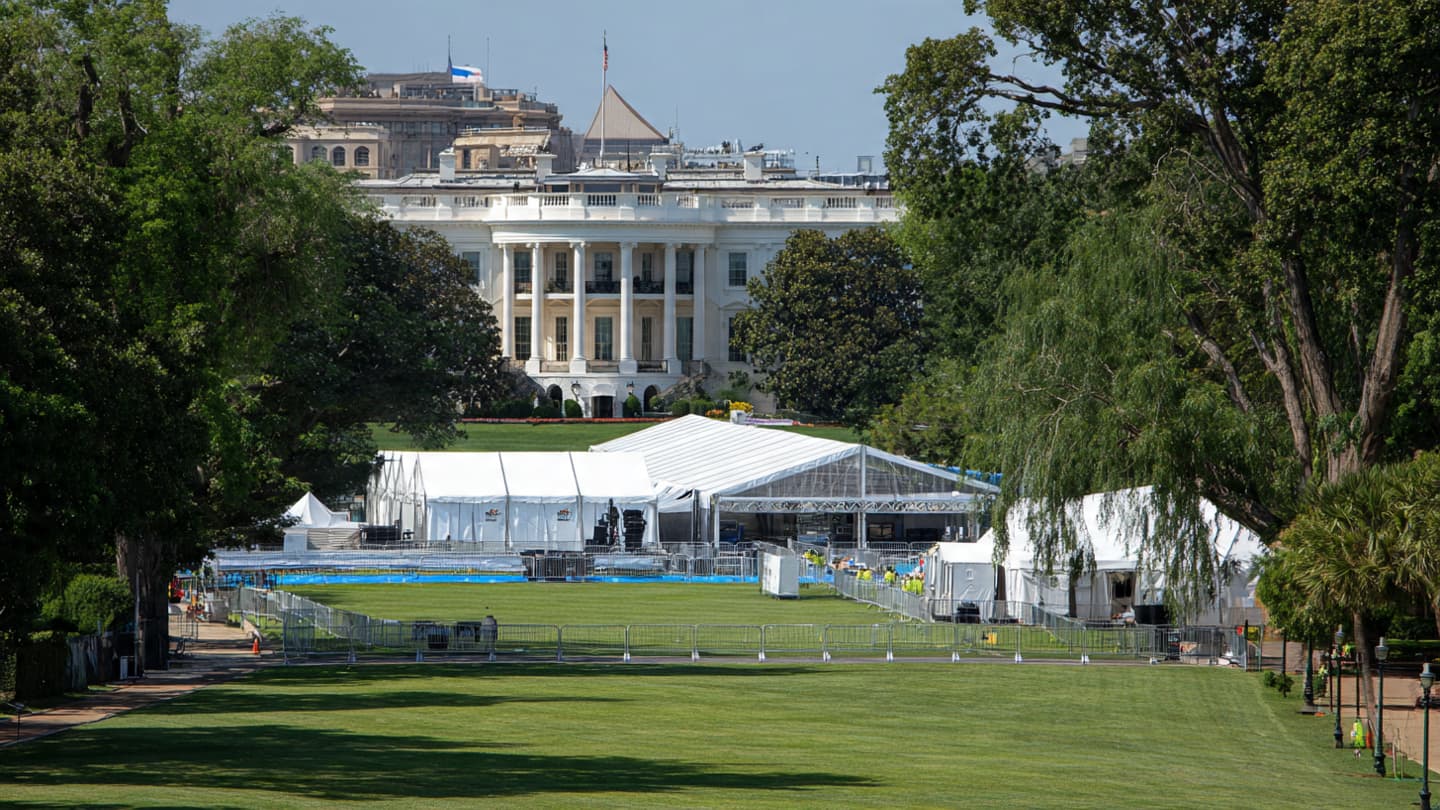
Public spaces often carry layers of meaning accumulated over generations. Some serve as symbols of government, others as venues for civic gatherings, and occasionally they become stages for debates that extend far beyond the events planned within them. A lawsuit seeking to halt a proposed UFC event at the White House has become the latest example of how public institutions can find themselves at the center of broader discussions about governance, access, and public trust.
The legal challenge was filed shortly before the scheduled event, which is expected to take place on the White House grounds as part of broader celebrations connected to America's 250th anniversary. Plaintiffs argue that the event raises questions about permitting procedures and the use of federal property for a high-profile sporting spectacle.
According to reports, the lawsuit seeks a preliminary injunction that would prevent the event from proceeding while the legal issues are reviewed by a court. The filing reportedly names federal agencies responsible for overseeing the property and event authorization process.
Supporters of the event have emphasized its promotional and celebratory value, describing it as a unique opportunity to combine sport, entertainment, and national commemoration. Organizers have argued that the event is intended to be a public-facing celebration rather than a political gathering.
Critics, meanwhile, contend that the use of such a prominent government venue warrants heightened scrutiny. Their concerns focus on transparency, permitting standards, and the precedent that could be established by allowing a commercial sporting event on White House grounds.
The dispute illustrates how modern sporting events often intersect with legal, political, and cultural considerations. While the event itself centers on mixed martial arts competition, the surrounding debate has broadened into questions about public resources and institutional boundaries.
Legal experts note that preliminary injunction requests typically require courts to weigh competing interests, including potential harm, legal standing, and the likelihood of success on the merits of a case. The timeline is often compressed when events are imminent.
For now, attention remains focused on whether judicial review will alter the schedule. Organizers continue preparations while legal proceedings move forward, creating uncertainty only days before the planned event.
The outcome of the lawsuit will help determine whether the UFC event proceeds as scheduled. Regardless of the decision, the case has already sparked discussion about the evolving relationship between public institutions, major entertainment events, and civic space.
AI Image Disclaimer: This article includes an AI-generated illustration created to visually represent the public event and legal issues discussed.
Source Verification Check: WTOP News Reuters Associated Press The Washington Post MMA Mania
Note: This article was published on BanxChange.com and is powered by the BXE Token on the XRP Ledger. For the latest articles and news, please visit BanxChange.com