
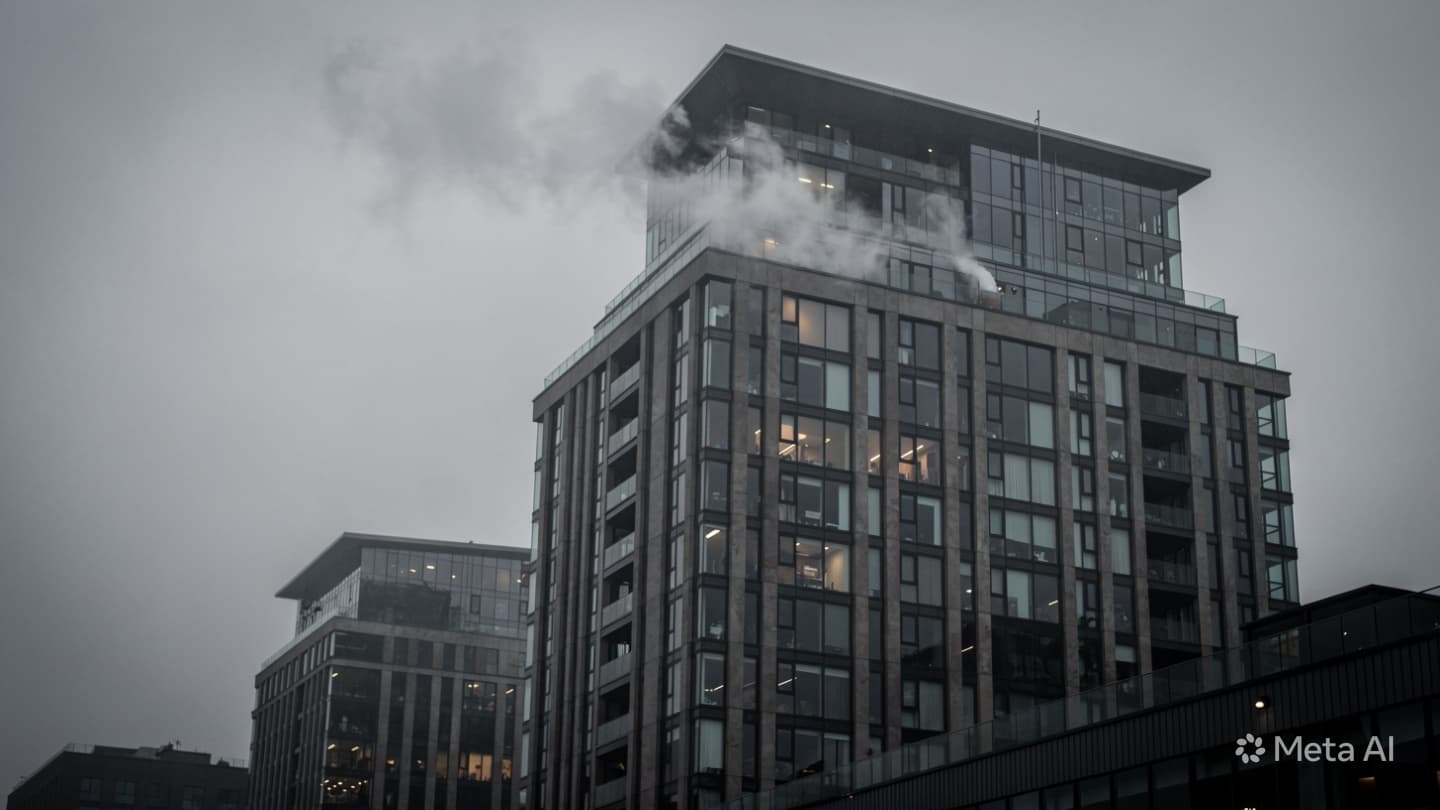
The high-rise stands as a sentinel of the modern city, a vertical neighborhood etched against the shifting grey of the Glasgow sky. To live in such a structure is to be part of an intricate, stacked geometry where the lives of hundreds are separated only by concrete and thin partitions. In the quiet morning, these towers are filled with the muffled hum of domesticity—the brewing of tea, the soft tread on carpet, and the distant, rhythmic pulses of the city below. It is a world of managed elevation, where safety is assumed to be as solid as the foundation itself.
When the stillness is broken by the scent of something sharper—the acrid, rising plume of a fire—the atmosphere of the building shifts instantaneously. It is a primal interruption, a descent from the mundane into the chaotic. For those within, the world narrows to the corridor and the door, the air becoming a heavy, swirling shroud. The architecture that once offered a view of the sprawling city now feels like an enclosure, a place where the familiar geometry of home turns against the inhabitants, concealing dangers within its deep, windowless corners.
Emergency services arrive with a surge of light and sirens, a jarring contrast to the somber gray of the apartment block. They operate in the vertical, climbing into the belly of the structure to confront a threat that defies the traditional reach of the street. For the responders, each floor is a new layer of uncertainty, a labyrinth where time behaves differently, compressed by the urgency of the heat and the smoke. The task is precise, practiced, and deeply weighted with the knowledge of what is at stake within those private walls.
To watch from the ground is to witness the impotence of observers. One stares up at the darkened windows, the silhouette of the building now a site of profound vulnerability. The fire, which consumes with a mindless, voracious indifference, makes no distinction between the history contained within an apartment and the structure that holds it. It is an equalizer of the most destructive kind, stripping away the domestic comforts of home until only the bare, charred reality remains to be reckoned with.
The loss of a life in such a setting feels particularly heavy, a singular narrative extinguished within the grand, impersonal stack of the high-rise. There is a haunting quality to the way a home, filled with the artifacts of a person’s existence, can be so swiftly altered by the elements. The firefighters, emerging from the haze, carry the heavy burden of their discovery back into the open air, their faces etched with the fatigue of a struggle that is both physical and deeply internal.
As the emergency operation winds down, the tower returns to a semblance of its former silence, yet the atmosphere is irrevocably changed. Residents begin the slow process of reconciling the safety of their homes with the fragility they have just witnessed. The building itself, standing as it always has, seems to bear the silent mark of the incident, its windows reflecting the changing light of the day as if nothing had occurred. It is a city's way of absorbing tragedy—continuing to function, while beneath the surface, the memory of the event persists.
This incident marks a moment of quiet sorrow for the surrounding community, a reminder of the unseen hazards that dwell behind the facades we walk past every day. Authorities move into the phase of analysis, looking for the cause in the cold remnants of the interior, seeking answers in the wreckage. For those who knew the victim, the apartment is no longer a place of living but a site of profound absence, a void in the middle of a bustling, vibrant urban life.
Emergency services were dispatched to the high-rise apartment block in Glasgow following reports of a severe fire on an upper floor. Despite the rapid arrival of fire crews who entered the premises to contain the blaze, one individual remained trapped within the affected unit and was later confirmed deceased at the scene. Scottish Fire and Rescue Service worked for several hours to extinguish the fire and ensure the building was secure. Police Scotland have launched a formal investigation into the origin of the blaze, and cordons remain in place while forensic teams examine the site for evidence.
Note: This article was published on BanxChange.com and is powered by the BXE Token on the XRP Ledger. For the latest articles and news, please visit BanxChange.com