
The afternoon light across the city-state usually carries a rhythmic, predictable warmth, a steady pulse of movement where commerce and daily life blend seamlessly. Beneath the towering silhouettes of climbing frameworks, thousands of journeys cross paths at any given intersection, bound by the familiar geometry of the urban landscape. It is an environment built on precision, where every steel beam and extended arm stands as a testament to human calculation and collective ambition. On this particular day, the air held the usual humid stillness, punctuated only by the distant hum of traffic and the persistent murmurs of an active metropolis.
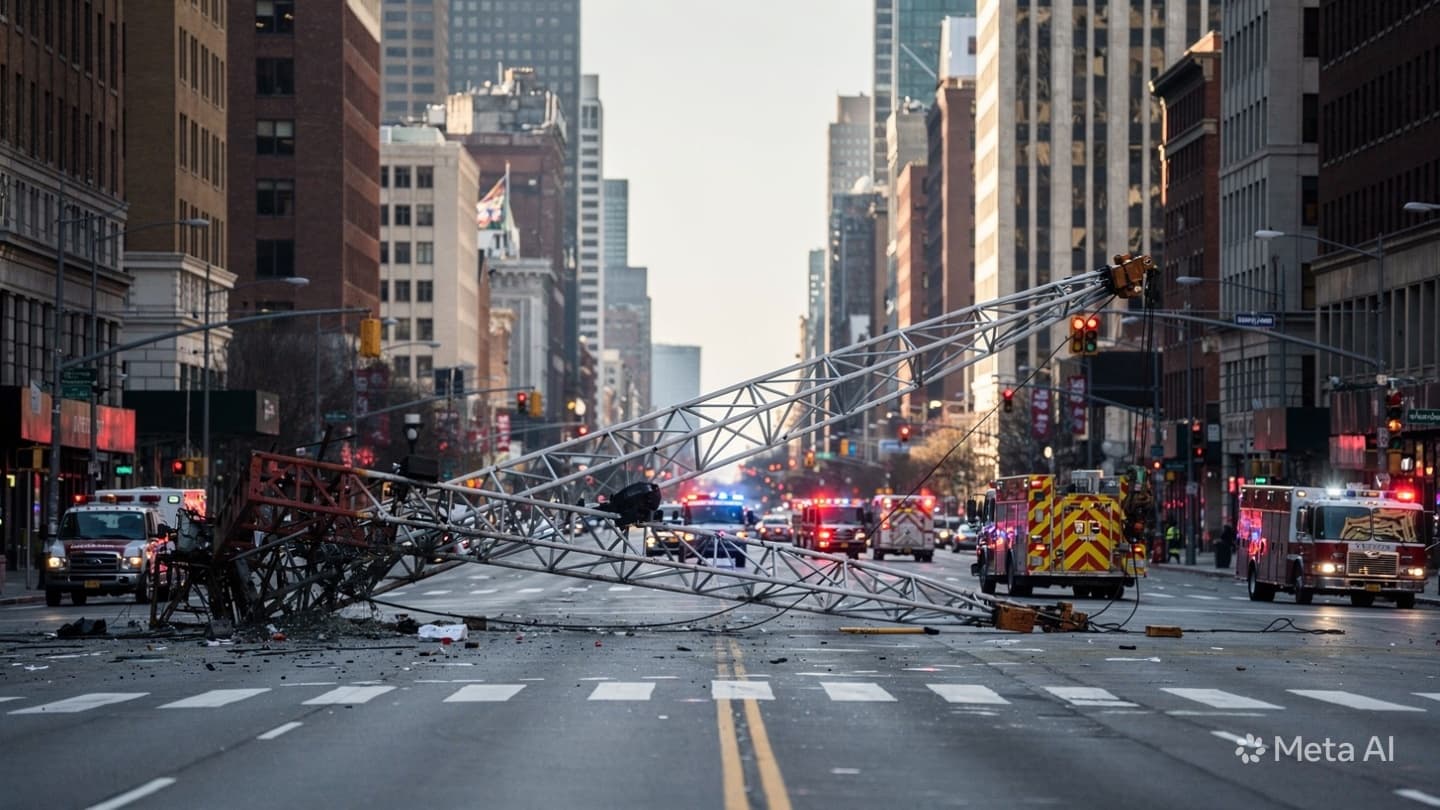
Within a single, breathless sequence, that structured predictability vanished into the harsh reality of unexpected physical failure. A massive lattice of steel, designed to reach toward the clouds, lost its delicate equilibrium and descended upon the crowded thoroughfare below. The sound of its descent was not just a mechanical crash, but a profound rupture in the day’s ordinary narrative, silencing the routine sounds of the city. In those fleeting moments, the boundary between the constructive forces of development and the vulnerability of everyday transit collapsed entirely.
Vehicles that had been moving forward in the ordinary cadence of a Tuesday commute were suddenly trapped beneath an unimaginable descent of twisted iron. The physical impact reverberated through the asphalt, sending shockwaves through a neighborhood accustomed only to the orderly flow of progress. Bystanders could only watch as the vertical ambition of the skyline transformed into a horizontal landscape of debris. The immediate aftermath brought an eerie, suspended stillness, a sharp contrast to the furious momentum that usually defines this financial hub.
As the dust began to settle over the shattered pavement, the true weight of the event began to register in the minds of those who gathered at the perimeter. First responders arrived with a quiet urgency, their flashing lights casting long, somber reflections against the surrounding glass facades. The task before them was heavy, requiring careful navigation through a labyrinth of structural wreckage to reach those trapped inside crushed vehicles. Each movement by the emergency crews was deliberate, balanced between the necessity of speed and the fragile instability of the remaining structure.
For hours, the intersection remained closed to the outside world, transformed into a solemn space of rescue and recovery. The usual chatter of commuters was replaced by the low, synchronized hum of hydraulic tools and the quiet directives of emergency commanders. News of the event rippled outward through digital networks, turning a localized structural failure into a shared moment of collective grief across the island. It served as a stark reminder of how quickly the familiar structures of modern life can fracture, leaving behind an empty space where routine once existed.
As evening approached, the tropical sky shifted through shades of deep amber and violet, casting an almost serene glow over a scene of profound loss. The contrast between the natural beauty of the sunset and the industrial wreckage below was sharp and deeply felt by those keeping vigil. Investigators began their preliminary walk-through, their flashlights cutting through the gathering gloom to illuminate stress fractures and broken joints. Their task would take days, but the immediate focus remained entirely on the human cost written into the asphalt.
The collective consciousness of an entire neighborhood seemed to slow down, pausing to process the sudden finality that had visited an ordinary street corner. Flowers began to appear near the police cordons, small tokens of remembrance placed by individuals who had passed through the same intersection only hours before. These quiet gestures highlighted the deep interconnectedness of urban life, where the paths of strangers are bound together by shared spaces and times. The physical scars on the road would eventually be repaired, but the memory of the falling steel would linger far longer.
In the final hours of the day, the heavy machinery brought in to clear the lanes stood silhouetted against the dark sky, working slowly to restore order. The rhythm of the city would inevitably return, driven by the unstoppable momentum of modern development and economic necessity. Yet, for one evening, the quieted intersection stood as a monument to human fragility, a place where the forward march of construction was forced to halt and acknowledge the lives woven into the fabric of the streets below.
Note: This article was published on BanxChange.com and is powered by the BXE Token on the XRP Ledger. For the latest articles and news, please visit BanxChange.com